Norway is known for a few things: The Nobel Peace Prize. Majestic fjords. A high standard of living. And its oil, which, with all that’s going on in the Middle East, is especially crucial to Europe right now.
But on Sunday night, the country became known for something entirely different: a big Oscar win.
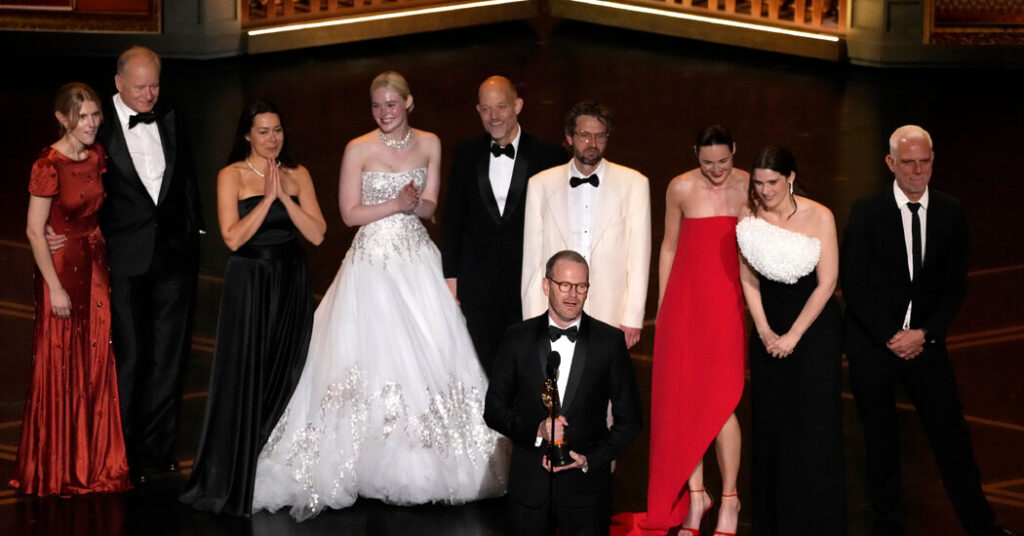
For the first time, a Norwegian film was named best international feature, with Joachim Trier’s “Sentimental Value,” a family drama set in Oslo, taking home the statuette.
“You make all of Norway proud!” Prime Minister Jonas Gahr Store told the national broadcaster, NRK. “When the gang comes home, I will invite them all over to my place so we can celebrate.”
Norwegians have earned Oscars for best documentary before but never for a fiction film. The victory provided some antidote to a slew of negative news in Norway recently, with a former prime minister, Thorbjorn Jagland, and the country’s future queen, Crown Princess Mette-Marit, linked to the convicted sex offender Jeffrey Epstein. Mr. Jagland has been criminally charged in connection with those ties, while the crown princess has also faced criticism.
Mr. Trier, a Danish Norwegian who lives in Oslo and is known for making delicate melancholic dramas, said the win was important for Norwegians, especially now. “Sentimental Value” went steaming into the Oscars with nine nominations, including for best picture, best director and best supporting actor — indeed, many in Scandinavia were hoping Stellan Skarsgard, a well-known Swedish actor, would win the big prize for his performance.
He didn’t, but still, Mr. Trier said he was “just so proud and shocked” about his film’s success.
“This awards season has almost been a bit like a summer camp,” Mr. Trier added. “We know each other now, and I’m so proud to be part of it.”
The film goes deep on one dysfunctional Norwegian family, investigating the traumatic relationship between a father and his two daughters. It touches upon inherited grief and generational trauma, in this case from Norway’s experience in World War II under Nazi occupation.
The film performed modestly at the box office but was praised by critics for its depth and for Mr. Skarsgard’s powerful performance. The New York Times deemed it a Critic’s Pick, and Manohla Dargis wrote in her review, “Even in its lightest moments there’s a soulful heaviness” to the work.
Kjersti Mo, chief executive of the Norwegian Film Institute, said that the film’s success was “the result of many years of long-term film policy in Norway, where we have built strong creative communities and made room for artistic ambition.”
“When a small film nation like Norway receives this kind of international recognition, it shows what can happen when filmmakers are given time, trust and artistic freedom,” she added.
Mari Glans-Doré, a Norwegian culture journalist, said that the win could catalyze more productions in Norway.
“I hope this creates even more interest in filmmakers from our little corner of the world,” she said. “We need way better film incentives to get more international productions to choose Norway. That will benefit not only the entire country, but especially local, hard-working talent in our film industry.”
Jeffrey Gettleman is an international correspondent based in London covering global events. He has worked for The Times for more than 20 years.
The post Norway Celebrates Its Big Oscar Win appeared first on New York Times.