The Israeli military has denied reports that it is running out of missile interceptors more than two weeks into the war with Iran, saying it had “prepared for prolonged combat.”
Lt. Col. Nadav Shoshani, a military spokesman, told reporters on Monday that Iran was firing far fewer missiles at Israel than the military had contended with at other times in the past two years of regional wars. He added that he was not aware of any “urgent problem” with the stock of interceptors, adding that Israel had prepared for a “larger threat.”
On Sunday, the military said in a statement that it was monitoring the situation and that “as of now” there was “no interceptor shortage.”
Israel’s foreign minister, Gideon Saar, has also denied that the military was running short of interceptors.
The comments follow a report by the news site Semafor over the weekend, which said that Israel had informed the United States that it was “running critically low on ballistic missile interceptors.” The report cited unnamed American officials.
Israel’s Ministry of Defense declined to comment on whether Israel had requested additional interceptors from the United States.
Colonel Shoshani said that whenever Israel is engaged in a broad operation that goes on for weeks, “there is a process of re-equipping in real time,” whether through local production or purchasing from abroad.
Israel and the United States have been waging a joint air campaign against Iran since Feb. 28, prompting Iran to launch daily volleys of ballistic missiles at Israel, more than 600 miles away.
Iran has fired more than 300 ballistic missiles toward Israel, about half of which carried cluster munitions, according to data gathered by the Institute for National Security Studies at Tel Aviv University.
Hezbollah, the Iran-backed militant group based in Lebanon, has fired more than 1,000 shorter range rockets and drones toward Israel since March 2, according to Colonel Shoshani.
In early March, Hezbollah fired rockets in support of Iran, prompting waves of devastating Israeli strikes on Lebanon. Hezbollah has answered with persistent rocket attacks on Israel.
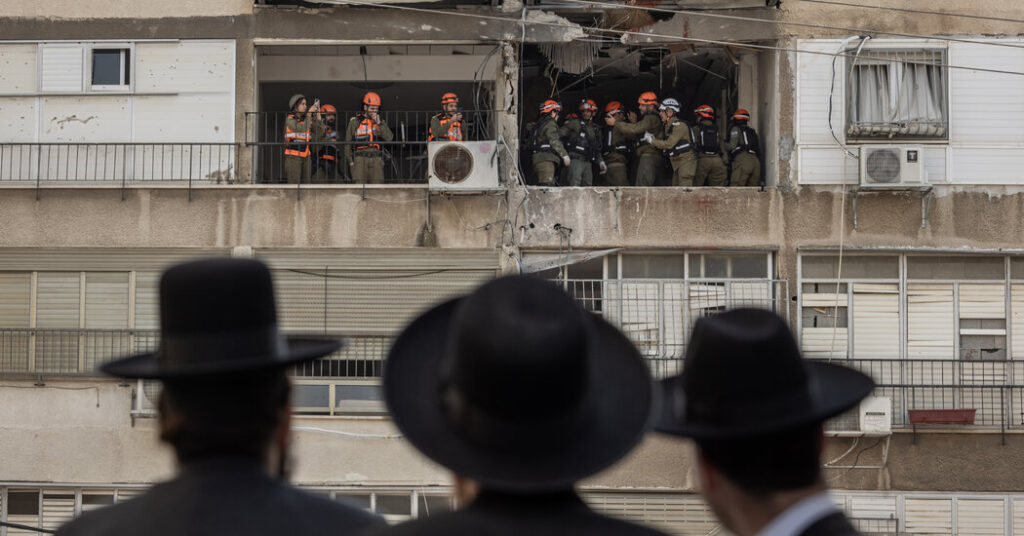
Israel has intercepted most of the projectiles, using different types of interceptors, though some incoming fire from either Iran or Lebanon have penetrated the country’s air defenses.
During Israel’s 12-day war against Iran in June, Iran fired more than 500 ballistic missiles at Israel and the United States provided missile defense assistance.
As well as defensive measures, Israeli forces have prioritized attacking Iran’s launching capabilities to reduce missile fire.
Colonel Shoshani said that about 70 percent of Iran’s missile launchers have been rendered inoperable — either destroyed, broken or made inaccessible — and that they were being “hunted in real time” by Israeli and American eyes in the sky.
Isabel Kershner, a senior correspondent for The Times in Jerusalem, has been reporting on Israeli and Palestinian affairs since 1990.
The post Israel Denies That It Is Running Out of Missile Interceptors appeared first on New York Times.