Florida lawmakers failed to pass a sweeping bill aimed at reining in the power of artificial intelligence by the time their annual legislative session wrapped up Friday.
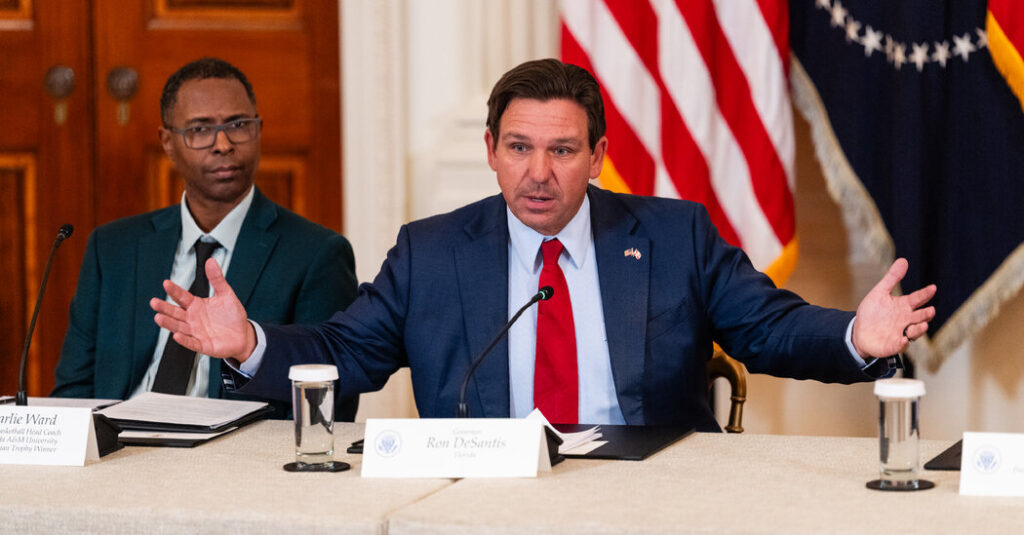
The legislation, known as an A.I. Bill of Rights, flopped even though Gov. Ron DeSantis, a Republican, had spent months championing it. The bill would have forced companies to disclose when they use A.I. chatbots to interact with consumers and forbidden the technology’s use in licensed mental health counseling, among other measures.
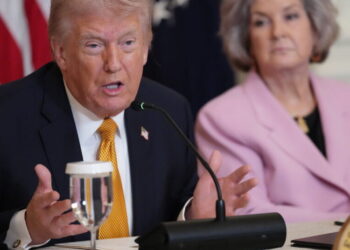
But Republicans in the Florida House of Representatives refused to take up the bill because of President Trump. Mr. Trump has visibly positioned himself as pro-A.I., signing executive orders to protect the tech industry and threatening states that try to regulate the technology. In recent weeks, the White House has communicated to state legislators around the country that it is wary of states regulating A.I., while Mr. Trump has reiterated his support for the technology in public.
“The White House’s position on A.I., and the House’s position on A.I. have been pretty clear,” Daniel Perez, the Republican speaker of the Florida House, told reporters earlier this month. “We do believe that the federal government should take care of A.I.”
The divide among Florida Republicans reflects how Mr. Trump’s embrace of A.I. has driven a wedge into the party nationally. Some Republicans, like Mr. DeSantis, are fearful of the technology’s ability to potentially steal jobs and push up energy prices. But Mr. Trump has made clear that A.I. companies should have mostly free rein in a global race to dominate the technology.
The split poses a challenge to the Republican Party’s Trump-era coalition, which includes billionaire tech leaders as well as social conservatives and economic populists who worry about the technology’s harms.
Some Republican politicians, like Senators Josh Hawley of Missouri and Marsha Blackburn of Tennessee, have been skeptical of the tech industry’s A.I. ambitions. Others, like Secretary of State Marco Rubio and Senator Ted Cruz of Texas, have fashioned themselves as champions of the technology.
“I don’t think the Republican Party has a consensus, that’s for sure,” said Evan Swarztrauber, a Republican tech strategist.
Their infighting has taken on new significance ahead of the midterm elections, when the party will try to maintain its control of the U.S. House and multiple state governments. Republicans are scrambling to hone their message about a fast-evolving technology that could transform voters’ lives, from their jobs to their electricity bills.
Mr. Trump has made his views on A.I. known since he took office. He signed a series of executive orders last year to promote the industry’s growth. In December, he signed another executive order that established a task force to sue states over laws that the attorney general deems are unlawful or “pre-empted by existing federal regulations.”
But as the midterm elections approach, Mr. Trump has tacitly acknowledged some A.I. concerns from his party.
His December executive order targeting state A.I. rules also called for creating “minimally burdensome” guidelines for regulating the technology federally. As a result, the White House is developing a proposal for federal A.I. rules that would narrowly focus on topics like children’s safety and transparency, according to two people with knowledge of the efforts who spoke on condition of anonymity to discuss private conversations.
This month, Mr. Trump convened top executives from Meta, Google and other tech companies, who promised to pay for the power behind their data centers. Data centers have been widely perceived to have driven up electricity prices because of how much energy they consume, as the cost of living becomes a central issue in the midterms.
“It is the policy of the Trump administration to sustain American A.I. dominance to protect our national security and ensure we remain the world’s leading economy,” said Liz Huston, a White House spokeswoman.
Mr. DeSantis’s office declined to make him available for an interview. A spokeswoman for the Republican National Committee, which has called for the revocation of Biden administration A.I. rules, declined to comment.
In Florida, Republicans hold supermajorities in the House and Senate, making the state a microcosm for national G.O.P. politics.
The debate in the state over A.I. kicked off in December at a Central Florida retirement destination called The Villages. There, Mr. DeSantis, who lost the Republican primary for president to Mr. Trump in 2024, introduced his A.I. Bill of Rights, which he said was essential to protecting Floridians.
“You want technologies that enhance our way of life, not supplant our way of life,” Mr. DeSantis said.
In January, state legislators convened in Tallahassee, Fla., for their annual 60-day session to pass new laws, effectively setting a deadline for the bill’s passage.
Mr. DeSantis had already received support from some Democrats and Republicans on the idea of regulating A.I. and data centers. But Mr. Perez, the House speaker who is closely aligned with Mr. Trump, was opposed to the bill.
It did not help that Mr. DeSantis had lost some sway within his party since his tenure ends in January because of term limits.
As weeks went by with little action, Mr. DeSantis held public events featuring A.I. skeptics to rally support among lawmakers.
During one round-table discussion, Mr. DeSantis had a mother describe how her child had tried to take his own life after conversations with a chatbot. Max Tegmark, a professor at the Massachusetts Institute of Technology,said A.I. should be regulated like drugs or food safety.
Mr. DeSantis’s bill gained enough traction that the State Senate this month passed a narrower version of it focused on protecting children. (Mr. Trump’s December executive order said that the administration’s proposal for federal A.I. rules would not pre-empt legal state laws related to child safety.)
State Senator Thomas J. Leek, the Republican who sponsored the Senate version of the bill, said in an interview that he hoped his legislation might be taken up this year. Lawmakers plan at least one special session in April.
On Friday, Mr. DeSantis won a victory as the Legislature passed a separate bill regulating how data centers use water and power. The bill prohibits water management authorities from issuing permits to data centers that could harm water resources. It also requires data centers to bear the “full cost” of needed electricity, without raising consumer rates.
“We’re the first state in the country to protect ratepayers against a hyperscale data center,” Mr. DeSantis said at an event in Jacksonville, Fla., on Friday, praising the bill’s final passage. “I don’t even know that they’re going to do it in Florida, but what we can’t have is seeing people’s rates go up because they don’t have enough power to go around.”
Still, the legislative session came to a close without the House approving a version of the A.I. Bill of Rights.
The Florida debate over A.I. is already moving to the Republican primary to replace Mr. DeSantis as governor.
U.S. Representative Byron Donalds, the Trump-endorsed candidate who polls show leading the race, has been supportive of building data centers in the state.
“I’m not anti-data center,” he said at an event earlier this year. “I’m pro having a plan.”
Leading the Future, a super PAC funded by a major A.I. investor and one of the founders of OpenAI, announced this year that it would spend $5 million to support Mr. Donalds’s campaign. Zac Moffatt, the longtime Republican operative who helps to lead the PAC, did not respond to a request for comment.
Other candidates for governor have criticized data centers as a drain on Florida’s resources and A.I. as risky for children.
The fracturing of the Republican Party over A.I. is expected to continue into the 2028 presidential primaries.
Mr. Swarztrauber, the Republican strategist, said a number of possible Republican candidates for president have begun staking out disparate positions on A.I., including Mr. DeSantis, Mr. Hawley and Mr. Cruz.
“Trump is a larger-than-life figure that can hold together disparate coalitions,” Mr. Swarztrauber said. “One of the big questions is: If he’s not there to hold together a coalition with very different views on A.I., then where does the party go?”
David McCabe is a Times reporter who covers the complex legal and policy issues created by the digital economy and new technologies.
The post How Trump Drove a Wedge Between Florida Republicans Over A.I. appeared first on New York Times.