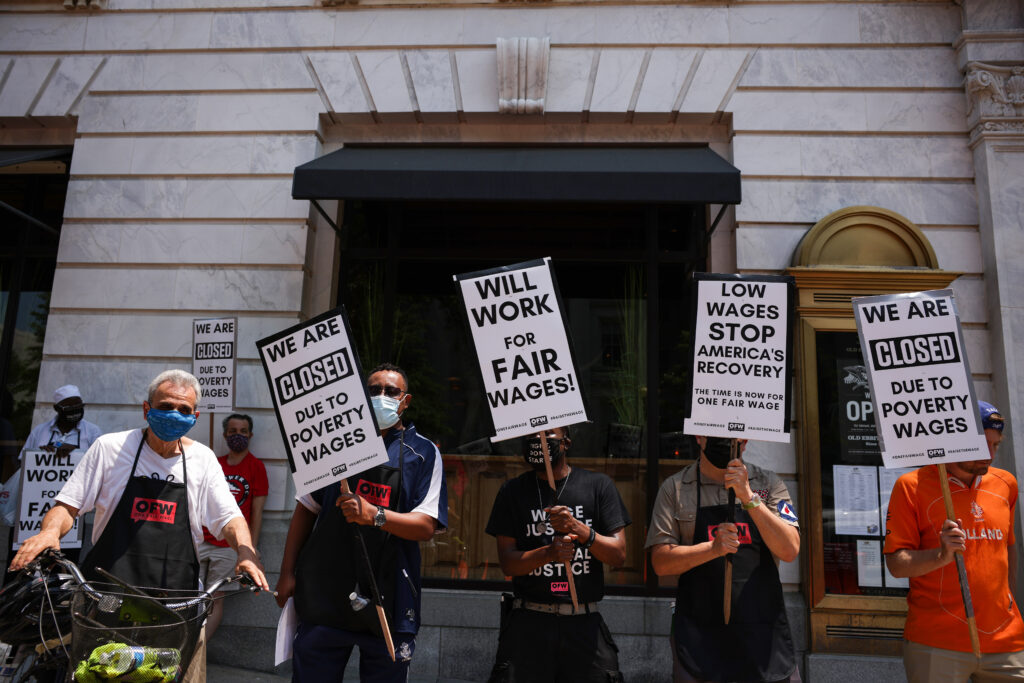
It looks increasingly likely that D.C. will hold a referendum in November on raising the minimum wage for all workers to $25 an hour. If it passes, the policy would be even worse for affordability than more incremental increases enacted in recent years.
The D.C. Board of Elections has advanced the referendum effort, which is being orchestrated by union bosses and the New York-based group One Fair Wage. The proposition, which would also phase out the tipped minimum wage by 2031, won’t appear on the ballot without enough signatures. Yet it’s expected to clear that hurdle.
This isn’t the first time D.C. voters have been asked to weigh in on the minimum wage, and D.C.’s base hourly pay of $17.95 is already higher than all 50 states.
A 2022 ballot measure was meant to increase the minimum wage for tipped workers $2 every year until it reached the standard minimum wage in 2027. This led to the loss of about 925 jobs and an average of two restaurant closures per week.
To mitigate the damage to the hospitality industry, the D.C. Council froze the base pay for the tipped minimum wage at $10 until this summer, when it will continue to rise. That compromise passed 7 to 5 and divided the two leading Democratic candidates for mayor: Then-council member Kenyan McDuffie supported it. Socialist Janeese Lewis George opposed it. Neither campaign responded when asked about this year’s likely referendum.
Companies are already moving toward more automation, and this will speed up the process. An academic paper published last month shows how increases in minimum wages raise the likelihood of robot adoption in manufacturing. From 1992 to 2021, a 10 percent increase in the minimum wage increased robot adoption by roughly 8 percent.
Natural competition between firms in a healthy business environment will always do more to raise wages than government mandates. Lowering taxes and cutting red tape would help workers far more. Or D.C. can head in the same direction as New York City, where Mayor Zohran Mamdani (D) is trying to raise the minimum wage to $30 an hour at the same time that his allies on the city council complain that grocery stores have cut back on the number of checkers.
Five Democratic council members in the Big Apple sponsored legislation last week to crack down on self-checkout lines by requiring a human cashier for anyone buying more than 15 items. They also want to force retailers to have a worker present for every three self-checkout machines. “This bill is about protecting good jobs,” said Councilwoman Amanda Farías (D-Bronx). Forcing store closures or dramatic price hikes is a strange way to protect workers.
The post Hiking the minimum wage puts robots over people appeared first on Washington Post.