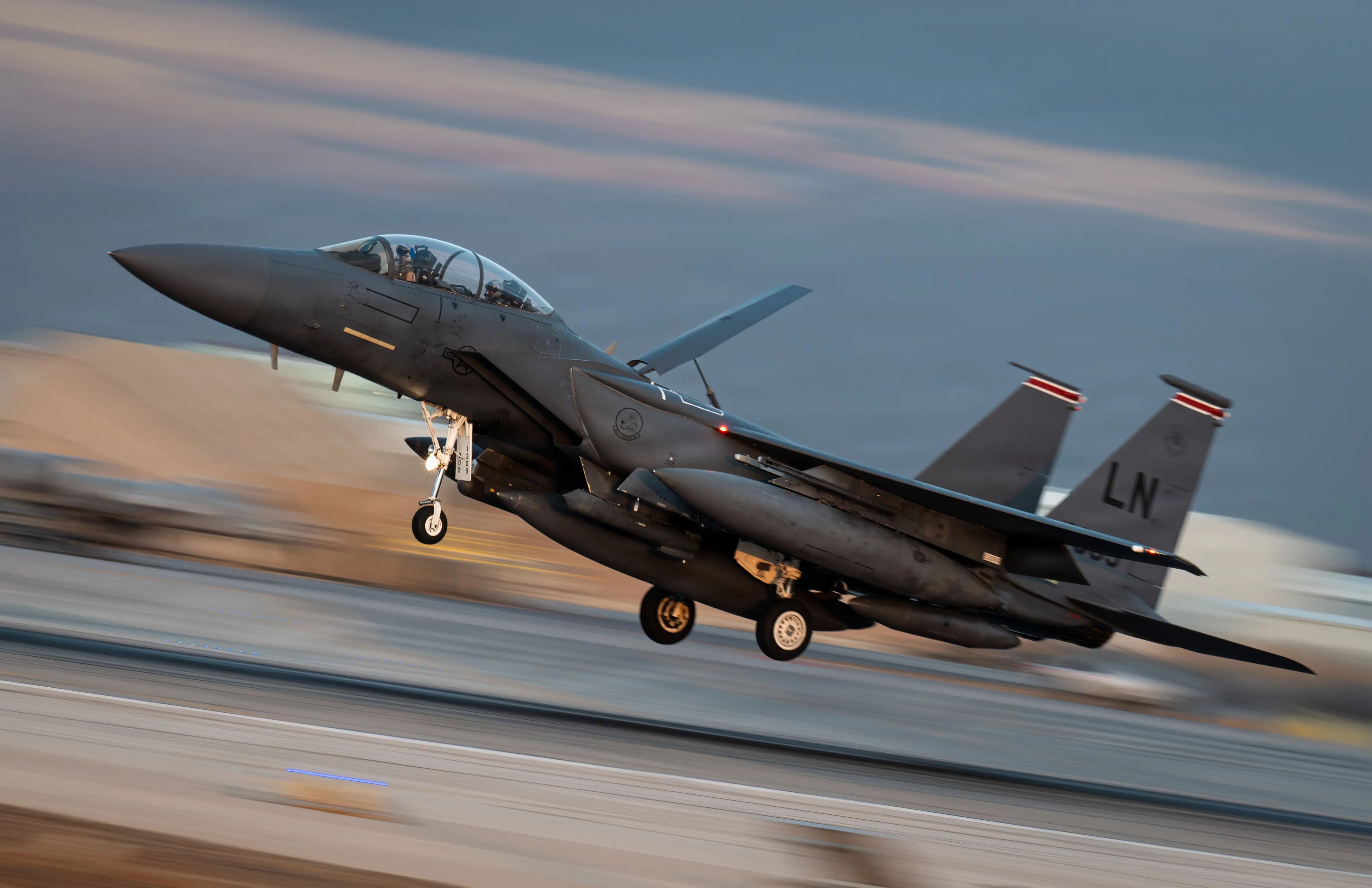
A U.S. Air Force F-15E Strike Eagle aircraft prepares to land at a base in the Middle East, Jan. 18, 2026. The F-15E Strike Eagle is a dual-role fighter designed to perform air-to-air and air-to-ground missions at low altitude, day or night and in all weather. U.S. Air Force photo by Senior Airman Jonah Bliss
The US Air Force deployed F-15E Strike Eagles during Operation Epic Fury against Iran.
The fighter jets are designed for air-to-air and air-to-ground combat in all weather, day or night.
Kuwait mistakenly shot down three F-15E Strike Eagles in a “friendly fire” incident, CENTCOM said.
F-15E Strike Eagles, fighter jets designed for air-to-air and air-to-ground combat, are usually a dominating force in the skies.
When three F-15E Strike Eagles were mistakenly shot down by Kuwait during Operation Epic Fury, it brought renewed attention to one of the Air Force’s fastest, most versatile aircraft.
Here’s a closer look at the F-15E Strike Eagle, an advanced aircraft the US is using to destroy Iran’s missile arsenal and drone bases from the skies above Iran.
The F-15E Strike Eagle has been in service in the US Air Force for nearly 40 years.
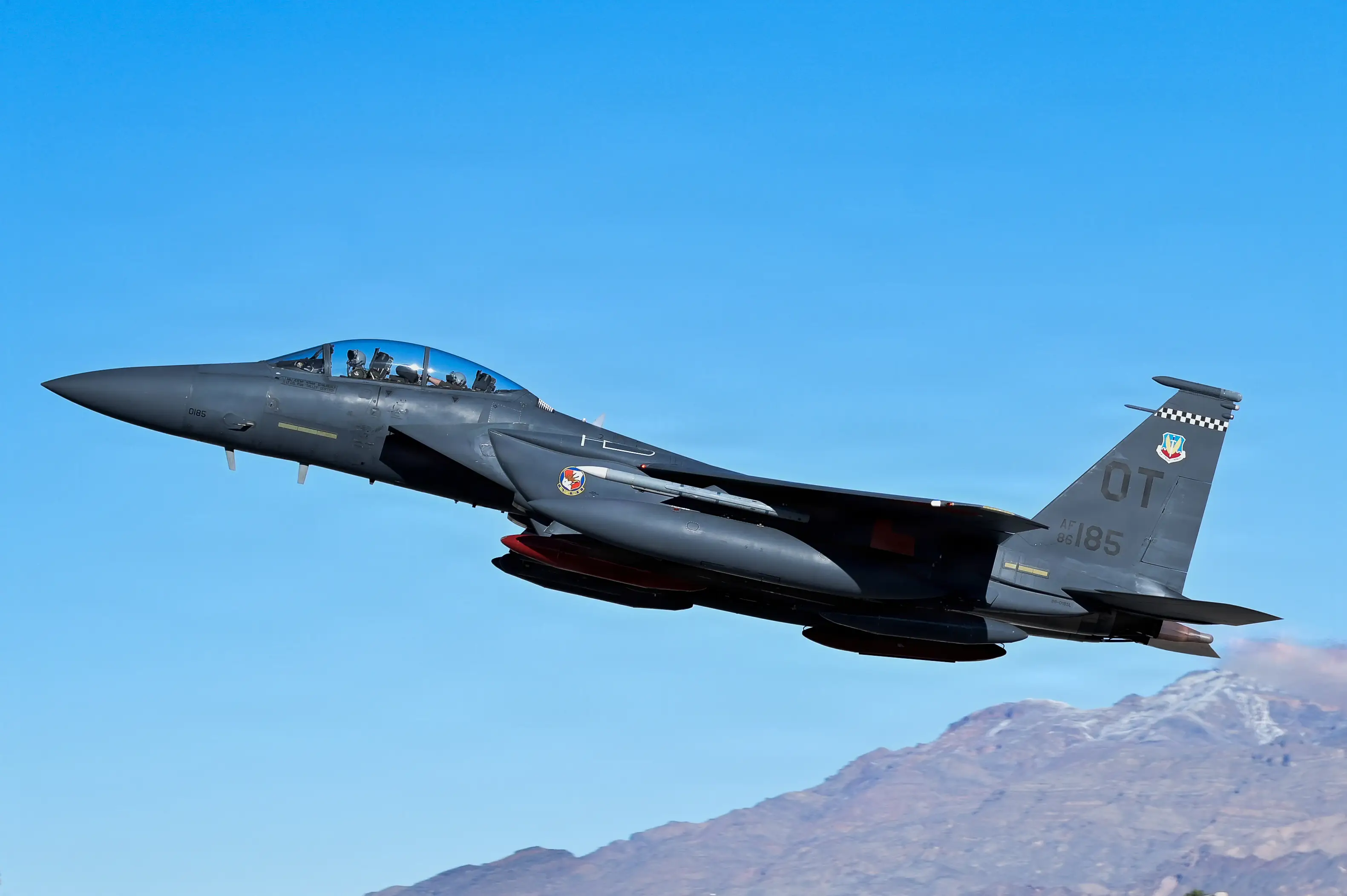
An F-15E Strike Eagle, aircraft assigned to the 40th Flight Test Squadron, Eglin Air Force Base, Florida, takes off from Nellis AFB, Nevada, Feb. 20, 2026. The 40th FLTS conducts developmental flight tests for fighter aircraft, focusing on weapon systems, software upgrades, and avionics. U.S. Air Force photo by Airman 1st Class Jasmine Thomas
The first F-15A model flew in 1972, and the first F-15Es were produced in 1988, according to the US Air Force.
It’s the fastest crewed aircraft in the US Air Force.
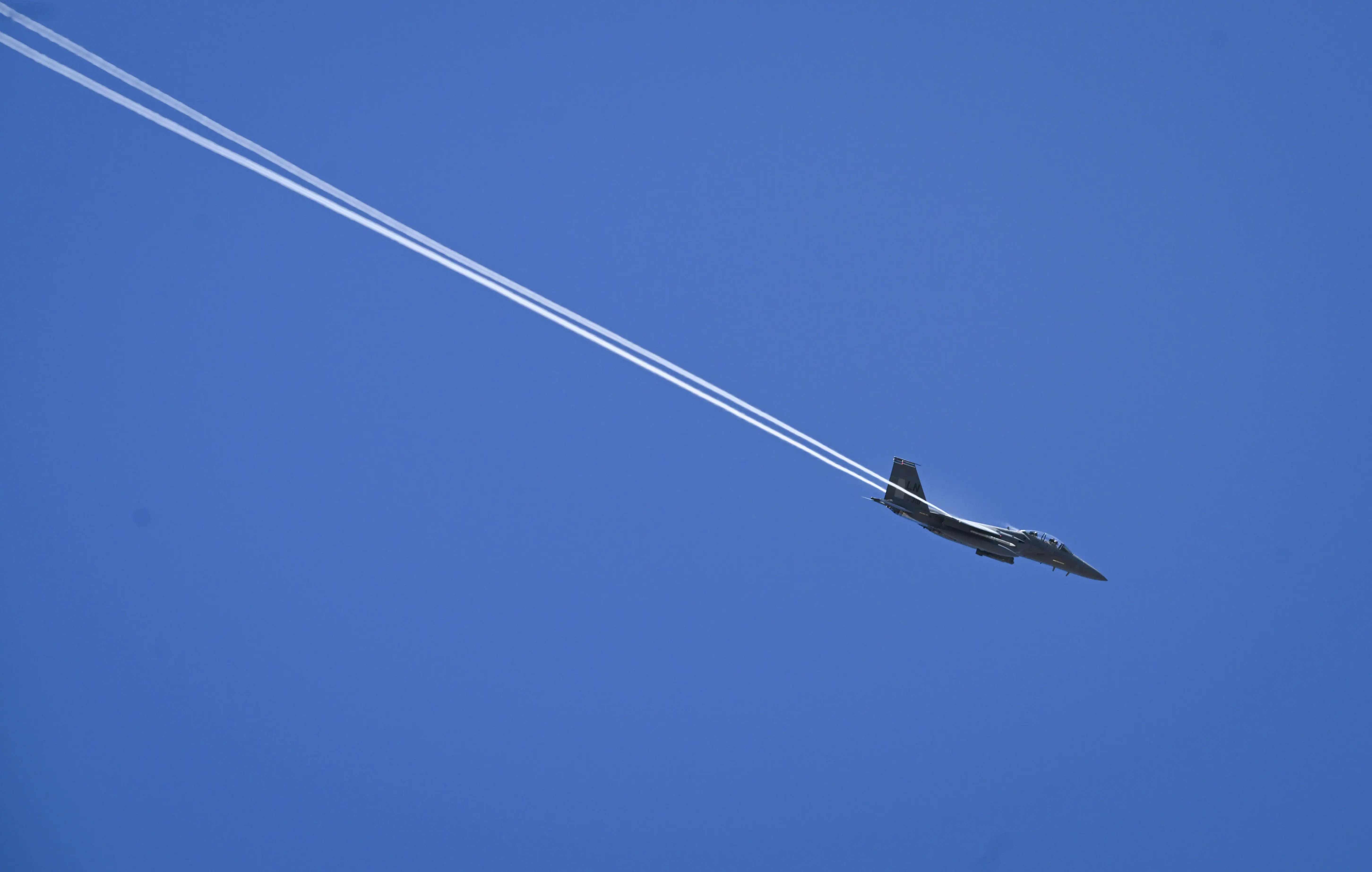
A U.S. Air Force F-15E Strike Eagle assigned to the 48th Fighter Wing flies during Exercise Ocean Sky 25 at Gando Air Base, Gran Canaria, Spain, Oct. 20, 2025. This annual exercise is designed to increase the operational proficiency of pilots, aircrew and air defense personnel through realistic, high-tempo air-to-air missions, supporting continued efforts to strengthen partnerships, alliances and combat readiness. U.S. Air Force photo by Staff Sgt. Elizabeth Davis
The air-to-air and air-to-ground attack aircraft can fly at 1,875 miles per hour, or 2.5 times the speed of sound.
The F-15E Strike Eagle’s high thrust-to-weight ratio enables it to accelerate during vertical climb.
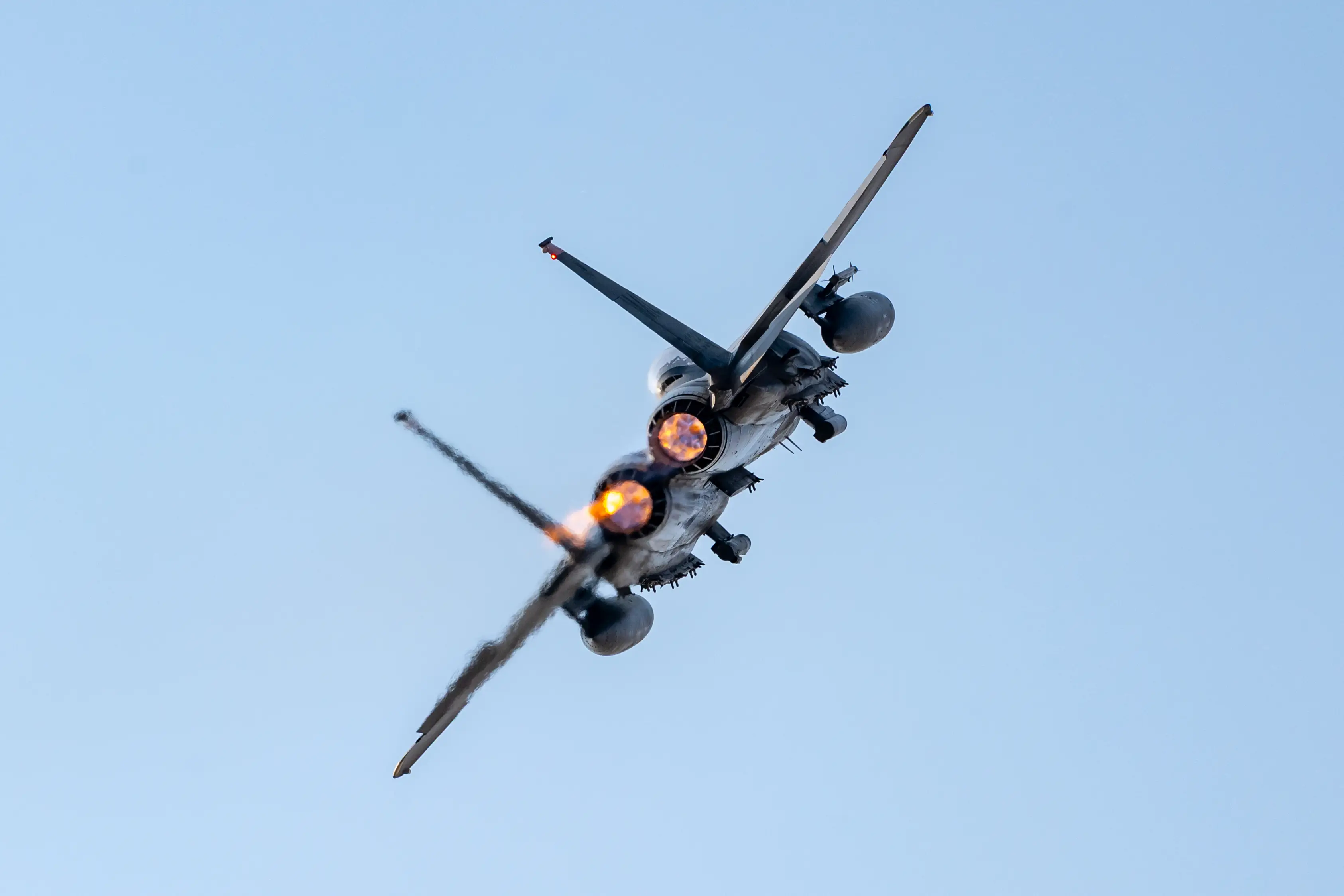
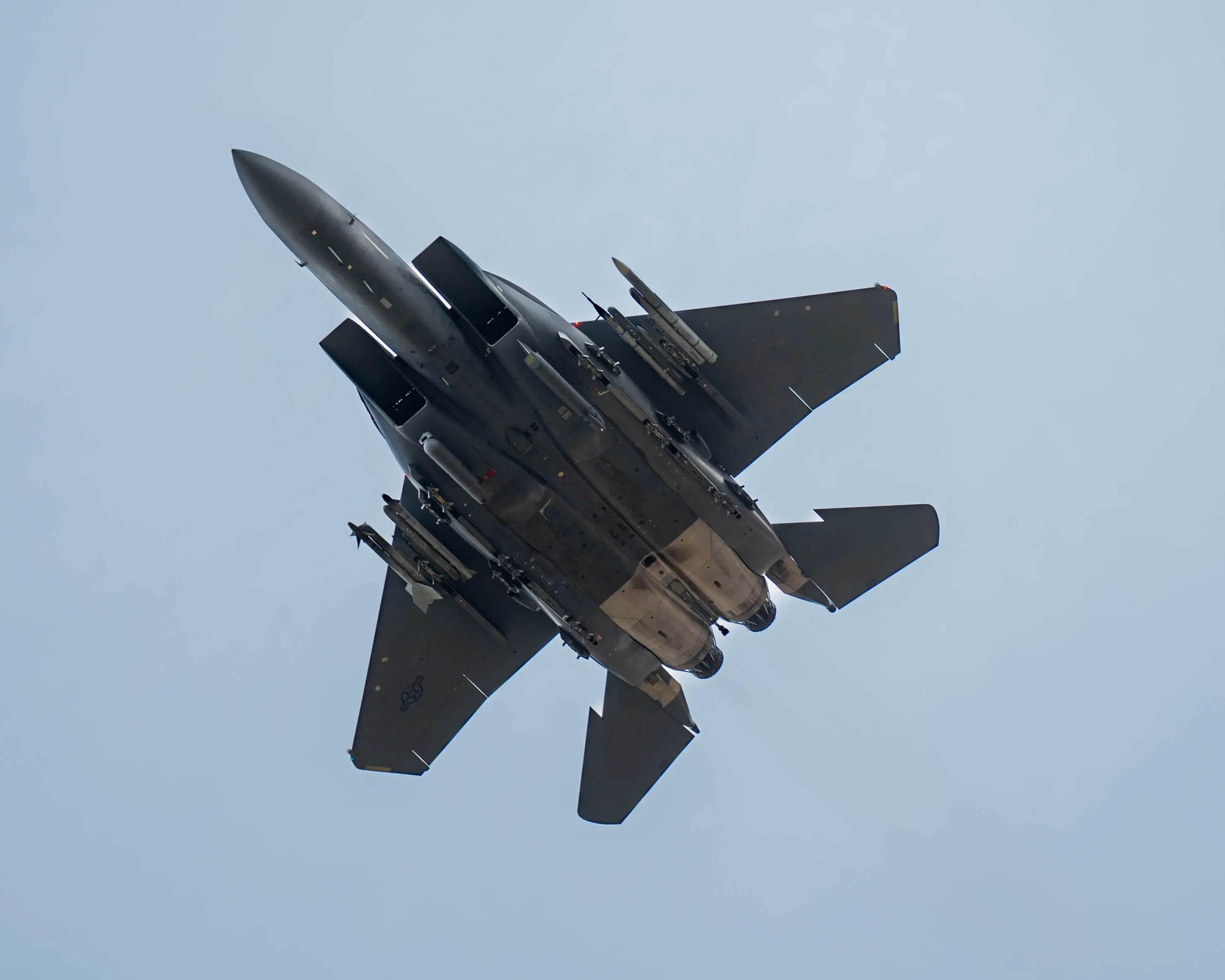
A U.S. Air Force F-15E Strike Eagle turns left in the air during exercise Marauder Shield 26.1 within the U.S. Central Command area of responsibility, Nov. 11, 2025. Marauder Shield 26.1 was focused on enhancing counter-Unmanned Aircraft Systems capabilities, fighter integration, improving command and control, and fostering closer cooperation between the U.S. and Kuwait, ensuring a more secure and stable region. U.S. Air Force photo by Staff Sgt. Tylin Rust
The high thrust-to-weight ratio also allows the F-15E Strike Eagle to execute tight turns without sacrificing speed. It has two Pratt & Whitney F100 engines, each producing over 23,000 pounds of thrust.
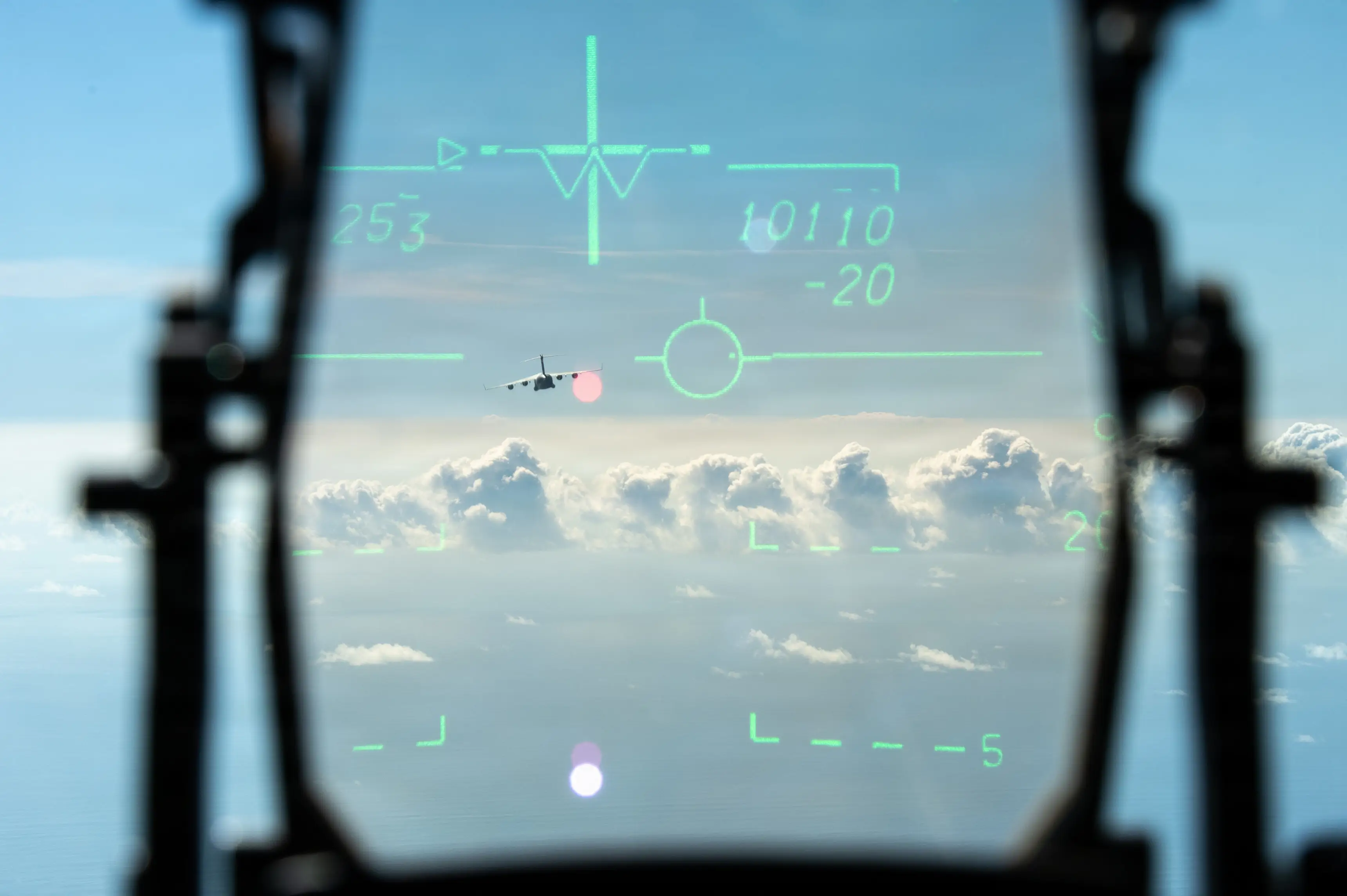
Another distinguishing capability is the plane’s head-up display, which projects flight and tactical information directly on the windscreen.
A U.S. Air Force C-17 Globemaster III aircraft, operated by the 204th Airlift Squadron, Hawaii Air National Guard, is captured through the head-up display of another C-17 during a training sortie Dec. 1, 2025, off the coast of Hawaii.The 204th Airlift Squadron operates under the Total Force Initiative, with aircraft crewed and maintained jointly by Hawaii Air National Guard Airmen of the 154th Wing and active-duty Airmen of the 15th Wing. U.S. Air National Guard photo by Tech. Sgt. John Linzmeier
Pilots can track and attack targets, check the status of weapons, and see other tactical and flight information without taking their eyes off the windscreen.
The fighter jet also includes a low-altitude navigation and targeting infrared for night (LANTIRN) system.
A U.S. Air Force F-15E Strike Eagle assigned to the 492nd Fighter Squadron takes off from Royal Air Force Lakenheath, England, June 27, 2023. F-15 training sorties are conducted by 48th Fighter Wing members to ensure they stay prepared and efficient to provide a strategic force whenever they are called upon for a mission. (U.S. Air Force Photo by Airman 1st Class Olivia Gibson) U.S. Air Force Photo by Airman 1st Class Olivia Gibson
The LANTIRN system allows the planes to fly in any weather and attack ground targets at low altitudes. The system consists of two pods, a navigation pod and a targeting pod, mounted under the plane.
F-15E Strike Eagles can carry both nuclear and conventional weapons.
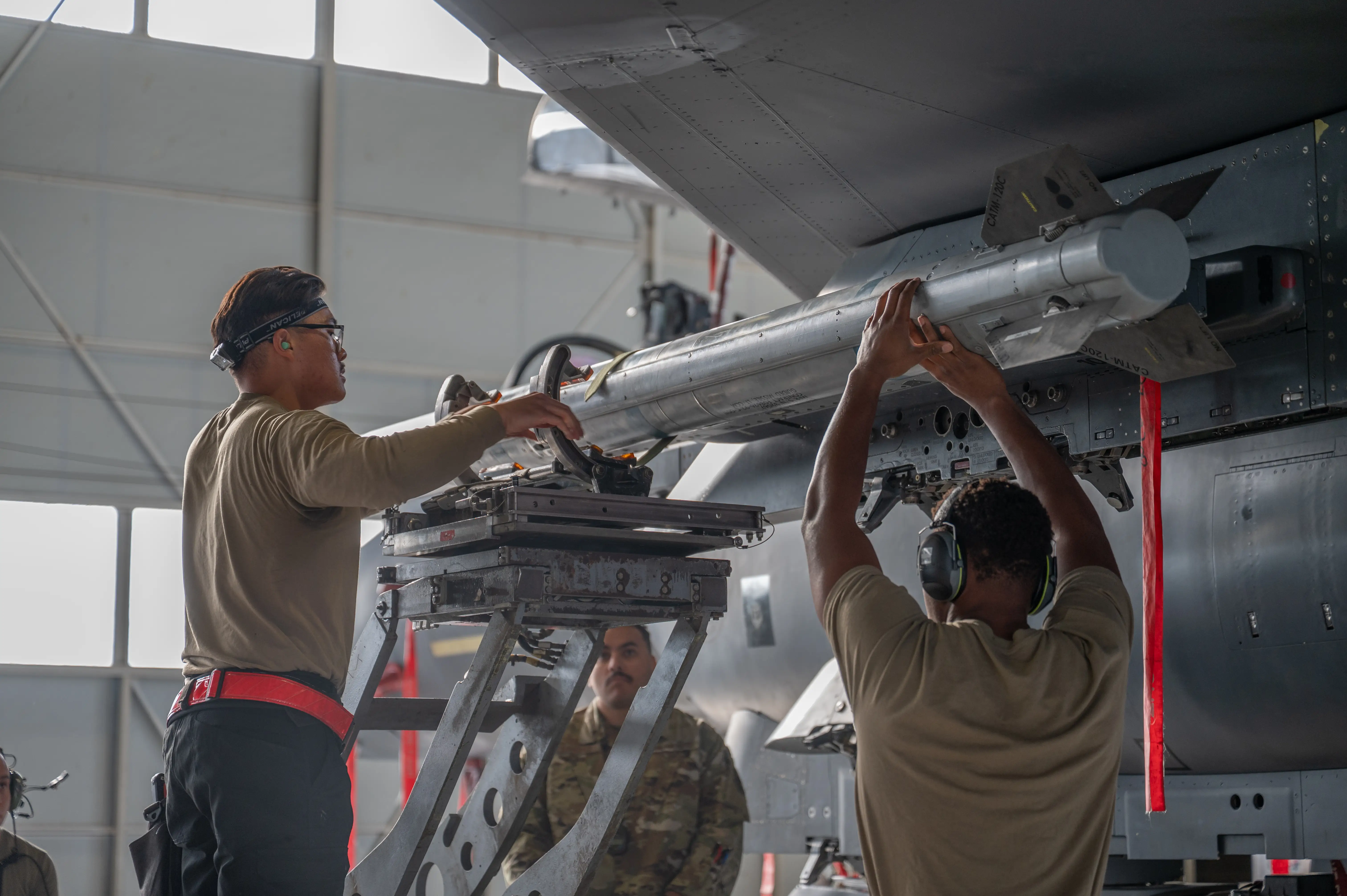
U.S. Air Force Staff Sgt. Sean Policarpio and Senior Airman Angelo Val, 389th Fighter Generation Squadron load crew members, load an AIM-120 missile onto an F-15E Strike Eagle aircraft at Mountain Home Air Force Base, Idaho, Oct. 24, 2025. Weapons load crews work together to ensure munitions are safely loaded and mission ready for F-15E Strike Eagle operations. Airman 1st Class Donovin Watson/366th Fighter Wing
Its armament includes an internally mounted 20-millimeter gun with 500 rounds of ammunition, AIM-9 Sidewinder missiles, and AIM-120 AMRAAMs, an acronym for the radar-guided Advanced Medium-Range Air-to-Air Missiles.
The F-15 also regularly carries ground attack weapons like the Joint Direct Attack Munition, or JDAM, a kit that adapts an unguided munition into a “smart” bomb with fins and GPS guidance.
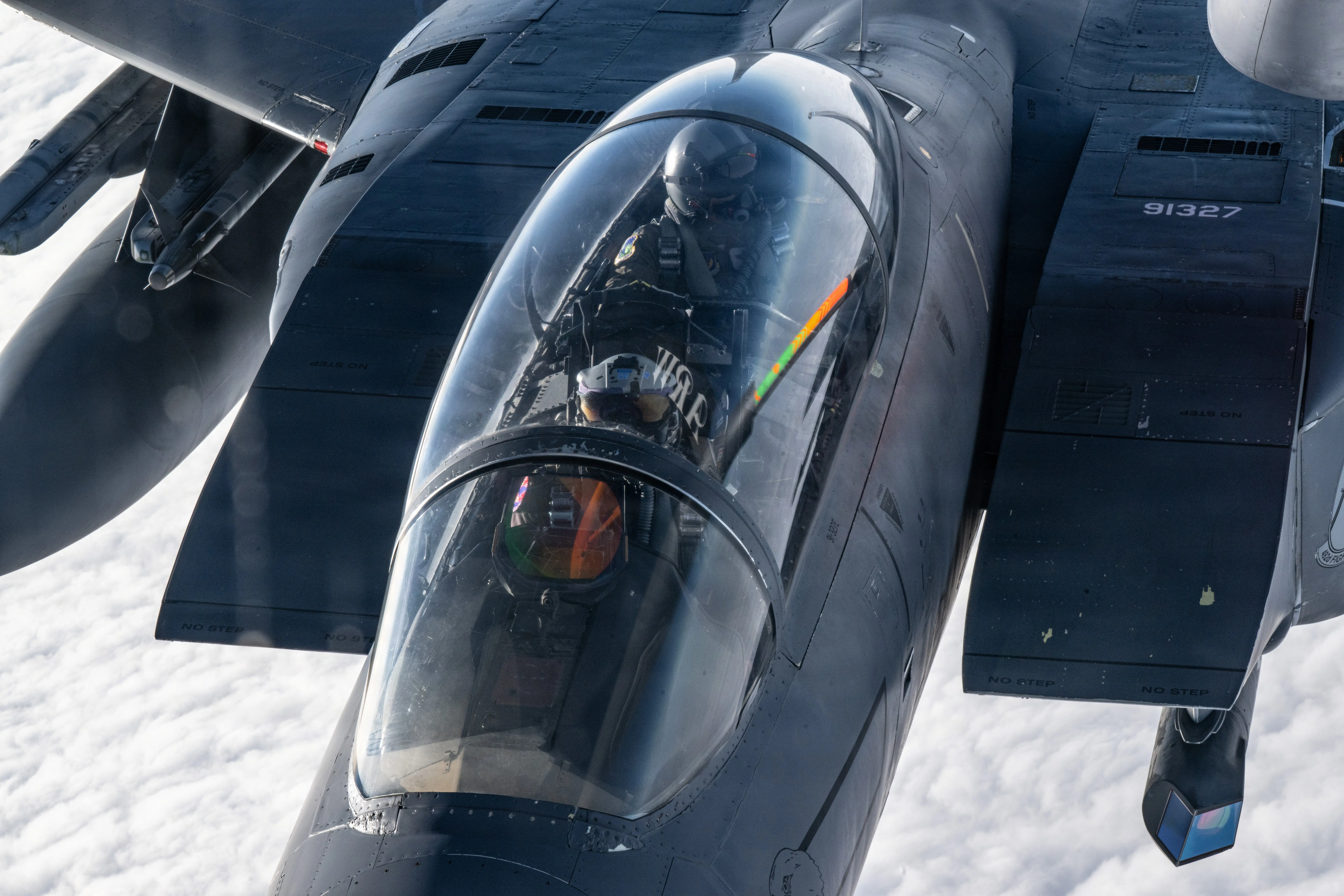
F-15E Strike Eagles are flown by a pilot and a weapons systems officer.
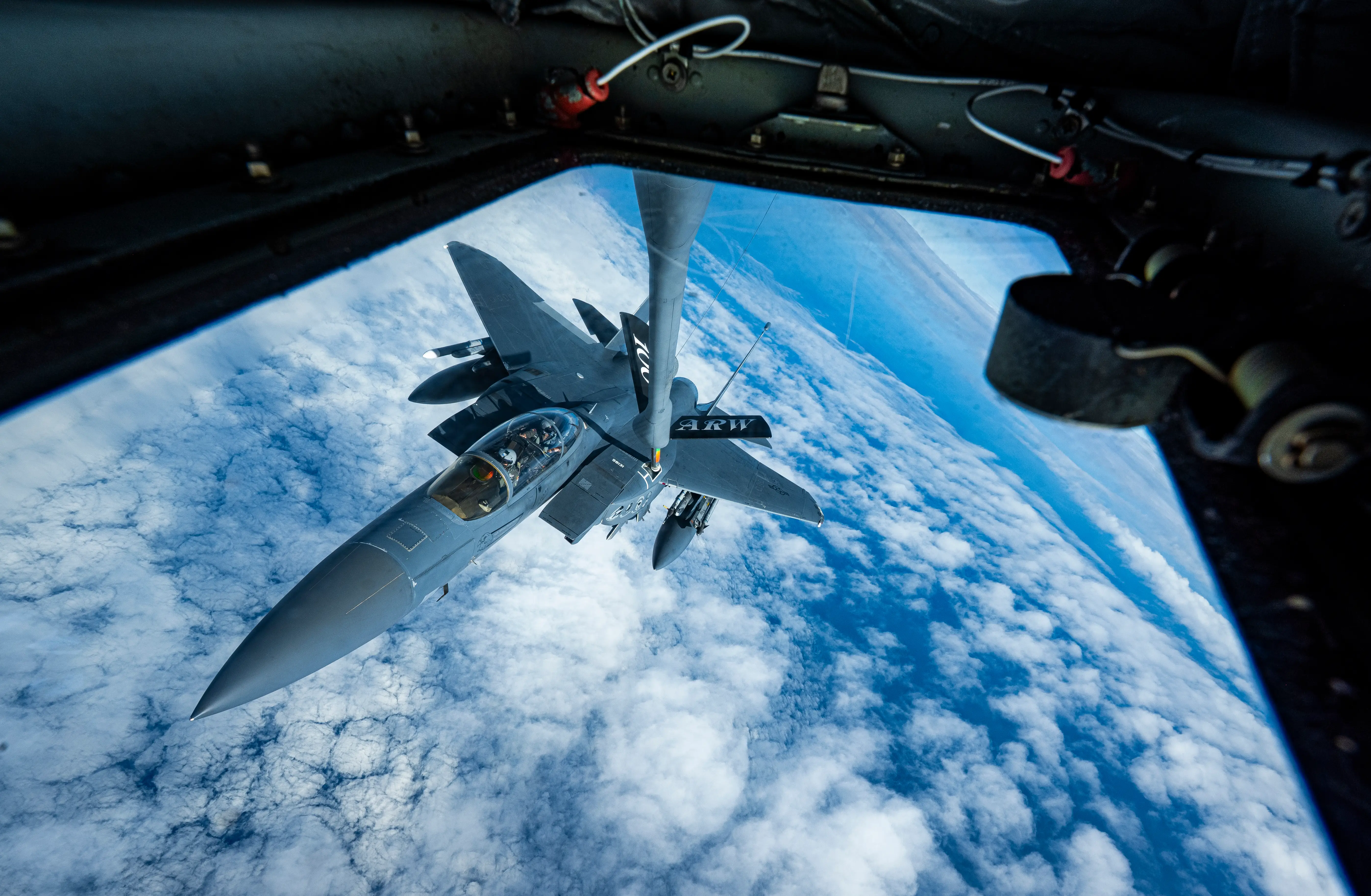
A U.S. Air Force KC-135 Stratotanker assigned to the 100th Air Refueling Wing fuels an F-15E Strike Eagle assigned to the 48th Fighter Wing during an aerial refueling mission over the North Sea as part of Exercise Point Blank, Feb. 2, 2026. Point Blank is a recurring exercise initiative, designed to increase tactical proficiency of U.S., U.K. Ministry of Defense and other NATO forces. U.S. Air Force photo by Airman 1st Class Aidan Martínez Rosiere
The weapon system officer sits directly behind the pilot, and closely manages the plane’s sensors and weapons.
Two variants of the F-15 are single-seaters: the F-15A and F-15C.
The planes can fly 2,400 miles without refueling, and can be refueled in flight.
A U.S. Air Force F-15E Strike Eagle receives in-flight refueling from a 100th Air Refueling Wing KC-135 Stratotanker during exercise Ocean Sky, over the Atlantic Ocean, Oct. 15, 2025. The Stratotanker provides air refueling capabilities, enhancing the Air Force’s ability to accomplish its primary mission of global reach. U.S. Air Force photo by Senior Airman Cody J. A. Mott
F-15E Strike Eagles have a fuel capacity of 35,550 pounds.
The fighter jets can be refueled in flight by KC-135 Stratotanker aircraft, which Boeing developed from its “Dash 80” prototype in the 1950s.
KC-135s were also deployed to Israel as part of Operation Epic Fury. One crashed in western Iraq on Thursday, killing six US service members. United States Central Command said the circumstances of the crash were under investigation, but it “was not due to hostile fire or friendly fire.”
Each F-15E cost $31.1 million to produce in 1998, according to US Air Force figures. That would be around $62.3 million when adjusted for inflation.
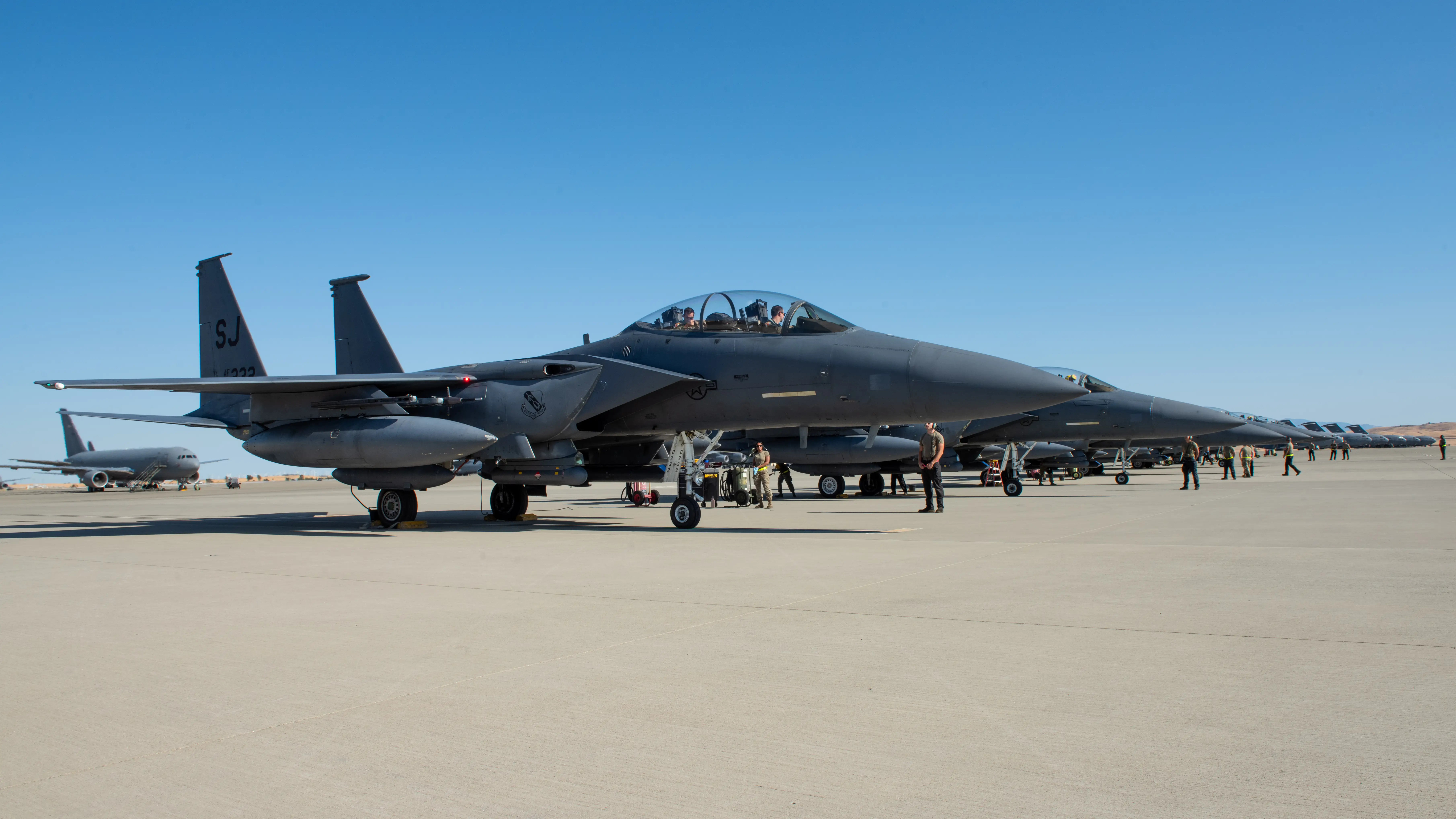
U.S. Air Force F-15E Strike Eagles assigned to the 336th Fighter Squadron are parked on the flight line during Exercise Bamboo Eagle 24-3 at Travis Air Force Base, California, Aug. 3, 2024. During Bamboo Eagle, Air Mobility Command assets supported warfighters implementing all-domain combat-power generation from disaggregated basing locations throughout the western part of the U.S., along with distributed command and control, agile logistics and tactical air-to-air refueling. U.S. Air Force photo by Kenneth Abbate
The newest version of the aircraft is the F-15EX Eagle II, which features more advanced controls and upgraded engines.
On March 1, Kuwait’s air defenses mistakenly shot down three American F-15Es during Operation Epic Fury in what US Central Command described as a “friendly fire incident.”
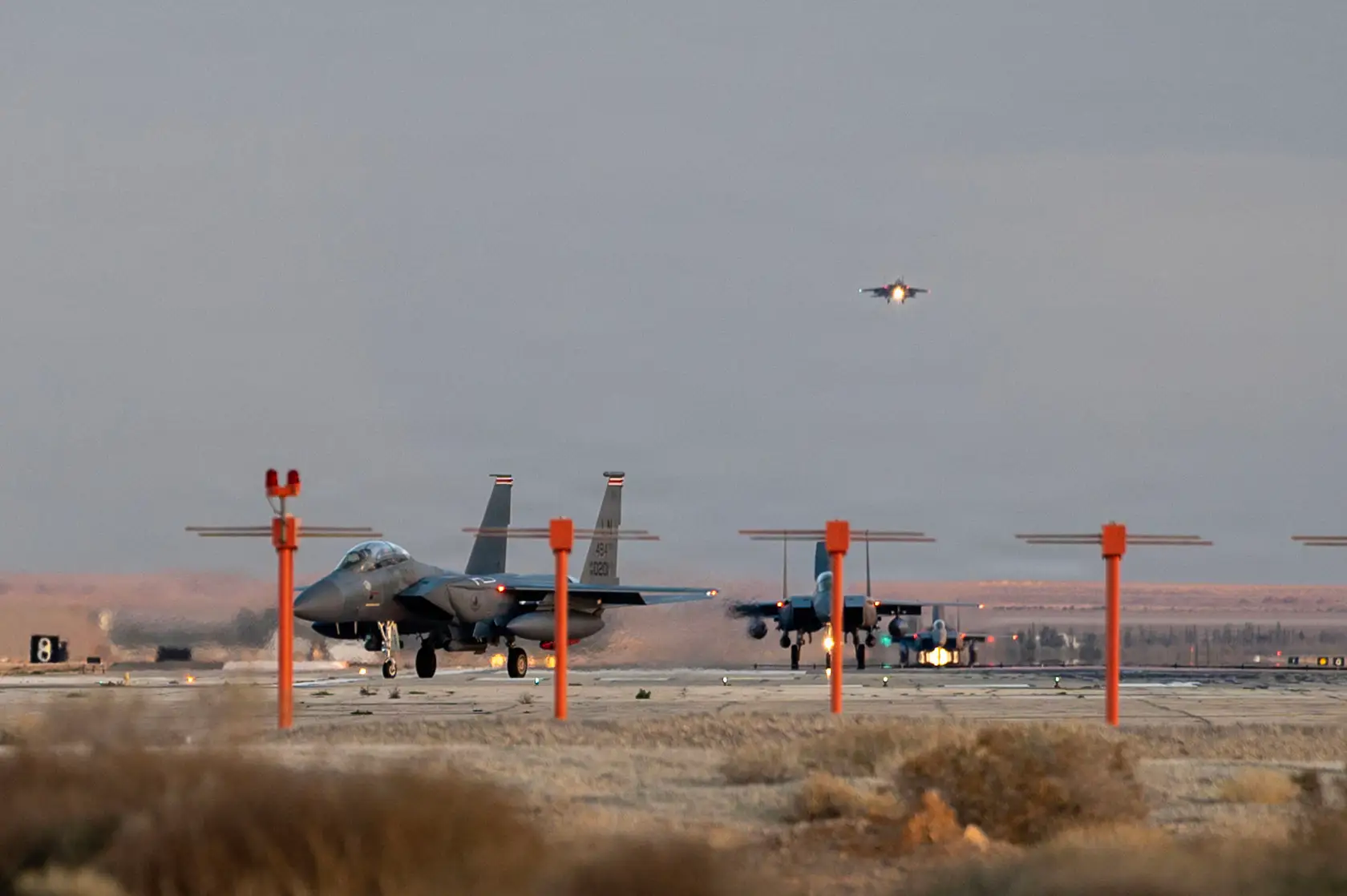
U.S. Air Force F-15E Strike Eagle aircraft taxi off of the runway after landing at a base in the Middle East, Jan. 18, 2026. The U.S. maintains a highly agile fighting force, leveraging the most advanced capabilities to support the long-term security and stability of the region. U.S. Air Force photo by Senior Airman Jared Brewer
All six crew members ejected safely. The incident is under investigation.
“Kuwait has acknowledged this incident, and we are grateful for the efforts of the Kuwaiti defense forces and their support in this ongoing operation,” CENTCOM said.