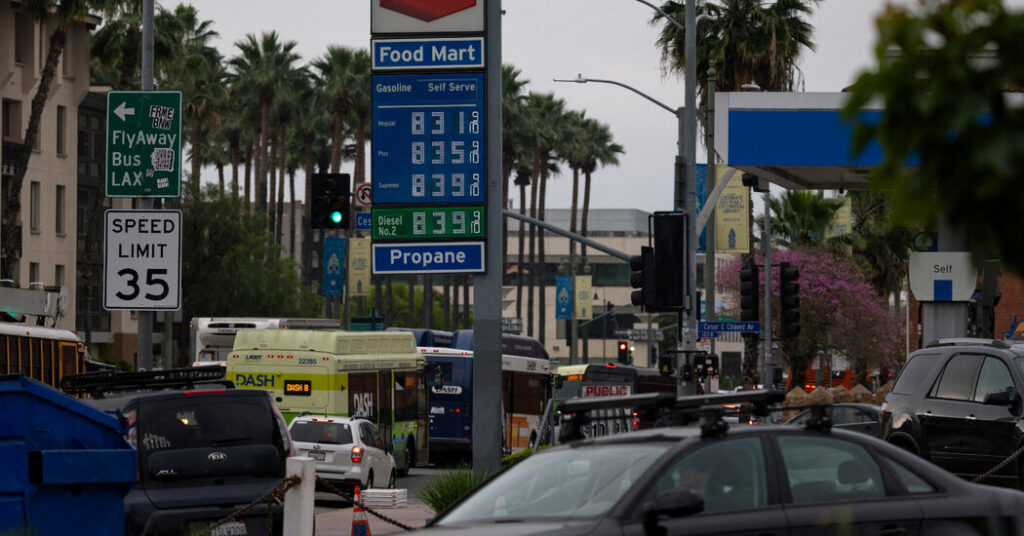
The price of gasoline in the United States rose again on Monday, to an average of $3.72 a gallon, according to data from the AAA motor club.
That’s an increase of almost 25 percent since the United States and Israel attacked Iran, inciting a conflict that has engulfed oil production, storage and shipping from the Persian Gulf to the rest of the world.
In financial markets, concern that oil shipments from the region won’t resume soon has lifted the price of crude oil — the largest factor in the cost of gasoline — about 40 percent in the same period.
The gains show just how vital the Persian Gulf region is to global energy supplies — and how interconnected global energy markets are, even if the United States produces plenty of oil.
Here’s what you need to know.
Who sets gas prices, and how are they determined?
In November the cost of crude oil accounted for about 50 percent of the price of a gallon of regular gasoline, according to the most recent estimate from the Energy Information Administration.
Refining and distribution by big energy companies and taxes account for most of the rest, which is why prices vary regionally. Station owners have a little wiggle room to set the price they charge, usually just a few cents per gallon.
Why does a disruption in the Middle East affect U.S. drivers?
Oil, no matter where it comes from, is priced largely on global supply and demand. Prices can change quickly when supply is cut off by wars or weather, or if demand rises or falls.
The price that American refiners pay is underpinned by benchmarks set in the commodities markets. The two main ones are Brent and West Texas Intermediate, but there are many different oil prices across the globe — determined by where it’s produced and how far into the future it’s expected to be delivered.
By any measure, oil prices have surged: West Texas Intermediate futures are more than 40 percent higher than before the attacks began.
“When there’s a supply disruption in the Middle East, that raises prices for every barrel of oil in the world,” said Christopher Knittel, associate dean for climate and sustainability at M.I.T. “Those price increases then trickle down to products that use oil, gasoline being the most relevant one.”
But isn’t the United States the world’s largest oil producer?
Yes, but not all American-produced oil can be easily used by American refiners. The United States is a net exporter of petroleum products, which include gasoline, diesel, jet fuel and propane, but it still imports millions of barrels of crude oil.
In December, the United States imported about 200 million barrels of crude oil, according to the Energy Information Administration. That same month, it exported more than 350 million barrels of petroleum products, including 128 million barrels of crude oil.
Fuel made from imported oil often winds up in U.S. gas stations. The type of oil produced in the United States tends to be higher-quality, so-called sweet oil, but domestic refineries are set up to handle heavy and sour oil. It is often more cost efficient to sell the sweet and buy the heavy.
It would be expensive and difficult to reconfigure refineries, said Willy Shih, an international trade expert at Harvard Business School.
Also, a federal law called the Jones Act requires goods shipped between U.S. ports to be carried on American-made and operated vessels, which can sometimes make it more efficient for refiners to import oil than moving it within the country.
Refineries in New Jersey, for example, might import oil from Algeria or Nigeria instead of buying it from Texas.
“You say, ‘Well, how can that make sense?’” Mr. Shih said. “Because that was the most efficient way of transporting it.”
Can the government drive down prices?
Energy experts generally say presidents have little control over oil prices, but the United States does have the Strategic Petroleum Reserve, which can hold up to 714 million barrels of crude.
Last week, the International Energy Agency, of which the United States is a member, announced that its members would release 400 million barrels of oil to ease supply constraints and calm markets. The agency’s executive director, Fatih Birol, said on Monday that the stockpiles can be a cushion for now, but “it is not a lasting solution.”
He added that the I.E.A. would still have over 1.4 billion barrels of oil reserves after the current release is completed.
What has the Trump administration said?
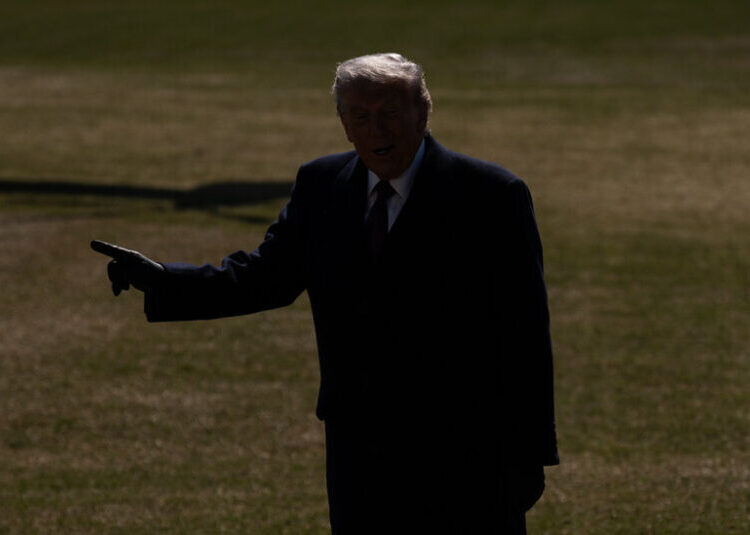
President Trump called on other nations to send warships to the Persian Gulf to escort tankers through the strait, but U.S. allies have so far responded coolly or refused.
The Trump administration has taken some steps to alleviate the pressure — promising to release oil reserves and lifting sanctions on Russian oil exports — but they’re not having a notable impact on oil prices.
Emmett Lindner is a business reporter for The Times.
The post America Is an Oil Exporter. Why Does a Mideast War Raise U.S. Gas Prices? appeared first on New York Times.