John Shelton is the vice president of policy at Advancing American Freedom.
In largely overlooked remarks delivered last year in Paris, Vice President JD Vance delivered a policy master class on the industrial promise of artificial intelligence and the conditions required for innovation to flourish.
“Now, at this moment, we face the extraordinary prospect of a new industrial revolution, one on par with the invention of the steam engine or Bessemer steel,” he said. “But it will never come to pass if overregulation deters innovators from taking the risks necessary to advance the ball.”
With his support for the Railway Safety Act, however, Vance has embraced precisely the kind of innovation-stifling regulations he decried in Paris on an industry that has long symbolized American progress and industrial dynamism.
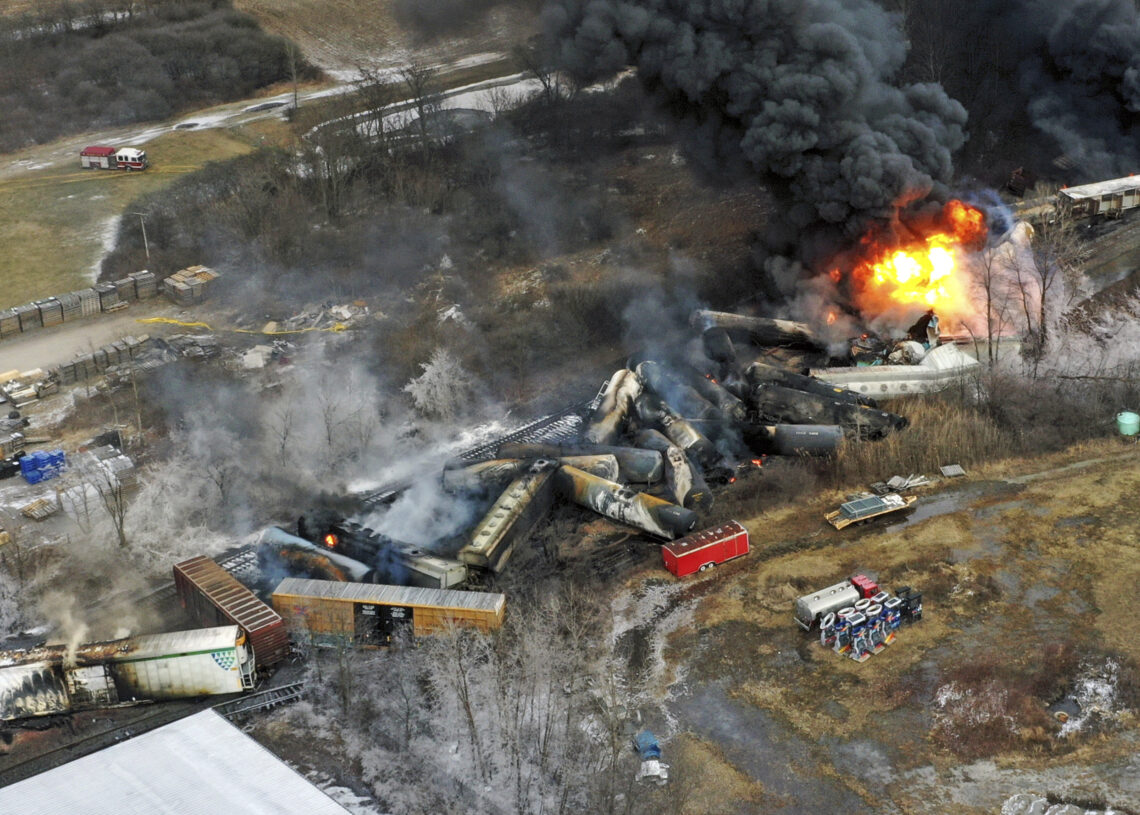
In the aftermath of the devastating 2023 derailment in his home state of Ohio, Vance argued as a senator that by passing the bill, “Congress has a real opportunity to ensure that what happened in East Palestine will never happen again.” Now, in part because of the vice president’s support, the White House is making a renewed push for the bill to become law.
From the great railroads that helped unite a continent to today’s innovators and entrepreneurs dreaming of a pneumatically powered “hyperloop,” trains have long occupied a central place in the American imagination. The Staggers Rail Act freed the railroads to live up to those expectations again, spurring competition and innovation by reducing burdensome regulations.
The results speak for themselves. In 1980, the year Staggers was enacted, there were 8,205 rail accidents, nearly one per hour. By the last full year of the first Trump presidency, that number had fallen to 1,675. This dramatic improvement came even as rail traffic has soared. The amount of rail freight that also moved by at least one other means grew from just under 9 million in 2000 to more than 13 million in 2020. Nearly 28 percent of all U.S. freight movement moves by rail.
The most significant gains in rail safety have come from technological advancement, not government regulation. The information age brought massive improvements in rail operations, including computer-aided dispatch, radio frequency identification monitoring and infrared wayside detectors.
The 21st century has accelerated this progress even further: “Positive train control” systems now integrate vast datasets to prevent accidents; light detection and ranging uses lasers to help detect structural stresses on tracks; and other emerging technologies increasingly allow railroads to identify problems before they become life-destroying and company-devastating catastrophes.
Vance cautioned his Paris audience that “the AI future is not going to be won by hand-wringing about safety.” And yet hand-wringing is precisely what the Railway Safety Act has always done.
Almost immediately after the 2023 derailment then-Sens.Vance (R) and Sherrod Brown (D) rushed to introduce the RSA’s package of new mandates. Some of these would codify rules that were first proposed by the Obama administration but were later withdrawn during the first Trump administration. Among them is a two-person minimum crew mandate, even though there were three crew members on board at the time of the derailment.
The bill, meanwhile, has never been brought to the floor of either chamber for a vote. And when the National Transportation Safety Board released its findings in 2024, it became clearer than ever that the RSA would not have prevented the accident. According to the agency’s report, “the derailment occurred because a bearing on a hopper car overheated and caused an axle to separate.”
While bearing-related incidents have trended down thanks to improving technology, simply mandating more hotbox sensors, as the legislation does, would not necessarily have made a difference in this case. The overheating bearing passed by multiple detectors without triggering a warning to the crew. When one of the hotbox sensors finally did alert the crew, it was too late.
Legislation that locks in today’s technology risks boxing out better technology in the future, even as it ensures higher costs, with safety improvements that are often marginal at best.
The East Palestine derailment was a genuine tragedy, and it is understandable that well-meaning federal officials would overreact. But the question is whether government should respond with new mandates that risk slowing the very innovation that has made rail transport steadily safer, including during the second Trump administration.
As Vance rightly said in Paris, “AI is going to make our workers more productive, and we expect that they will reap the rewards with higher wages, better benefits, and safer and more prosperous communities.” But those rewards will never come to fruition if Washington keeps undermining innovation and wringing its hands over safety.
The post A devastating train tragedy is clouding JD Vance’s judgment appeared first on Washington Post.