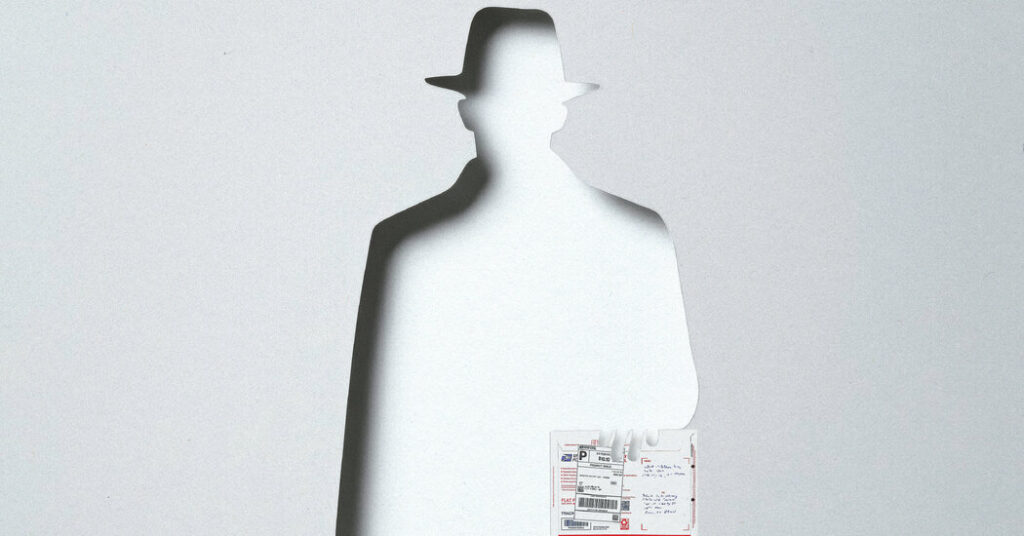
It landed at a law firm in Reno, Nev., last March, a mundane-looking piece of priority mail that cost $10.10 to ship. But it soon unleashed the sort of multimillion‑dollar havoc usually associated with town-flattening tornadoes. Inside was a document many insisted did not exist: the last will and testament of Tony Hsieh.
The dimpled and charismatic chief executive of Zappos, Hsieh had died in 2020, at the age of 46, from smoke inhalation injuries sustained in a fire. A forensic psychiatrist later concluded that he’d lived the last months of his life in a state of drug-induced psychosis, spending his immense fortune at a manic pace.
Many of his plans were grand to the point of derangement. He dreamed up “Country Zero,” a theme‑park-cum nation state to be built on his ranch in Park City, Utah. It would be a place with its own time zone, filled with hot air balloons and run on a seashell-based barter economy. He believed the project, which never broke ground, would draw billions of people in a matter of months and usher in world peace.
“Once word gets out,” he told underlings, “every sunrise is owned by us.”
Because Hsieh (pronounced “shay”) died unmarried and childless and without a will in sight, his entire $500 million estate was headed for his parents, Richard and Judy Hsieh. Then the “surprise will,” as The Wall Street Journal called it, arrived at the Reno offices of the law firm McDonald Carano.
The document, seven typed pages dated March 13, 2015, spread the money in ways that were both conventional — $3 million went to Harvard, Hsieh’s alma mater — and utterly baffling.
Something called the Tony Hsieh Lit Wow Irrevocable Trust would receive $50 million in addition to money from the sale of four parcels of real estate. Exactly who would profit from this immense infusion of cash and assets is still unclear. No record of a trust by that name has been found.
The will’s origins are every bit as perplexing. It came with a letter explaining that it had been discovered in February of last year among the personal belongings of one Pir Muhammad, purportedly a 91-year-old resident of Pakistan who, the letter noted, had died of Alzheimer’s, apparently unaware of Hsieh’s passing.
To Hsieh’s friends and family, everything about that story sounded cockamamie. He didn’t know a Pir Muhammad, they say, or have any connection to Pakistan, and the four others who signed and witnessed the will, supposedly at Hsieh’s home in Las Vegas, seem to have vanished. Or they are fictional. Same for the man who apparently mailed the document to Reno, identified in court filings as Kashif Singh and said to be Pir Muhammad’s grandson. Since March of last year, not a peep.
The will named two Nevada lawyers as coexecutors, Robert Armstrong of McDonald Carano and Mark E. Ferrario of Greenberg Traurig. Neither knew Hsieh, and they were not obligated by law to champion the will. But it appeared to meet statutory requirements, and by June they had petitioned the court to validate it and remove Richard Hsieh as the estate’s administrator.
The elder Hsieh was not about to go quietly — a development the will seemed to anticipate. It contained a brutal “no contest” clause stipulating that if any members of the Hsieh family challenged it, Tony’s parents and his brothers, Andrew and David Hsieh, would get nothing. By accepting the will, they would get whatever was left after all the bequests.
If this was intended to quash the Hsiehs’s willingness to brawl, it did not work.
“Scams come in all shapes and sizes,” lawyers for Richard Hsieh wrote in a court filing in December. “In this case, the scam is in the form of a document being touted as the purported will of Anthony ‘Tony’ Hsieh.”
Despite its obvious peculiarities, the will cleared Nevada’s legal threshold for serious consideration, which turns out to be surprisingly low. Judge Gloria Sturman of the Eighth Judicial District Court in Las Vegas described the will as “just odd.” But, she added, “that doesn’t mean it’s not valid.”
In late January, she announced that the only way to resolve this dispute was through a full-on court battle, a.k.a. a will contest. It was the opening whistle of fracas shaping up as the strangest probate case since the 1976 death of Howard Hughes, another Las Vegas-based mogul and eccentric who died intestate, without a spouse or children. It took 34 years to litigate the 40 wills eventually lobbed at the court in the Hughes matter. But at least it was clear who did the lobbing.
Barring a settlement, the Hsieh case could easily last for years and cost millions of dollars in legal fees. For now, the will is the most intriguing actor in this drama, a character that tottered onstage wearing a gaudy disguise and speaking in gibberish, only to flop on the floor and refuse another word. Men and women in suits have since been waving their hands and arguing. What is this thing? Where did it come from?
And what is this production, anyway, a tragedy or a farce?
Tony’s Corner
Hsieh told the story of his life in “Delivering Happiness,” a 2010 memoir and manifesto that preached a smiley-faced version of capitalism centered on employee joy and customer “wow.” He was born in Illinois to Taiwanese immigrants, a father who worked as an engineer at Chevron and a mother who is a clinical psychologist.
A few years out of college, he joined the internet’s first crop of whiz‑kid tycoons when Microsoft paid $265 million for a banner‑ad start‑up he had co-founded. In 1999, he became the chief executive of ShoeSite.com, which he transformed into the hugely successful Zappos, later sold to Amazon for $1.2 billion. He stayed on as chief executive and, in 2013, moved the company into the old Las Vegas City Hall, a few miles from the upmarket Strip.
He would eventually pour $350 million of his own wealth into the Downtown Project (now DTP Companies), buying blighted properties and treating the neighborhood like a start‑up. Bars and motels were revived. Entrepreneurs were wooed with seed money and cheap rent. He lived in an Airstream trailer near the company’s headquarters, with an alpaca and dozens of friends and colleagues in their own trailers.
He was an unlikely patron for an experiment in urban utopia. Hsieh was shy, awkward and dependent on the medicinal-tasting liquor Fernet‑Branca, which became the house pour of his circle. He drank throughout the day and into the night, holding meetings in bars, including one in the El Cortez Hotel and Casino, where “Tony’s Corner” now bears a plaque.
“Tony used alcohol as a social lubricant for himself, to kind of dumb himself down, to be able to vibrate on the level of, you know, folks like myself and others,” said Tyler Williams, a friend and former Zappos employee. “It felt like he kind of needed to get some drinks to normalize.”
The two men were together at Burning Man in late 2019 when Hsieh first tried ketamine, an anesthetic also used in carefully controlled settings for depression. Hsieh began snorting it constantly and slid into delusion. He said he could grow to seven feet tall, live without oxygen and “download” taekwondo skills. Friends steered him into a rehab center in Utah, but he left after two weeks and started using drugs again.
Holed up in Park City during the pandemic, Hsieh conceived another wildly ambitious community full of start‑ups and parties, a vision detailed in “Happy at Any Cost,” a biography of Hsieh by Kirsten Grind, now a reporter at The New York Times, and Katherine Sayre published in 2022. He spent an estimated $50 million to $70 million on 10 to 20 properties, including a 17,000‑square‑foot mansion. Friends who tried to curb his drug habit were banished as buzz kills.
“He started giving people money to not bring up drugs, to do menial jobs or do nothing at all, just be around,” said Ryan Doherty, a friend and Las Vegas nightlife entrepreneur. “I wouldn’t call these people enablers. They were more like opportunists.”
The walls of his Utah mansion were quickly covered with thousands of Post‑it notes, many containing barely legible contracts and i.o.u.s. He became emaciated and increasingly unhinged, living in a room littered with broken glass and rotting food. He talked about buying every submarine on earth and detonating them in pairs to generate $600 million in diamonds. Black‑clad security guards kept worried friends and family away. Inside the perimeter was a nonstop open bar, with music and pyrotechnics.
After months of this noisy circus, Hsieh flew to New London, Conn., in the fall of 2020 to stay at the home of his girlfriend, Rachael Brown. After an argument, he moved into a small poolside shed. Surveillance footage showed him locking himself in around 3 a.m. on Nov. 18. Soon after, a fire broke out that a medical examiner would rule an accident.
He died in a hospital nine days later.
“Significant Bequeaths”
The next month, Tony’s father, Richard, and his brother Andrew were appointed administrators of the estate and began a fruitless search for a will. The estate was quickly embroiled in more than a dozen creditor’s claims, and it filed lawsuits to recover millions that Hsieh had committed to spend during his Park City days. A large I.R.S. tax bill also loomed. The estate would soon sell millions in assets.
All of this activity kept a team of lawyers busy. When that priority mail envelope turned up in Reno, in March of last year, they got even busier.
Armstrong and Ferrario, the lawyers named in the will, were “quite surprised” to learn they’d been chosen for the job, they said in a court filing. But they argued that the will met Nevada’s validity standards: It was signed by Hsieh and at least two witnesses, missing or not. Armstrong and Ferrario declined to comment.
To a layman’s eyes, the document seems a bit quirky, but it’s filled with plausible enough legalese and plenty of accurate details. Also, there are lines like, “I want my Beneficiaries to ‘live in the Wow,’” which was either written by Hsieh or someone doing a pretty good impersonation of him.
Richard Hsieh was less impressed. By this time, he was running the estate alone. (Andrew Hsieh had stepped down in 2022, with no explanation.) In a December filing, Richard called the will a forgery and hired a bunch of experts to back up that opinion.
A University of Cambridge linguistics professor concluded that the language style and patterns of speech in the will “are indicative of South Asian English, such as Indian and Pakistani English.” A probate lawyer noted that the will had its share of clunkers, phrases like “significant bequeaths” and “money owed be paid.” Another expert concluded that Hsieh’s signature was a fake. The will also misspells his middle name. (It’s Chia-Hua, not Chia Hua.)
Attempts to locate any record of the Tony Hsieh Lit Wow Irrevocable Trust have so far come to nothing, as have attempts to find other trusts named in the will.
The actual signing of the will raises questions, too. On the day in 2015 that it supposedly happened, Hsieh’s daily log is crammed with calls and meetings with people named Dave, Rob, Fred and others, and the delivery of a DeLorean at the Zappos headquarters. There’s no mention of Pir Muhammad or any of the four witnesses, Meer Gohram, William Khatt, Ishrat Daud and Nayab Shah.
Those witnesses have remained untraceable. “William Khatt appears to be a fictional person fabricated for the purpose of committing this fraud,” lawyers for the estate wrote in a filing. Three of the witnesses left residential Las Vegas addresses under their signatures on the will. When landlords at those properties were subpoenaed by the estate, all provided declarations stating that they had no records of the putative witnesses ever having lived there.
Of course, there’s no way to prove that a person does not exist. Eli Segall, a reporter for The Las Vegas Review-Journal, understood this conundrum when he began his quest to find anyone connected to the will. Segall covers real estate in a city that has attracted its share of oddballs and criminals, and he’s highly skilled at locating people who don’t want to be found. Over dinner at a downtown Vegas burger joint, he told me that he had started hunting for names on the will the day after it was filed, in April of last year.
“I didn’t think twice about the search, initially,” he said. “You come across names you’ve never heard of all the time, in every story.”
Finding these people soon started to feel like a maddening chore. He combed property records, professional licensing databases, corporate and bar rolls, voter files, social media and court documents in different jurisdictions and states. He found a few people in the United States named Kashif Singh, but none of them had anything to do with Hsieh. He found one man named Pir Muhammad who had lived in Austin, Texas, but could only locate a former neighbor, who knew nothing about him.
How could six people leave so little evidence of their lives? Segall would plop on his sofa every evening and type on his laptop well into the night. He wrote a batch of richly detailed stories about the will without nailing down who drafted, witnessed or mailed it.
Lawyers for the will have produced little more. One of their court filings includes an image of the death certificate for someone named Pir Muhammad, but almost everything about the document — other than the name, year of birth, year of death and “The Govt of Balochistan Pakistan” — was blurred out. Representatives for the lawyers would not comment on where that document came from and who did the blurring.
Armstrong said in a court filing that soon after the will arrived, his office got a phone call from a “gentleman identifying himself as Kashif Singh.” (Whether Armstrong actually spoke to Singh is not mentioned.) The elusive Singh also mailed two copies of the will to the Las Vegas courthouse. One arrived with a return address that turned out to be a satellite building of the courthouse itself. The other had this return address: 1621 Central Ave., Cheyenne, Wyo., an office building and mail‑drop hub for LLCs in that privacy-friendly state. Adding to the mystery: the envelope was postmarked in Fairless Hills, Penn.
Which leaves two possibilities. The people who wrote, witnessed and delivered the will could be real and, for some reason, gone to extraordinary lengths to make themselves difficult to find. Or they don’t exist.
If it’s the latter, then who invented them and the will? Segall has theories, but, he said: “I won’t say them out loud. Even off the record.” They seem too nuts.
Some of Hsieh’s friends think it’s possible that he, in fact, wrote the will. He lived in unconventional ways, so secretly divvying up his worldly possessions with an octogenarian from Pakistan was, perhaps, on brand.
Then again, these friends say, he never cared much about Harvard or other beneficiaries in the will, like the Red Cross and the Gates Foundation. He invested in dozens of businesses and charities, none of which were earmarked for even a dollar.
So the will could be a long-game scam. Forged estate documents are hardly rare, said Roee Kaufman, an estate lawyer at Keystone Law Group in Los Angeles who has studied the case. It is possible that trusts named in the will could one day surface and cite the mastermind as a beneficiary.
Others think it could be the work of someone who was sued by the estate, concocted as revenge. You tied me up in court, now it’s your turn.
It is all but certainly written by someone familiar with the Nevada legal community, say local lawyers. The choice of Armstrong and Ferrario, both highly respected, seems too perfect to be an accident.
“Mark is the classic bulldog,” said Daniel P. Kiefer, a lawyer with Lee Keifer & Park in Las Vegas, referring to Ferrario. “You want someone to go to trial and chew somebody up, that’s your man. And Robert has all of the clout and chops as it relates to trusts.”
Lawyers for the will have broached the idea of negotiating a settlement. At a hearing in late September, Jennifer M.K. Willis of Greenberg Traurig said she’d raised the prospect of a “nonlitigation resolution” right before the start of the hearing.
“Saves money for the estate,” she said, “saves time for the court, and honors the wishes of Mr. Hsieh.”
Lawyers for the estate have said nothing in court on the topic, but made their feelings clear in a statement to The Times.
“We have not accepted any settlement overtures,” said Vivian Lee Thoreen, a partner at Holland & Knight, who represents Richard Hsieh both personally and as an estate administrator. The estate has “no interest in negotiating over a fake will,” she said.
This dug-in approach has potential pitfalls, say probate law veterans. Richard Hsieh has demanded a jury trial, and juries in probate cases are notoriously unpredictable. They often decide not on the merits but on who they think most deserves the money. If that no-contest clause is triggered, the entire Hsieh family will get nothing.
Ghost Town
In January, Judge Sturman added Armstrong and Ferrario as special administrators of the estate. They and the lawyers they have hired to handle the probate war can now submit their fees to the judge, which, if approved, will be paid by the estate. Expensive and seasoned lawyers are now toiling on both sides. Thoreen represented Jamie Spears, the pop star Britney Spears’s father, in the fight over the singer’s conservatorship.
Now, and potentially for years to come, this scrum will spend Hsieh’s money to push mutually exclusive narratives about his wishes.
Downtown Las Vegas, once Hsieh’s overriding passion, is in limbo. The estate has sold off an elementary school campus, a liquor store, a retail plaza, a nightclub and a wide assortment of other buildings and lots. It still owns the trailer park-style community where Hsieh lived, filled with Airstreams and tiny cottage-style homes on wheels. During a tour in January, there was not a person in sight. It’s now closed and desolate, a ghost town in miniature and a quiet memorial to an unfinished dream.
Kirsten Grind contributed reporting.
Audio produced by Jack D’Isidoro.
David Segal is a business reporter for The Times, based in New York.
The post The $500 Million Mystery Will, Signed by Ghosts appeared first on New York Times.