Artificial intelligence seeks to emulate the faculties of the human mind through computational systems, a synthetic recreation of our brains’ capabilities to perceive, learn, and reason.
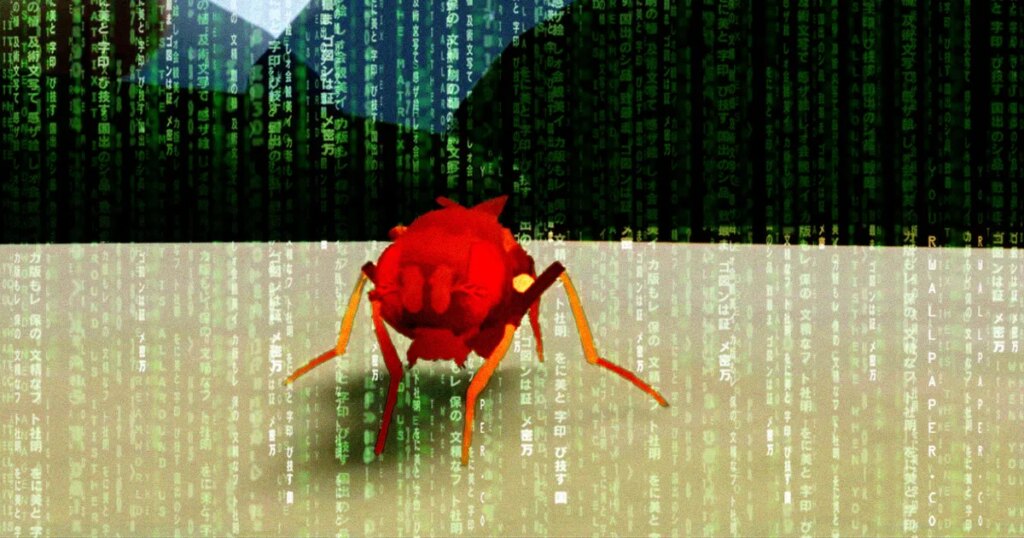
Now, a company claims to have taken a totally different tack by simulating the 125,000 neurons and 50 million synaptic connections of an adult fruit fly’s brain — and then letting it roam inside a Matrix-like virtual environment.
In a video shared by Eon Systems cofounder Alex Weissner-Gross, the crudely animated insect can be seen stretching its legs inside a simulated sandbox, rubbing its front feet together and using its labellum to drink from a small bowl.
“For decades, whole-brain emulation has been the tantalizing counterpart to artificial intelligence,” Weissner-Gross wrote in a Substack post. “Copy a biological brain, neuron by neuron and synapse by synapse, and run it.”
It’s a simple demonstration with larger implications, according to its creators.
Weissner-Gross claimed the video demonstrates what the company believes is the “world’s first embodiment of a whole-brain emulation that produces multiple behaviors.”
The experiment builds on research by Eon senior scientist Philip Shiu and his colleagues, which was published in the journal Nature in 2024. At the time, the researchers said they had created a complete computational model of the entire fruit fly brain to “study circuit properties of feeding and grooming behaviors.”
The team used the pre-existing FlyWire connectome, a Princeton-led effort to create a complete wiring diagram of a fruit fly brain.
For their research, they found that their computational model predicted the motor behavior of the simulated fly with a 95 percent accuracy.
“We show that activation of sugar-sensing or water-sensing gustatory neurons in the computational model accurately predicts neurons that respond to tastes and are required for feeding initiation,” the paper reads.
Now, scientists at Eon Systems have put the pieces together, providing the disembodied brain with “somewhere to go,” per Weissner-Gross.
By leveraging an embodied simulation framework, dubbed NeuroMechFly v2 and developed by neuroengineers at the Swiss Federal Technology Institute of Lausanne, the team integrated “Eon’s connectome-based brain emulation with a physics-simulated fly body.”
“The result: multiple distinct behaviors driven by the emulated brain’s own circuit dynamics,” Weissner-Gross wrote. “Sensory input flows in, neural activity propagates through the complete connectome, motor commands flow out, and a physically simulated body executes the output, closing the loop from perception to action for the first time in a whole-brain emulation.”
Weissner-Gross claims the experiment meaningfully builds on prior research, such as a 2025 paper published by a team of DeepMind researchers, who modeled the neural pathways of a fruit fly using “reinforcement learning, not connectome-derived neural dynamics, to control a simulated body.”
Eon Systems is now hoping to push the idea even further by first aiming to complete a “digital emulation of a mouse brain” — and eventually “human-scale emulation.”
It’s a somewhat terrifying thought: having a virtual human brain take its first steps, vaguely reminiscent of reinforcement learning techniques allowing stick figures to learn how to walk, from an awkward crawl to a far more adept running style.
Heck, could we be far more sophisticated versions of Eon Systems’ fruit fly crawling around in a much, much larger sandbox, a paradox that has had physicists intrigued for decades?
But to get to that point — if it’s even a possibility to begin with — the company has tons of work to do. Even a mouse brain has over 500 times the number of neurons as a fruit fly’s, making an endeavor to analyze sensory inputs, simulate neural activity, and send motor commands to the many parts of the human body exceedingly challenging.
The degree of difficulty doesn’t appear to have Weissner-Gross worried, though.
“If a fly brain can now close the sensorimotor loop in simulation, the question for the mouse becomes one of scale, not of kind,” he wrote.
“Watch the video closely,” Weissner-Gross added. “What you are seeing is not an animation. It is not a reinforcement learning policy mimicking biology. It is a copy of a biological brain, wired neuron-to-neuron from electron microscopy data, running in simulation, making a body move.”
“The ghost is no longer in the machine,” he concluded. “The machine is becoming the ghost.”
More on brain simulation: Scientists Preparing to Simulate Human Brain on Supercomputer
The post Researchers Upload Fly’s Brain to Matrix, Let It Control Virtual Body appeared first on Futurism.