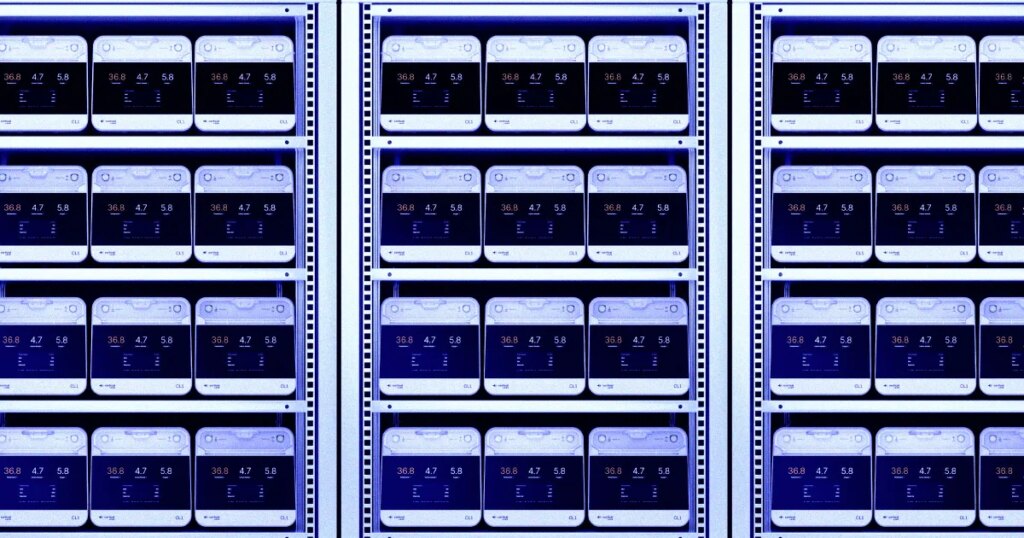
Last year, researchers at Australian biotech startup Cortical Labs showed off its CL1, the “world’s first code deployable biological computer” that’s made up of 200,000 living human neurons.
In February, the company showed off its progress, demonstrating how the neurons could be taught how to play the seminal video game Doom — a far more complex and impressive showing than much earlier attempts to have them play Pong in 2022.
Now, Cortical Labs is ready to scale up the operation. As Bloomberg reports, the company says it’s working on “biological data centers” in Melbourne, Australia, and Singapore. Simply put, instead of relying on Nvidia chips like AI companies, Cortical Labs is planning to outfit its futuristic facilities with racks of CL1 biological computers, powered by many more human brain cells, instead.
The company refers to this approach as “wetware,” an unsettling new take on software and hardware terminology. Simply put, the computers send electrical signals to neurons derived from human blood stem cells. The chips embedded within record those neurons’ responses as the output.
The company teamed up with DayOne Data Centers, to develop the two facilities. The Melbourne data center will house 120 CL1 units, while DayOne is planning to deploy as many as 1,000 units at the one in Singapore.
Cortical Labs claims that relying on biological computers comes with a massive advantage over their silicon wafer counterparts: future biological data centers will only “consume a fraction of the power used by conventional AI processors,” per Bloomberg.
CEO Hon Weng Chong told the publication that each CL1 node needs less power than a handheld calculator to run. That’s orders of magnitude less power than a modern graphical processing unit requires.
But plenty of questions remain. Most crucially, it’s not clear what practical use the units have; the company has yet to show that its computers can even remotely keep up with the computational prowess of the current generation of top-of-the-line data center chips.
Nonetheless, if it does turn out to be a viable approach, it would make for an elegant response to the burgeoning environmental disaster that AI data centers are turning out to be. They’ve been shown to generate copious amounts of noise, consume staggering amounts of water, and even raise local electricity prices.
More on Cortical Labs: Researchers Get Human Brain Cells Running Doom
The post New Data Centers Will Be Powered by Human Brain Cells appeared first on Futurism.