I have been tending my house on a hill in Marjayoun in southern Lebanon by phone since fighting broke out between Israel and Hezbollah, the Lebanese militant group, after Oct. 7, 2023. I call the caretaker of the house every week. Is the road passable? Is the water running? Is the house still standing? He tells me what he can see. I ask him to do what he can.
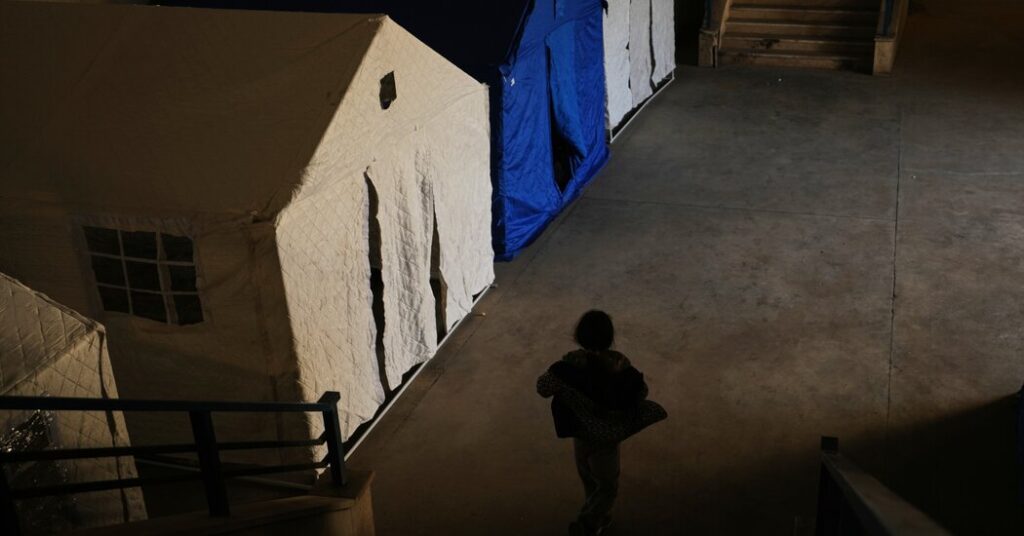
A cease-fire in 2024 quelled the fighting, although Israel continued with sporadic raids. This month, the area became a major front in the American-Israeli war with Iran. Israel ordered people to leave our neighborhood and sent its army and attack planes to fight Hezbollah. In two weeks, the Israeli military has killed more than 800 people and driven some 800,000 others from their homes there and elsewhere in Lebanon, with devastating strikes on Beirut, and turned schools, stadiums, sidewalks and other corners of ordinary life into places of shelter.
The orders came after Hezbollah fired on Israel, saying it was avenging the killing of Iran’s supreme leader, Ayatollah Ali Khamenei, and acting in defense of Lebanon. The Lebanese government answered by banning military activity by Hezbollah, declaring that only the state can make decisions about war and peace. President Joseph Aoun on Monday said Hezbollah showed “no regard for the interests of Lebanon or the lives of its people.”
For decades, Lebanon has been a place for other people’s wars and our own unfinished ones: Palestinians and Israelis, Syrians and Israelis, militias and the state. Old civil war battle lines never fully disappeared, and new wars keep finding the same ground. Even now, after all these years, Lebanon is still caught between a party that claims to defend it — Hezbollah — and a war whose consequences the country is left to absorb. My house is still standing. But like much of the country, it remains intact only at the whims of the armies surrounding it.
Lebanese politicians have been talking about ending Hezbollah’s enormous influence on Lebanon for at least 30 years. Prime Minister Rafik Hariri, in 1996 during a previous Israeli occupation, spoke about plans to disarm Hezbollah and absorb it into the Lebanese political landscape once Israel withdrew from the south.
Mr. Hariri was not an idealist floating proposals from the margins. He was rebuilding Beirut, and understood that you do not dismantle a militia by confrontation but by making it unnecessary, by building a state functional enough that the argument for a parallel state becomes moot. Remove the occupation, he was saying. Remove the cause. Disarmament will follow. It was a specific, logical theory of how Lebanon works. But it was also a threat to the parallel state that Hezbollah was building.
Israel eventually withdrew, but Hezbollah didn’t disarm. A car bomb killed Mr. Hariri on the seafront road in Beirut in 2005. Many people blamed Syria. A U.N.-backed tribunal convicted a Hezbollah member of the killing but failed to find enough evidence tying it to the party’s leadership. Hezbollah blamed Israel. Following an appeal in 2022, two more Hezbollah members were convicted in the killing.
After the assassination, Lebanon had a moment. The Cedar Revolution, which filled streets with protesters, pushed out Syrian troops who had also been in the country for decades. But the politicians chose accommodation. By May 2008 Hezbollah had turned its weapons on Beirut. The government had moved against it; the army declared neutrality; Hezbollah took West Beirut in just a few days. The state had been built to watch. In just over 15 years, Hezbollah gained elected representation, then cabinet presence, then veto power.
Now Israel is back occupying part of Lebanon and creating a new security zone south of the Litani River. The same argument from 1996 — that occupation gives Hezbollah its reason to stay armed — is being made again, at a vastly larger scale and with vastly more destruction. The paradox is deeper. Even if, like much of Lebanon, you want Hezbollah disarmed, Israel cannot be the means of that disarmament. Its occupation, and its assault on Lebanese territory, are exactly what Hezbollah, or whatever is reconstituted from its wreckage, will invoke to justify rearming.
Israel denies territorial ambitions in Lebanon. Yet biblical and expansionist language is no longer easy to dismiss as being on the fringe. In an interview with Tucker Carlson last month, Mike Huckabee, the U.S. ambassador to Israel, said it would be “fine” if Israel “took it all,” a remark that the embassy later said was taken out of context. Whatever he meant, it is the kind of talk that does not reassure a small country watching an army that keeps invading. Once an army enters, Lebanon has learned, you don’t know when it will decide to leave.
I have been watching videos coming out of Lebanon, many from areas under Hezbollah’s control, of people angry at the group, asking why their children and villages are being offered up again for sacrifice. They are furious about Israel’s bombs and its refusal to leave, and furious about being treated as expendable. The resistance narrative and the annexation narrative need each other.
I want Hezbollah gone. I have wanted this for a long time, as a Lebanese who watched what it did, directly or indirectly, to the country I come from and intend to return to. And yet. I cannot call an enemy state’s war on Lebanese land a cure for our lost sovereignty. I cannot conflate wanting an outcome with supporting whoever delivers it. I cannot call this liberation when the liberator is also the occupier.
Mr. Hariri’s great mistake, maybe, was believing that a country could be built faster than it could be hollowed out. Something akin to a house that still stands after being gutted.
My house in Marjayoun needs repairs. Cracks in a wall. Some plumbing. Things that in any other moment I would have scheduled without thinking. I keep postponing the work, because I am not ready to spend money on a house I cannot visit, on a road I cannot drive, through a town under bombardment by a military that keeps rewriting the terms of when normal life can return.
I came to this home through love and then through loss. My husband’s great-grandfather built it. My husband found it in ruins almost a century later and restored it. He died in 2012, four years after finishing the work.
The house outlived the man who built it. It outlived the man who restored it. Will the house outlive my son? What Lebanon will be left when the bombs stop falling?
I have learned, in the years since my husband’s death, that not knowing is not the same as not caring. This is what tending becomes: you do it anyway. Or you don’t, because the road closes, the town empties, and even the phone call to a caretaker is no longer possible.
Nada Bakri is a journalist and essayist based in Cambridge, Mass. Her late husband was Anthony Shadid, a New York Times correspondent.
The Times is committed to publishing a diversity of letters to the editor. We’d like to hear what you think about this or any of our articles. Here are some tips. And here’s our email: [email protected].
Follow the New York Times Opinion section on Facebook, Instagram, TikTok, Bluesky, WhatsApp and Threads.
The post Israel Attacks Hezbollah. The Lebanese Pay the Price. appeared first on New York Times.