The great American creative-industrial supertanker that is Hollywood is being rocked by rough seas. Nowhere is the conflict between the gales of change and the enduring strength of professional storytelling fiercer than in the business of movies in movie theaters, which has been my stock in trade for 35 years.
In the 135 years since the birth of motion pictures, there have been four of what Winston Churchill would have called climacterics, or critical transitions. The first was the invention of sound; the second was the end of the “studio system” when talent was no longer tied up under long-term contracts; the third was the advent of television; and the fourth was the transition from analog to digital, both as the means of production and of distribution.
A fifth such decisive moment is upon us: the entry into the industry of A.I.-obsessed technology companies for which movie profitability is seemingly irrelevant — and the simultaneous crisis of global box office decline.
In 2019, there were 1.24 billion movie tickets sold in North America. In 2025, there were 780 million, a decline of 37 percent. (Box office revenue had a less drastic reduction, but that reflects rising ticket prices, which is its own problem.) I was asked recently if this trend was inexorable, leading to the eventual demise of moviegoing. I don’t think so, despite the gloomy mood in Hollywood resulting from the coming end of Warner Bros. — once the mightiest of all studios — as a stand-alone entity after more than 100 years. But the stakes are high and the ultimate verdict will depend on how the industry’s players throughout the ecosystem respond to this critical moment.
I want to stress that, contrary to the common wisdom, streaming itself is not the Death Star for the movies. Just as the initial threats of television, videocassettes, HBO and DVDs turned out to be great boons to movie studios, so it is with streaming. Film has successfully competed with in-home entertainment since the invention of television. The deal Sony has made with Netflix to eventually stream our theatrical films on its service is very valuable and enables our studio to make more films. And indeed, some films are better suited for streaming. At Sony, we made “KPop Demon Hunters” for Netflix. Movies in theaters are a parachute business — if they don’t open, they die. “KPop” needed free repeat viewings to build an audience and become a hit. So streaming and theatrical runs can happily coexist.
The problem instead stems from an innocent-sounding word: Windows.
Windows, in entertainment lexicon, refers to a period during which a product — whether a film, TV show or sporting event — is available exclusively to the public in one place. For movies, these windows occur sequentially: first in movie theaters, then on home video, then on pay TV and streaming, then eventually on free TV. This system was meant to ensure that if you made a good film at an appropriate budget and the audience liked it, it would usually be profitable. Of course, if you made a bad film, all the windows in the world won’t save you. Trust me, I have made many of both sorts, so I know.
Movie theater owners used to require a 75-day exclusive window. This was too long. Then the pandemic hit, nearly ending theaters. Their plight led to greatly shortened windows — some films even played in theaters and on home screens on the same day. This was too short.
During Covid, such experiments were perhaps understandable. The problem came after the pandemic, when studios, theaters, agents and talent all failed to grasp the long-term effect that the extreme shrinking of windows would have on the movie audience, despite the near-term economic benefits.
Now the theatrical window is badly cracked. Some films are available on pay-per-view at home only 17 days after being released in theaters, while some go to streaming services — which viewers experience as being free — in 30 days or less. A few streaming hits have even stoked interest by appearing in theaters after streaming. Too many people now think they can see any film at home — in Humphrey Bogart’s immortal words from “Casablanca”: “Maybe not today, or tomorrow, but soon ….”
This is killing the adult audience for movie theaters.
There have always been dual reasons to go to a theater: the communal big-screen experience and the draw of the movie itself. But the “‘Casablanca’ effect” — knowing you can see a movie at home soon — has undermined this second motivation. Most people no longer “go to the movies” as habitual behavior. They go to a particular movie — but only if it has generated enough cultural urgency.
Removing the near-term drive to see the story the film is telling has made it especially hard for movies that aren’t sequels or part of a franchise and so don’t have a built-in avid fan base. And for all the success of films driven by existing intellectual property, originality is essential to movies. Neither movie theaters nor the art form itself can survive without at least some originality. After all, you can’t make a sequel to nothing.
France has legally mandated theatrical windows, and box office revenue there is strong. Disney, which rigorously maintains the longest windows, had Hollywood’s only billion-dollar-grossing films last year. At Sony, we are not above reproach; we tried some shorter windows but have now realized the consequences. In our new Netflix deal, our films don’t become available to stream until 100 to 120 days after theatrical release. In a further sign of progress on this issue, Universal, which consistently has terrific films, just this week announced it would observe at least a five-week initial theatrical window for most of its movies.
What length windows would be the Goldilocks ideal? There’s a focus on a sweet spot of 45 days before home video and 100 days before streaming. Christopher Nolan, the head of the Directors Guild of America, thinks the theatrical window should be 60 days. (Chris, and a few other superstars, can demand long windows in their contracts, but all talent has a key part to play in solving this.) Personally, I don’t think the exact number of days, or uniformity, matters so long as the theatrical window is consistently long enough to restore the story-based motivation to attend.
James Carville once told Bill Clinton, “It’s the economy, stupid.” For movies, it’s the windows, stupid.
As for theater owners, the box-office slide has put them under pressure. But continued short-term thinking about pricing, windows and interminable pre-shows risks enabling their own demise. And just calling for “more movies” won’t help. What is needed are more hits.
In a world gone mad, does it amount to more than Bogie’s “hill of beans” if movies in theaters go extinct? Yes, it does. Much has been written about the death of shared cultural touchstones. Yet movies still move great masses of people all at once, all over the world, and thus ennoble culture itself. Movies unite us, and sometimes in good ways, divide us in civil debate. (Remember that?) And movie stars are created only in theaters, not on streaming. Who wants to live in a world without those special individuals who, like great athletes, reflect our best selves? Julia’s smile. Denzel’s glare. Zendaya’s je ne sais quoi. I don’t.
And great movies matter especially. Check out this year’s Oscar contenders: “Sinners,” “Hamnet,” “Marty Supreme,” “Avatar,” “One Battle After Another,” “Song Sung Blue” and our own “Blue Moon,” among others. Originality can still succeed. It’s worth noting that 2026 is likely to be an up year at the box office. Sony has a number of strong films, as do all the studios. But that is all the more reason to change, as Daniel Day-Lewis said in “Lincoln,” a Steven Spielberg masterpiece I am very proud of, “Now, now, now!”
Finally, a confession of obvious bias. I am, by most reckonings, the longest-serving movie chairman in modern Hollywood. I have worked on over 600 films. I love movies and believe in their relevance to the fabric of our lives. I first kissed a girl at the Crest Theater in Baltimore. I fell in love with my wife, Jessica Harper, when I saw her on the big screen, 14 years before I married her. My children’s first experience of the magic was at an animated film I had greenlighted.
But my own devotions aside, I suspect that most people reading this can name an indelible memory they have of seeing a film, with strangers in the dark on the silver screen, that moved them and that they cherish still. The power of that enduring emotional connection should prevail against all the winds of change.
But it is not invulnerable. We have to fight for it. Hollywood, writ large, needs to act.
Tom Rothman is the chief executive and chairman of Sony Pictures Motion Picture Group, a former chairman of 20th Century Fox and the founder of Fox Searchlight Pictures.
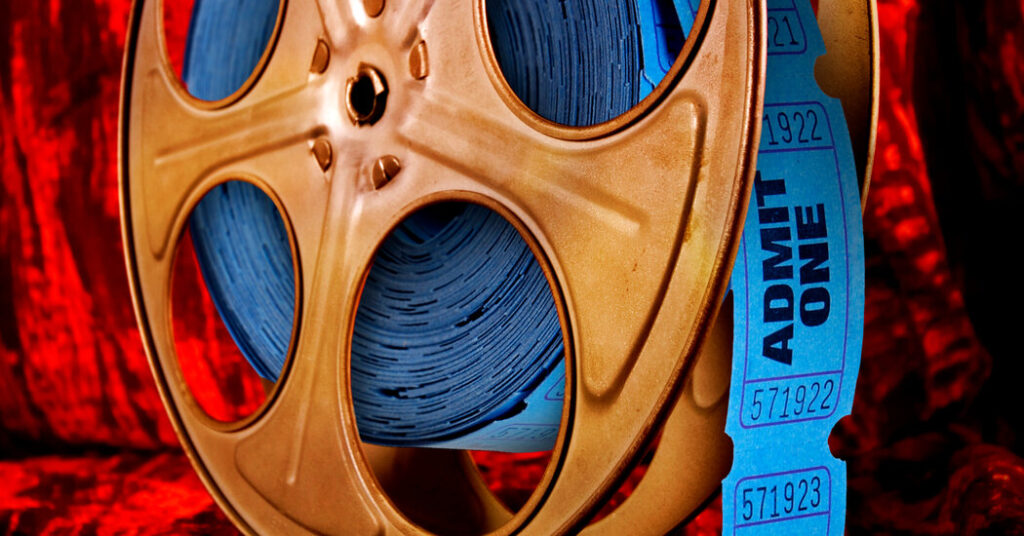
Source photographs by MenagerieCreative and sunstock, via Getty Images.
The Times is committed to publishing a diversity of letters to the editor. We’d like to hear what you think about this or any of our articles. Here are some tips. And here’s our email: [email protected].
Follow the New York Times Opinion section on Facebook, Instagram, TikTok, Bluesky, WhatsApp and Threads.
The post Why I Love the Movies and How to Save Them appeared first on New York Times.