For two decades now, social media companies have been virtually untouchable, profitably floating above accusations that they normalize propaganda, addict children and degrade our character. Legally and politically, platforms like Facebook, Instagram and YouTube have been protected by an idea that they and others have promoted: that they are not just innovative technologies but also speech platforms, so that imposing any limits on them would amount to both censorship and a drag on technological progress.
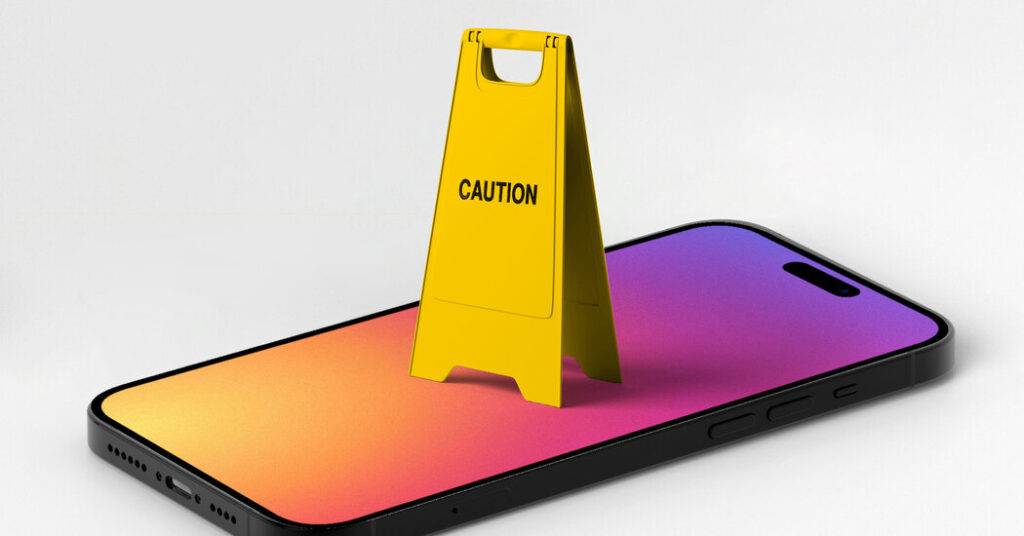
That protection is finally starting to weaken, thanks to a growing realization that social media is also a matter of public health. Seen this way, social media appears as something less newfangled and more familiar: a defective, hazardous product. The current trial of Meta’s Instagram and Google’s YouTube in Los Angeles Superior Court, in which a 20-year-old woman has accused the platforms of designing their products in ways that harmed her mental and physical health, is the clearest sign of this shift.
The case, in which closing arguments were made on Thursday, is the first of many lawsuits brought by thousands of young people, school districts and state attorneys general against companies like Meta, Google, Snap and TikTok. The plaintiffs in these cases do not accuse the companies merely of serving up bad content to young people; they argue that the very design of social media is intentionally engineered to create compulsions and habits of overuse, regardless of the content provided.
In this context, charges of censorship lose their bite. Lofty platitudes about free speech ring hollow in the face of teenage depression, self-harm and suicide. As the legal scholar Matthew Lawrence has put it, “The states, in signing the Constitution, did not relinquish their independent authority to safeguard the public health.” Public harms — here, an addictive product akin in some ways to cigarettes — have always been the province not of the Bill of Rights but of the common law, the most ancient part of our legal system. As the attack on Big Tobacco reminded us, tort lawsuits in the states can be an effective alternative to addressing harms that Congress fails to address.
Until now, companies like Meta and Google have relied on some powerful legal defenses. They do not deny that their products can be highly absorbing. But so, they contend, is a good novel, and no one suggests that a beach thriller is a public health hazard; a novel is speech protected by the First Amendment. Moreover, the companies note, unlike the publisher of a novel, which can still be responsible for defamation, social media companies cannot be held responsible for what appears on their platforms, thanks to Section 230 of the Communications Decency Act of 1996, which was intended to protect platforms from being destroyed by tort lawsuits.
But changing circumstances have undercut these arguments. For one thing, if the platforms in the 1990s and 2000s were passive carriers of others’ content (albeit filtered by human moderators), they are now active purveyors. The platforms use aggressive tactics to keep users compulsively engaged — algorithmic recommendations, infinite scroll, auto video play and intermittent reinforcement (in which likes, comments and refreshed content are rewarded unpredictably rather than consistently). This goes far beyond merely hosting and moderating third-party content.
The second change is the growing evidence of a correlation between the rise of social media and harm to young people. The psychologist Jonathan Haidt cites some striking statistics from the United States: Suicide rates for girls ages 10 to 14 rose 167 percent from 2010 to 2021; over roughly the same period, emergency-room visits involving cases of self-harm rose 188 percent among girls ages 10 to 14 and 48 percent among boys that age. Major depressive episodes among adolescents rose from about 8 percent in 2009 to 16 percent in 2019.
Make no mistake: The plaintiff may lose the case in Los Angeles. Establishing causation is a challenge; the jury may decide that as bad as overuse of social media may be, social media cannot fairly be held liable for a damaged life. And even if the plaintiff wins, on appeal the defendants may prevail on the basis of the argument — incorrect, in my view — that their product design is protected by the First Amendment: speech in the form of curation. (The idea is that the automated promotion of content is akin to a newspaper’s choosing what to feature on its front page.)
But there are more cases coming, and whether any individual plaintiff wins is less important than the degree to which courts, juries and the public begin to adopt the public health perspective on social media. To the extent they do, the social media companies will eventually have to bear the responsibility for the products with which they have addicted a generation of young people.
It is a cliché that we live in an information age. And it is true that much of what we interact with today comes in the form of information. But an unfortunate side effect of the information idiom is the idea that everything is a form of speech and therefore exempt from regulation. Calling all transmission of data “speech” is a gross distortion of reality, and a generation of teenagers raised on social media has borne the cost of it.
Tim Wu (@superwuster) is a law professor at Columbia and a contributing Opinion writer. He served on the National Economic Council as a special assistant to the president for competition and tech policy from 2021 to 2023. He is the author of “The Age of Extraction: How Tech Platforms Conquered the Economy and Threaten Our Future Prosperity.”
Source images by Argelis Rebolledo and Dragon Claws/Getty Images.
The Times is committed to publishing a diversity of letters to the editor. We’d like to hear what you think about this or any of our articles. Here are some tips. And here’s our email: [email protected].
Follow the New York Times Opinion section on Facebook, Instagram, TikTok, Bluesky, WhatsApp and Threads.
The post Social Media Isn’t Just Speech. It’s Also a Defective, Hazardous Product. appeared first on New York Times.