Russia is reveling in the Trump administration’s decision to lift U.S. sanctions on Russian oil at sea, a move Moscow hopes will lead to further relief from penalties that had only recently begun to bite deep.
The 30-day license announced this week by the U.S. Treasury, which allows energy traders to buy Russian crude already loaded on tankers without fear of secondary sanctions, is aimed at containing oil prices sent soaring by the U.S.-Israeli war on Iran. For Russia, it’s a break from restrictions that were imposed to reduce the Kremlin’s ability to finance its war in Ukraine.
“The U.S. has practically admitted the obvious,” crowed Kirill Dmitriev, Moscow’s special economic envoy. “The global energy market cannot remain stable without Russian oil.”
“Against the backdrop of the growing energy crisis, a further softening of restrictions on Russian energy producers looks more and more inevitable, despite the resistance of part of the Brussels bureaucracy,” he wrote on the Russian messaging service Telegram.
The decision, which analysts say could affect some 128 million barrels of oil, risks undermining four years of sanctions aimed at curbing Moscow’s war effort.
Sanctions imposed by the Treasury on Russian oil giants Rosneft and Lukoil in October forced Moscow to sell elsewhere at discounts averaging nearly $30 per barrel, and left millions of barrels per day stranded on tankers. The sanctions, which increased the share of Russia’s total oil output under U.S. sanctions to 80 percent, sent revenue in February plummeting more than 40 percent year-over year, plunging the budget deeper into deficit.
But the U.S.-Israeli bombing campaign on Iran drove the price of Russia’s Urals blend this month to double to more than $80 per barrel. Even with the markdowns, analysts say, the surge has brought Moscow additional revenue of up to $150 million per day.
Now, economists say, Russia won’t have to mark down the oil that was loaded onto tankers before Thursday to sell it.
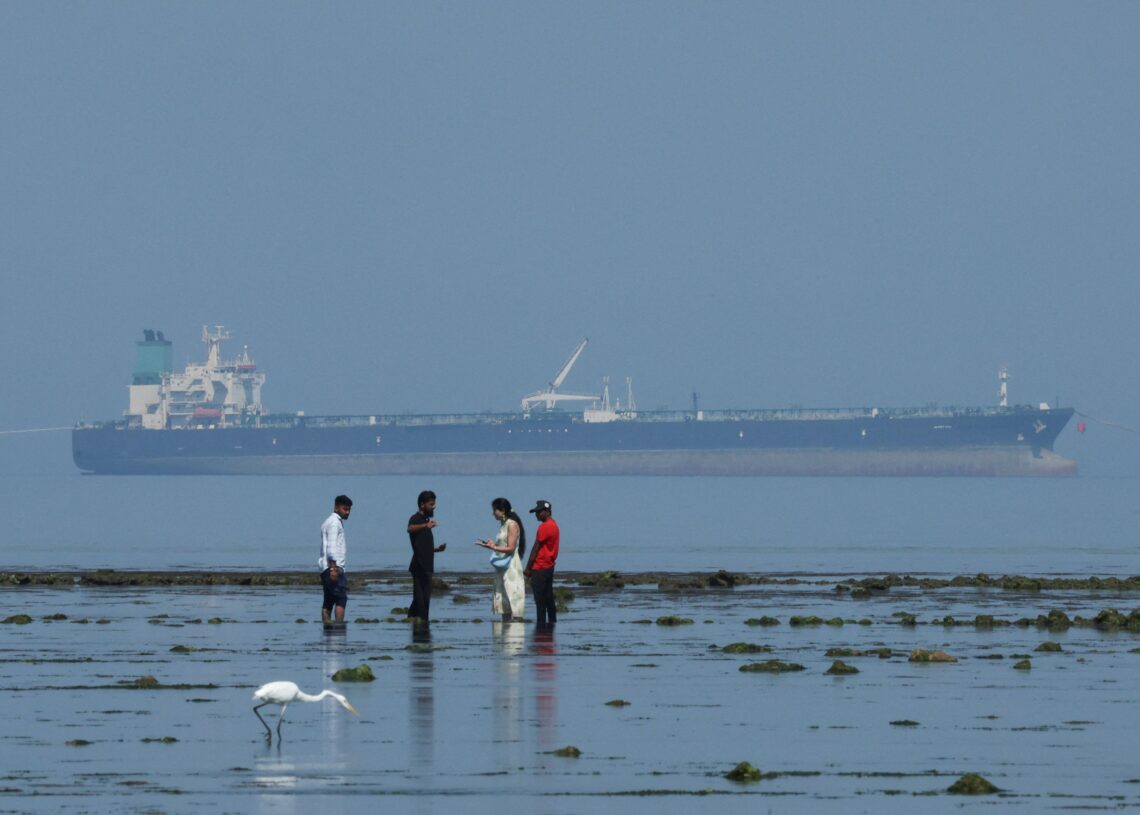
The European Union imposed a price cap on Russian oil in December 2022. But that resulted mostly in Moscow diverting most of its crude to India and China, and deploying a ghost fleet of tankers that change names and flags, spoof or hide locations and transfer oil at sea to evade sanctions.
“Finally it seemed like the West had found the key to really straining Russian oil exports, and now all of this has been upended,” said Janis Kluge, an economist at Germany’s Institute for International and Security Affairs. Russian oil, he said, “will find a way to the market now without any discount because there is no reason now to give a discount.”
“This will make a huge difference,” said Borys Dodonov, head of the Center for Energy and Climate Studies at the Kyiv School of Economics. “Russia was in trouble in January and especially in February. Now Russia will have enough money to balance its budget and even start to accumulate some money in its national wealth fund.”
In the U.S. conflict with Iran, Dodonov said, “Putin is the biggest winner.”
For that reason, the decision was slammed Friday by U.S. allies.
Ukrainian President Volodymyr Zelensky warned it could give Moscow an additional $10 billion to fund its war on his country. “This one concession alone by the United States could give Russia about $10 billion,” he said at a news conference in Paris with French President Emmanuel Macron. “This certainly does not help peace.”
“I want to make this very clear,” German Chancellor Friedrich Merz said. “We believe that easing sanctions now, for whatever reason, would be wrong.”
But Macron backed U.S. Treasury Secretary Scott Bessent, who said the impact would be limited and would not breach G-7 sanctions policy. According to Bessent, allowing the delivery of oil already on ships “will not provide significant financial benefit to the Russian government” because it “derives the majority of its energy revenue from taxes assessed at the point of extraction.”
The decision “does not constitute a lasting or broad reversal of the sanctions they had decided on,” Macron told reporters.
Kluge warned that conditions could deepen divisions in the West. “We know that G-7 cooperation is very fragile and it was very complicated to get these sanctions in place,” Kluge said. “Now it is unclear if the same level of cooperation can continue later on or as the Russians are hoping this will lead to more damage to the sanctions regime in the future. … I’m just not convinced this waiver will run out in April as it is planned.”
How much Russia will benefit is unclear. Most of the oil on tankers has already been sold, Dodonov said. Only some 12 million barrels was idling without a buyer.
“For tankers, it is not a very big deal,” Dodonov said. “The biggest concern is the high prices and the fact that the U.S. might cancel other sanctions on the Russian shadow fleet or on Russian oil producers.”
Dmitriev, who met this week with U.S. officials in Florida to discuss potential economic cooperation and what he called “the ineffectiveness and destructive nature of sanctions against Russia,” has been taunting the West over the spiraling energy crisis. On the day the United States and Israel launched their campaign, he predicted oil prices would surge above $100 per barrel.
Responding this week to a Financial Times report that the spike was making Moscow an extra $150 million per day, he gloated: “And this is just the beginning of the largest energy crisis ever.” After BlackRock Chairman and CEO Larry Fink said the war wouldn’t cause lasting economic damage, Dmitriev said “Mr. Fink is unfortunately wrong. There will be lasting economic damage as supply-side shocks affect oil, gas, fertilizer, agriculture, and many other markets.”
Hawkish Russian officials have long dreamed of the chaos its ally Iran could unleash by closing the Strait of Hormuz, the channel through which Saudi Arabia, Kuwait, Iraq and Qatar ship energy to the world. During the first year of the war in Ukraine, Sergei Glazyev, the hard-line head of Russia’s Union State with Belarus, wrote about a proposal to “join a coalition with Iran and close the Hormuz Strait.”
“This would lead to a tenfold increase in global oil prices, the bankruptcy of European energy, metals and chemicals corporation, and the inevitable collapse of the American-European financial system,” Glazyev wrote in a copy of the internal Kremlin report reviewed by The Washington Post.
Tehran, a Russian ally since the Soviet era, has assisted Moscow in Ukraine by providing Shahed drone technology. Western officials have told The Post that Moscow is giving Iran targeting information for U.S. forces, including warships and aircraft in the Middle East. “No one will be surprised to believe that Putin’s hidden hand is behind some of the Iranian tactics, potentially some of their capabilities as well,” British Defense Secretary John Healey told reporters Thursday.
At the same time, Putin, hopeful of negotiating a peace deal in Ukraine favorable to Russia, has tried to avoid upsetting relations with President Donald Trump. The Kremlin has assured Trump it’s not sharing targeting information with Tehran, U.S. special envoy Steve Witkoff told CNBC this week. “We can take them at their word,” he said.
Moscow has in the past considered using its influence with Houthi rebels and Hezbollah to challenge the West in the Middle East, according to a Russian academic with close ties to senior Russian diplomats, but is now treading carefully. “Russia has certain possibilities,” the academic said. “But at the same time, we know very well that the Russian leadership does not want to fall out with Trump. ….
“The Russian side is looking for a very fragile balance that would allow it not to lose face with Iran, but at the same time not threaten the preservation of dialogue with the White House. Whether this is possible or not is difficult to say.”
For Moscow, the academic said, the best outcome would be a role in mediating the conflict. But it seemed unlikely.
“Maybe Russia can help restore some contacts. But real mediation is not really possible.”
Ellen Francis and Serhii Korolchuk contributed to this report
The post How Trump suspending sanctions on Russian oil helps Putin’s war effort appeared first on Washington Post.