The last thing I expected while on assignment in Antarctica was to meet someone who knew my late father.
Kim Gwang-heon was the coolheaded, eagle-eyed captain of the Araon, the icebreaker that brought me, my colleague Raymond Zhong and nearly 40 scientists on an eight-week voyage to the bottom of the Earth that wrapped up last month.
As it turned out, Captain Kim had once sailed as a first officer under my father, Jin-soo Lee, who worked for four decades as a captain on cargo ships and oil tankers for a South Korean shipping company.
“Captain Lee was a very reserved and responsible leader,” Captain Kim told me. “I learned a lot from him.”
As surprised as I was to discover this link, it was actually the second time that our journey to Antarctica had connected me with my father, who died last May.
I grew up in Busan, South Korea, during the period of rapid postwar economic growth known as the Miracle on the Han River. My father’s work for the shipping company took him around the world, and when I was young he came home only once every year or two. The stronger South Korea’s economy became, the less of him I saw. And even when he was around, he, like many Korean fathers of his generation, was not especially communicative.
Strangely, it was only when I was a college student that I first connected, truly connected, with him.
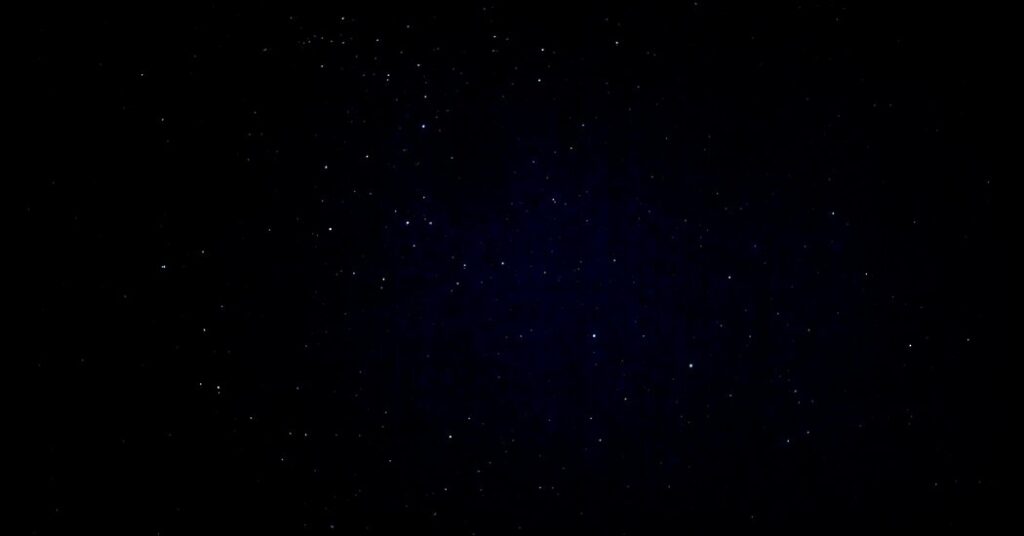
It was around 3 a.m., on a ferry from Italy to Greece, in the middle of the Ionian Sea. As a frugal student backpacking through Europe, I was staying on the ship’s deck overnight to avoid buying a seat. I must have fallen asleep, and when I woke up feeling cold, the sky was filled with stars, so many stars. They looked so close, it seemed I could touch them.
My heart started to race. It was an experience of nature’s raw power that I’d never had before and haven’t had since, some 30 years later.
It also made me think of my father.
I realized at that moment that during all his decades at sea, he must have seen countless starry skies like these, night after night, year after year. Did they captivate him, as they did me? Or did they make him feel lonely — adrift in an uncaring universe, far from his home and his loved ones, his sense of time and self obliterated in the ocean of stars?
Since then, I’ve thought about my father every time I see the stars, whether on assignment in the Gobi Desert of Mongolia or the mountains of Kurdistan during the Iraq war.
When Matt McCann, The Times’s photo editor for the Climate desk, asked me to join Ray on this voyage to Antarctica, I first thought I might be able to say hello to the stars in yet another part of the planet — until I realized we were going at the height of the Antarctic summer, when the sun never sets, creating a white night.
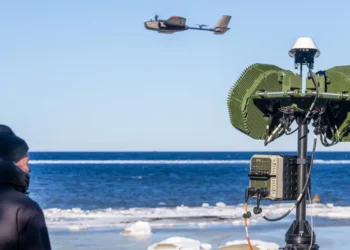
Still, our encounters with nature in Antarctica made me think of my father all the same. I flew drones from our icebreaker to capture the immense scale of the icebergs and ice cliffs around us. I mounted cameras on the ship’s helicopters to take in the deep ravines and crevassing surfaces of the colossal Thwaites Glacier. Ray and I stayed with the scientists for more than 24 hours on the glacier, watching the vast, icy landscape cycle through a whole day’s colors and moods.
My father’s given name, Jin-soo, means “truly magnificent,” and each time I photographed the truly magnificent environment, I wanted to show him my pictures, like a little boy eagerly showing off his grades.
Captain Kim didn’t know if my father had ever wanted to travel to Antarctica. In those days, South Korean ships didn’t sail to the poles, so it’s unlikely he would have had the opportunity. What would he say, though, if he knew I had gone to the end of the Earth? Might I be fulfilling a dream of his?
As far as I know, the closest he ever got to Antarctica was Chile. During his travels, he often brought home stamps for me and my older brother. Maybe he hoped, in his own quiet way, that these stamps would help him connect with us.
Today, as a photojournalist, I travel constantly, just as my father did. And, like him, I’m a father who probably wasn’t around enough while his son was growing up.
Once, when my son, Gio, was 3, he kicked me at the end of the day and said, “Go home, go home, Daddy.” To him, “Daddy” was just the name of a person who came and went.
Like my father, I am not the most communicative with my son, who is now 22. But I do often tell him I love him. I wish I had told my father the same thing while he was still around — perhaps even decades ago, when I first saw the stars above the Ionian Sea.
Chang W. Lee has been a photographer for The Times for 30 years, covering events throughout the world. He is currently based in Seoul. Follow him on Instagram @nytchangster.
The post How My Trip to Antarctica Unlocked a Family Discovery appeared first on New York Times.