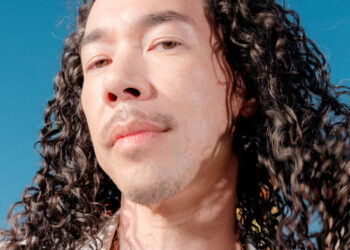
Just after midnight on New Year’s Day, Mahmood Mamdani sat on a bench in a disused subway station and watched as his son, Zohran Mamdani, was sworn in as mayor of New York City.
At nearly 80, dressed warmly for the ceremony in a fur hat and thick coat, the older Mamdani huddled next to his wife, the acclaimed filmmaker Mira Nair. It was, by any measure, an astonishing late chapter for Mr. Mamdani, a Columbia University professor who is one of Africa’s leading political thinkers.
Suddenly, the son’s fame had eclipsed the father’s. At the same time, the New York City election appeared to breathe fresh life into the political ideas that had animated Professor Mamdani’s work for decades. Suddenly, new readers were scouring his books for clues into his son’s politics, and scrutinizing the professor’s contentious views on colonialism, history, identity, Israel and Palestinians.
In a recent interview with The New York Times, Professor Mamdani said he had sought not to interfere with his son’s political rise and public life. “I’m more of an observer than a participant,” he said, sitting on the terrace of his brother’s house near the Kenyan coastal city of Mombasa. “I reminisce.” Whether he can remain on the sidelines while his son governs New York City remains to be seen.
Mayor Mamdani’s campaign was built in part on his support for Palestinians and opposition to Israel’s war in Gaza, a position he shares with his father. While public opinion has shifted toward the mayor, he continues to walk a tightrope in the face of persistent criticism from some voters.
That challenge has not diminished the father’s pursuit of thorny subjects or his appetite for debate and provocation. In the interview with The Times, he said his next book would be about Israel, Palestinians and the campus protests against the war in Gaza at Columbia University in 2024.
“I must be involved, whatever the cost,” Professor Mamdani said, reflecting on his intellectual life. “It is part of my responsibility.” The mayor’s office declined a request for comment.
Professor Mamdani was born in Mumbai in the final year of the British Raj to a family that was part of India’s diaspora in East Africa. He attended a segregated colonial school in Kampala, the capital of Uganda, and, in 1963, he secured a scholarship to the University of Pittsburgh.
He joined a civil rights group on a bus trip to Alabama, where he was arrested and spent a night in jail. The experience, he said, drove home the links between the civil rights movement and decolonization efforts in Africa and beyond.
“This was the same struggle we fought for,” he said.
He returned to Uganda only to be expelled in 1972 along with tens of thousands of other people of South Asian descent by Idi Amin, the country’s dictator. Professor Mamdani landed in London as a refugee, but returned to Africa soon after to attend the University of Dar es Salaam in Tanzania, then a center of socialist thought under President Julius Nyerere.
At the university, he met Yoweri Museveni, who took over Uganda in 1986, seven years after Mr. Amin was driven from power. Forty years later, Mr. Museveni still rules Uganda. Professor Mamdani said he and Mr. Museveni have continued to cross paths and occasionally clashed.
“‘Professor, you are always talking, always talking. What’s wrong with you?’” Professor Mamdani recalled Mr. Museveni asking during one meeting. “‘Mr. President,’” Professor Mamdani said he had replied. “‘I am paid to talk.’”
Professor Mamdani has published a series of books that helped secure his reputation and attract criticism as a leader in post-colonial studies. His latest book, “Slow Poison,” published in 2025, tackles the presidencies of Mr. Amin and Mr. Museveni amid personal reflections and memories.
“Slow Poison” re-examines Mr. Amin’s rule, which lasted from 1971 to 1979, and rejects the notion that he was a uniquely wicked ruler. Mr. Mamdani writes that Mr. Amin’s path to power was facilitated by the British and Israeli governments.
It was not until Mr. Amin turned his back on the two countries and expelled their citizens from Uganda that Western media began to portray him as a cruel, murderous despot, he argues.
Some critics say Mr. Mamdani has sanitized the scale of Mr. Amin’s brutality, which led to the deaths of thousands of innocent people. In the book, Professor Mamdani compares Mr. Amin’s tenure with that of Mr. Museveni, who for years enjoyed a reputation as a visionary leader. But Mr. Mamdani notes that his rule has been marked by violent abuses of civilians.
“I am far more empathetic to the two leaders than history has been to Amin and posterity will be to Museveni,” he said.
A spokesman for Uganda’s government did not respond to a request for comment, but in a post on X, the country’s ambassador to the United Nations, Adonia Ayebere, called the book a “vile publication.”
Mr. Mamdani has often found himself at the center of such controversies. Two years after the end of apartheid in 1994, he moved his family to South Africa, where he was tasked with developing an African studies program at the formerly segregated University of Cape Town. The syllabus for first-year students was titled, “Problematizing Africa.”
The syllabus was meant to challenge the prevailing Western view of the continent, and relied largely on the work of African academics, according to an article Professor Mamdani wrote in an academic journal in 1998. Some colleagues criticized the curriculum as too onerous and discarded it.
The professor and his supporters saw that opposition as a rejection of an Afrocentric curriculum they deemed essential to decolonization and post-apartheid education. The dispute at the University of Cape Town acquired a nickname: The Mamdani Affair.
The episode did not detract from his influence in shaping thinking about higher education and other topics on the continent. “Professor Mamdani, through his scholarship and practice, is one of the intellectual giants and leaders in Africa,” said Willy Mutunga, a retired chief justice of Kenya.
After two sold-out events in Nairobi in January to celebrate the release of “Slow Poison,” Professor Mamdani suggested that the audience had come only because of his famous son. But audience questions suggested otherwise. Almost everyone asked about events in Africa, not in New York.
Catherine Komuhangi, a Ugandan researcher who attended one of the events, asked Professor Mamdani for guidance on where progressives should look for leadership.
Right here in this room, he replied. The audience laughed.
The thesis of Professor Mamdani’s next book will be that people are by nature migratory beings and that the notion of a homeland is a fiction. This applies to groups in Africa and it applies to Jews, he said. The book, which will be titled, “Homelands,” and is expected to be finished in two to three years, will also argue that colonial authorities have used ideas about ethnic identity to secure territorial control and oppress others.
“Intellectual work has to be provocative. It has to challenge conventional thinking,” he said.
The book will build on his previous work, such as the 2020 study, “Neither Settler Nor Native,” which traces the creation of modern states and examines colonial power. In that book, Mr. Mamdani argues that the conflict in Israel is a clash “between settlers and the community they dispossessed.”
Critics have said his views are antisemitic and minimize Jewish history in the Middle East and the hostility of Arabs toward Jews.
During the 2024 protests at Columbia, Professor Mamdani signed a petition calling on the university to end its support for Israel. He also held teach-in sessions for students who had set up an encampment on campus grounds to protest the war in Gaza. Some students took issue with Professor Mamdani’s involvement.
“His conduct, in my view, contributed to a discriminatory environment for Jewish students,” said Elisha Baker, 23, a student of Middle East history at the university, who led pro-Israel advocacy during the encampment.
Professor Mamdani has said that events in Israel and the occupied Palestinian territories were an example of a theme that he has explored with respect to Africa: Who is a settler and who is a native? It is a theme that he said was political and also intimately connected to his own life.
“My intellectual ambition comes in part from my marginality,” he said. “I have learned that I belong wherever I am, and I must never take the stance of an outsider.”
Reporting was contributed by Musinguzi Blanshe from Kampala, Uganda; Sharon Otterman from New York; John Eligon from Cape Town; and Abdi Latif Dahir from Beirut, Lebanon.
Matthew Mpoke Bigg is a London-based reporter on the Live team at The Times, which covers breaking and developing news.
The post As Mamdani Walks a Tightrope, His Father Pushes Boundaries appeared first on New York Times.