Max Jankowsky represents the third generation of his family to run a foundry in eastern Germany, but he is worried that history might end with him.
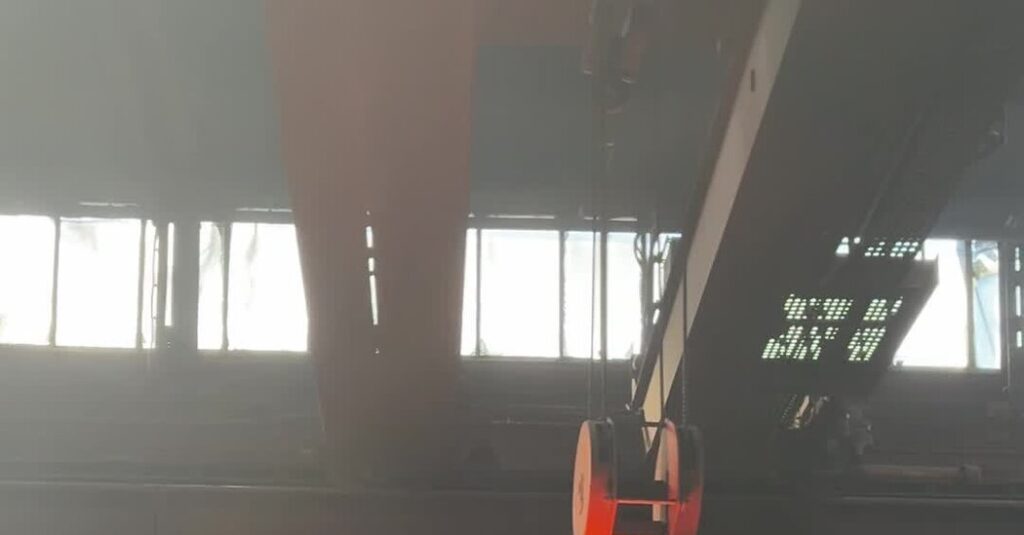
The foundry, GL Giesserei Lössnitz, makes metal presses used by automakers like Volkswagen and BMW. It consumes vast amounts of electricity, natural gas and coke, a coal-based fuel. And the cost of all that energy is crippling his business and thwarting his efforts to move away from fossil fuels.
The challenge he and his business face has only intensified since the war in Iran sent the prices of oil and natural gassoaring.
For many industrial companies in Europe, high energy costs have been a big concern, especially since Russia’s 2022 invasion of Ukraine. But even before then, electricity, fuels and other forms of energy were consistently much higher in Germany, Italy and other European countries than they are in the United States and China.
Since the end of February, when the United States and Israel attacked Iran, European natural gas prices have risen more than 50 percent, further exposing the region’s vulnerability. Brent crude oil, the international benchmark, is trading at around $100 a barrel, up nearly $30 from the end of last month.
“It’s so, so hard to survive,” said Mr. Jankowsky, who is 32 and has been the foundry’s chief executive since 2020.
“As a young C.E.O., I still have probably 40 years in the job market until my retirement,” he said. But the situation with Germany’s energy costs feels “not really under control.”
The latest jump in energy prices comes as Europe is trying to rebuild its industrial base and fend off competition from cheaper Chinese exports. In an effort to make its businesses more competitive, European officials have sought to lower energy and related costs even if that has meant easing some of the region’s tough environmental regulations.
Germany, Europe’s largest economy and the home of a large chunk of its industrial base, is central to those revival efforts. Last year, the German economy barely grew, following two years of recession. The industrial sector lost 160,000 jobs in 2025, and business closures have increased. The country is hampered by some of the highest electricity prices in Europe and is trying with mixed success to use less natural gas, almost all of which is imported and expensive.
But officials and some business groups have sought to project calm in recent days. Holger Lösch, the deputy director general of the Federation of German Industries, said that the trade group was monitoring the situation closely but that he did not yet see a reason for the government to introduce policies in response to the Iran conflict.
On Wednesday, Ursula von der Leyen, the president of the European Commission, said households and companies needed relief from high energy costs. The commission was even “exploring subsidies or capping the gas price,” she said, while urging countries to lower taxes on electricity.
So far, the situation is different from 2022, when some German factories struggled to secure enough natural gas at prices they could afford and had to suspend production when Europe started to drastically reduce its purchases of Russian gas. This time, executives are less concerned about running out of fuel since Germany has significantly diversified its suppliers.
But the 2022 crisis took a big toll across Europe. Households were told to lower their thermostats, and some workers were furloughed because of production halts. Between August 2022 and December 2023, European Union countries collectively reduced gas demand by 18 percent, according to the European Commission.
“In 2022, it was really a total physical interruption from one day to another, and Germany was broadly unprepared for that,” said Ferdinand Rammrath, the chief procurement officer at Covestro, a large German chemicals company.
Back then, Mr. Rammrath oversaw the company’s energy procurement, and he said he could plan only six hours to three days ahead. “That was all we had in terms of visibility,” he said.
Now, he said, his company has the luxury of waiting to see how the dust settles before making any major changes. That is partly because Covestro now hedges some of its energy costs, something it was not doing in 2022, and has increased its use of renewable energy.
Covestro produces a wide range of polymers for everyday uses, from the soft foam in mattresses to the insulation panels in fridges. The company manufactures products around the world, and energy represents about a tenth of its global costs. The share is higher in Europe, Mr. Rammrath said.
German companies are better protected against fuel shortages because the country now buys much of its gas from suppliers in the United States and Norway.
That said, natural gas storage levels in Germany and other European countries are low after a cold winter. Many executives and analysts are worried that a drawn-out war in the Middle East could make it harder and more expensive to refill its gas stores.
“If we go into the next winter with too low storage, then everything depends on the weather,” Mr. Rammrath said. “Then you have volatility as you have volatility in your weather forecast. And that is very, very unhelpful for an industrial company.”
Covestro and other companies have concerns beyond the impact of the Iran conflict. They have been pushing for relief from proposed changes to the European Union’s emissions trading system, which makes companies pay for their carbon emissions over a certain level. The system is being reviewed this year, and businesses are lobbying to soften some of the bloc’s planned expansion of the rules.
The cost of emission allowances, particularly from a separate German system, is a major expense for Mr. Jankowsky’s foundry — 350,000 euros (about $405,000) last year. And that is on top of his bill for coal, electricity and natural gas.
He would like to replace his coal-based furnaces with two new machines that run on electricity, which would reduce his emissions bill. But that upgrade will cost €12 million ($14 million), a substantial sum for a business that in a good year earns around €300,000 to €400,000 in profit.
He had expected a large part of that cost to be covered by a government subsidy, but a new federal government that took over last year did away with the necessary incentives. Paying for the upgrade on his own or by borrowing money is not feasible. Even if it was, he is not sure that the investment would make sense given Germany’s relatively high electricity prices.
“We can’t go back, but we also can’t go forward,” Mr. Jankowsky said.
The problem weighs heavily on him. The foundry employs 90 people and 10 young apprentices, and is a key source of jobs in Lössnitz, a town near the city of Chemnitz and around 290 kilometers (180 miles) south of Berlin. Mr. Jankowsky is also the president of Chemnitz Chamber of Commerce and Industry, which represents 70,000 businesses.
Local unemployment is rising, especially for industrial workers. He said he often overheard people expressing fear for their futures while eating and drinking at local restaurants and pubs.
“This sector is really in danger,” Mr. Jankowsky said, referring to the small and medium-size businesses that make up the backbone of Germany’s industrial base. He added: “We are resilient, but we are not unbreakable.”
Eshe Nelson is a Times reporter based in London, covering economics and business news.
The post Surging Energy Costs Put German Industry ‘Really in Danger’ appeared first on New York Times.