After rising sharply on Thursday, oil prices had little reaction and stayed around $100 a barrel after the Trump administration said it would allow the sale of some Russian crude.
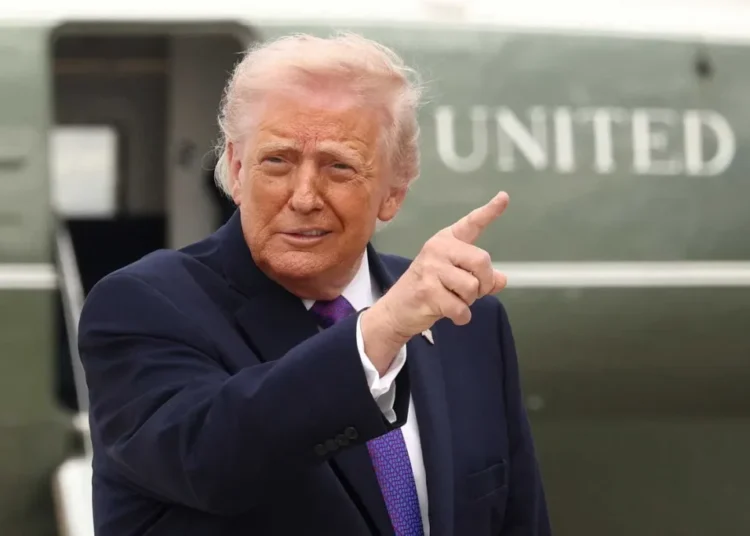
Treasury Secretary Scott Bessent announced on Wednesday night that the U.S. government had temporarily removed sanctions on Russian oil currently at sea, saying that freeing the supply could add hundreds of millions of barrels of oil to global markets.
Stock markets in Asia were trading lower on Friday after the S&P 500, the U.S. stock benchmark, slumped to its worst single-day performance since the war began.
Oil barely budges after Russia waiver.
-
The price of Brent crude, the global benchmark for oil, was trading at nearly $100 a barrel on Friday morning in Asia. It settled at $100.46 a barrel on Thursday, up 10.1 percent.
-
West Texas Intermediate crude, the U.S. benchmark, was around $95 a barrel. It settled at $96.40 a barrel, up 10.5 percent, on Thursday.
-
Oil markets have been on a convulsive path since the United States and Israel attacked Iran on Feb. 28. The price of Brent spiked to nearly $120 a barrel on Monday as traders feared long-lasting cuts in supplies. Prices have pulled back since then, but remain sharply higher than before the war.
-
Investors and analysts across the world are focused on the Strait of Hormuz, the narrow waterway between Iran and Oman that is a vital trading route for oil and natural gas, which normally carries as much as one-fifth of the world’s oil supply. Shipping traffic exiting the Persian Gulf through the strait has been effectively halted and hundreds of tankers are stranded because of the risk that vessels could be attacked.
-
Governments have tried to stem the price be easing concerns about global supply. World leaders agreed Wednesday to release 400 million barrels of oil from their strategic reserves, including 172 million barrels from the U.S. reserve. Last week, the Trump administration temporarily freed Russian oil sitting at sea that was set to be delivered to India, which has been a major importer of Russia’s oil since Russia’s full-scale invasion of Ukraine in 2022.
Stocks in Asia fall.
-
Stock markets across Asia were trading lower on Friday.
-
On Thursday, the S&P 500 fell 1.5 percent over concerns about rising oil prices. The Stoxx 600, a Pan-European index, fell 0.6 percent.
Gasoline prices rose.
-
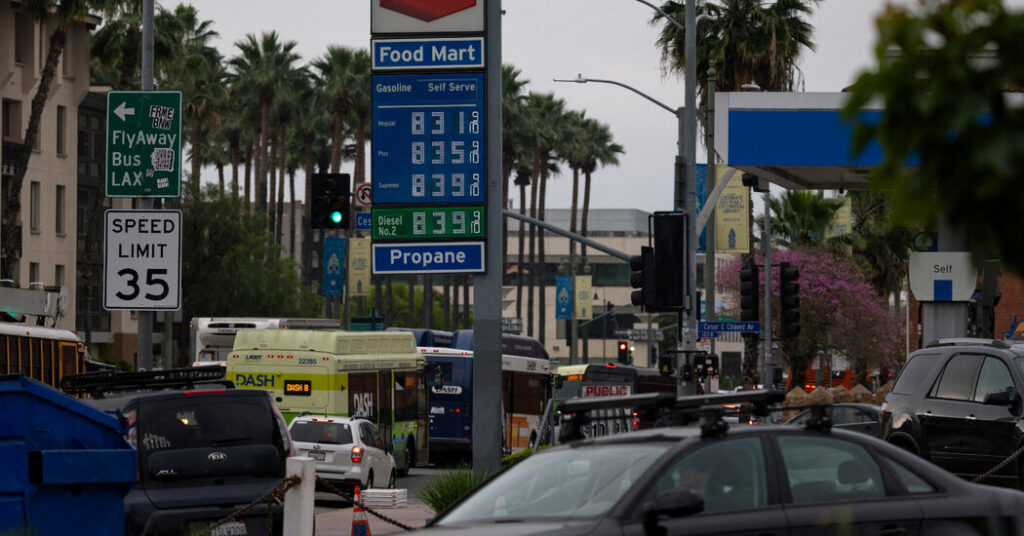
Gas prices rose on Thursday to a national average of $3.60 a gallon, according to the AAA motor club. The increase raised the cost for drivers by 21 percent since the war began.
-
Gas prices don’t move in lock step with crude, usually trailing increases or drops by a few days.
-
Diesel prices have increased even more quickly and rose to $4.86 on Thursday, up 29 percent since the start of the war.
The post Oil Prices Barely Budge After Trump Lifts Russia Sanctions appeared first on New York Times.