For around 15 years, many American leaders — including all three presidents in that period — believed that the country was too deeply entangled in trying to reorder the societies of the Middle East. They felt the more pressing challenges included rebuilding America’s industrial base and confronting the rise of China. Yet here America is, once again, fighting a war to reorder a society in the greater Middle East. And like in Iraq, Afghanistan and Libya, this war seems unlikely to turn out quite as its proponents may hope.
Why does this keep happening?
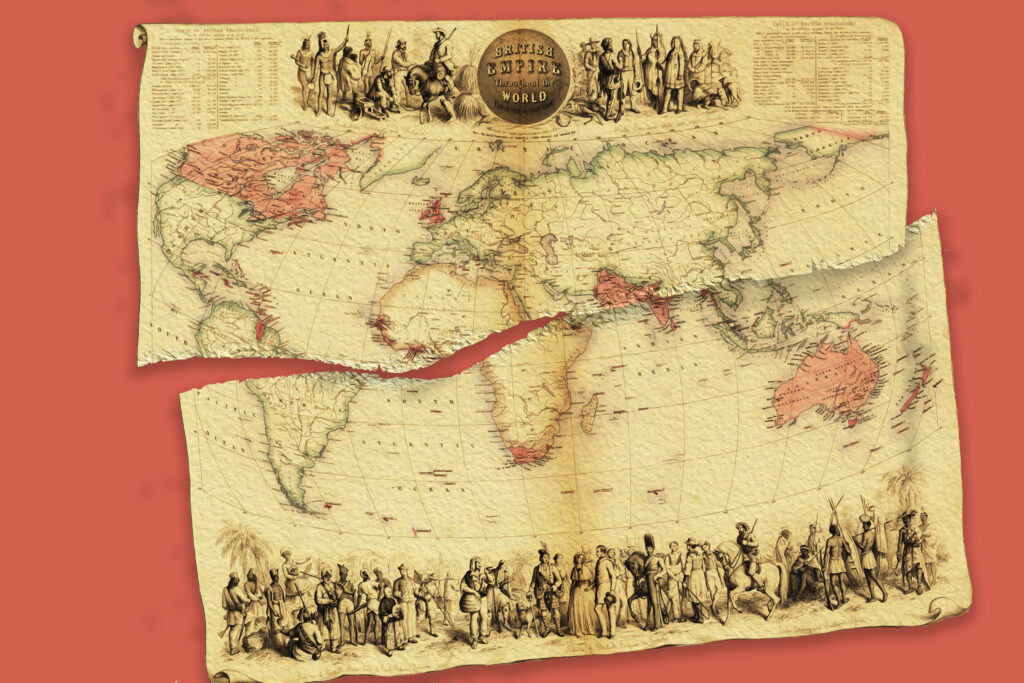
To understand the present, look at the past — at the only country in modern history whose global reach matched that of the United States. Britain at the turn of the 20th century was the world’s sole superpower. The British Empire’s share of globalgross domestic product in 1870 was roughly 25 percent — about the same as the United States’ today — and London was the world’s financial capital. Britain had thwarted Napoleon’s bid to rule the European continent and Russia’s effort to expand more into Southeastern Europe during the Crimean War. It presided over a vast empire and set the agenda for international life, much as Washington does today.
Over the course of those decades, roughly from the 1880s through the 1920s, Britain found itself responding to instability, nasty regimes and power vacuums all over Asia and Africa. It sent troops and asserted control in places like Sudan and Somalia, Iraq and Jordan. These missions all seemed compelling at the time but had the effect of keeping London distracted by an endless series of local crises in peripheral parts of the world, often at great cost. The Iraqi rebellion of 1920 required more than 100,000 British and Indian troops and tens of millions of pounds to put down — at a time when the estimated total budget for education in Britain was roughly the same as the cost of that Iraqi “excursion.”
While British leaders passionately debated their strategy in Mesopotamia, they fundamentally neglected the real economic and technological challenges that they faced. As Britain battled with tribes in the Middle East and Africa, across the Atlantic, the U.S. was quietly building the most advanced industrial economy the world had ever seen. In Europe after World War I, a defeated Germany steadily rebuilt its industry and a highly mechanized military apparatus. Britain, distracted by the chaotic periphery, was being systematically surpassed at its core. Over time, the result was that Britain collapsed as the world’s leading power.
America today is succumbing to some of the same imperial temptations. It responds to genuine crises in the Middle East. It sees a logic that is political, military and moral in responding. But ultimately, grand strategy is about prioritizing finite resources. The U.S. does not possess infinite political capital, bandwidth, military capacity or economic resilience. Every airstrike on Tehran, every anti-drone interceptor shot over the Persian Gulf and every hour administration officials spend debating the nuances of Iranian political succession represents energy diverted from the true tectonic challenges defining the 21st century.
The primary, indispensable role of the U.S. is to anchor the global system against the revisionist ambitions of Beijing and Moscow. China is not getting bogged down in Middle Eastern quagmires; it is relentlessly investing in artificial intelligence, quantum computing, solar and wind power, batteries and robots — the technologies that will determine the balance of global power. Russia remains fiercely committed to disrupting European security and undermining Western democracies through hybrid political-military warfare that has proved hard to detect and even harder to defeat. But while Moscow and Beijing challenge the basic architecture of America’s world order, Washington is preparing, once again, to spend blood and treasure policing the Middle East and trying to pick the leaders of one of its countries.
History suggests that great powers often succumb to the allure of “small wars” precisely because they offer the illusion of quick, political and moral victories. Unfortunately, these tactical successes rarely translate into strategic gains, and more often serve as the first step toward long-term exhaustion.
Even if the intervention in Iran succeeds, it would require that America get deeply involved in the fate of that country. Is that ultimately where America’s time and energy would be best devoted over the next decade? The lesson from Britain’s role is clear: Great powers do not usually fall because they are conquered by foreign armies. They fall because they overextend themselves on the periphery while neglecting the core.
The post America’s imperial trap in Iran appeared first on Washington Post.