Reality is starting to set in for the world’s oil traders.
Oil futures have again topped $100 a barrel — the latest surge after days of wild price swings in the market since the United States and Israel first struck Iran. But this uptick came after the International Energy Agency on Wednesday announced that more than 30 countries would release a record amount of oil from their emergency reserves.
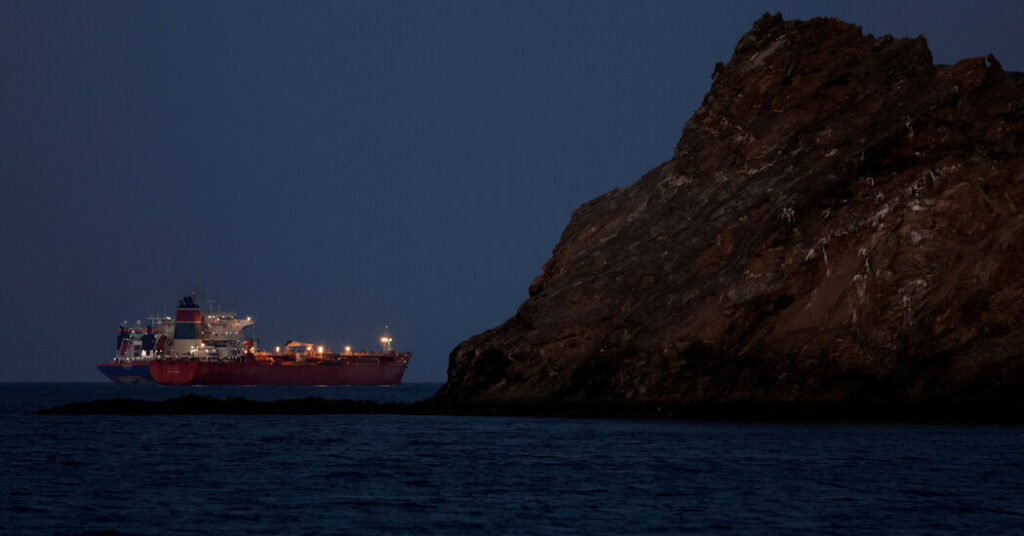
Instead of reassuring jittery markets, the news seemed to further spook traders by underscoring how far the world is from reopening trade in the Strait of Hormuz, the narrow waterway and vital trading route that separates Middle Eastern oil producers from their customers. This concern was further reinforced when three ships were attacked in the channel on Wednesday.
Before the war, the strait carried more than 20 million barrels a day, roughly one-fifth of the world’s supply. That traffic is virtually halted. While world leaders agreed to release a record 400 million barrels of oil from strategic reserves, that is only about 20 days worth of oil that would normally flow through the strait.
And the war began nearly two weeks ago — with no end in sight.
“No amount of storage can replace 20 million barrels per day of continuous flow,” said Edward C. Chow, a senior associate at the Center for Strategic and International Studies, a Washington think tank, and a former executive at Chevron.
Tapping those emergency stores of oil is easier said than done. Reserves are stored in massive facilities scattered around the world.
South Korea, for example, has storage sites positioned around the peninsula, according to the Korea National Oil Corporation. Some facilities, like one in Okinawa, Japan, are shared with commercial inventories owned by producers like Saudi Arabia’s Aramco.
Member countries of the International Energy Agency, a Paris-based organization, are required to maintain at least 90 days of their imports as emergency reserves.
Getting the oil flowing from reserves also takes time. There are physical limits on how quickly oil can be pulled from storage, but also more mundane hurdles, such as finding buyers, writing contracts and the basic logistics of moving supplies across the globe.
The maximum rate at which the United States can draw oil from its reserves is only 4.4 million barrels per day, according to the U.S. Department of Energy.
Even if shipments resume in the strait, it could be months before energy markets return to normal, according to June Goh, a Singapore-based oil market analyst at Sparta, a commodities data firm.
Refineries are complex, tightly sequenced operations and cannot be turned on and off like a light switch. If refineries are forced to shut down, it would take at least two months for them to return to normal operations, even after regular shipments return, she said.
Oil prices rose sharply after the war began on Feb. 28, briefly surpassing $110 a barrel this week before falling back.
Markets are starting to reflect the possibility that there will be no short-term resolution to the conflict and its consequences on oil supplies, and that even releasing the reserves is only a temporary solution.
Traders had been betting that the conflict would be brief and that President Trump would back down as he has in trade disputes, said Edward Fishman, a senior fellow at the Council on Foreign Relations. But unlike with tariffs, the strait is not something that Mr. Trump can unilaterally open or close.
Even if the United States were to declare an end to military operations, there is no guarantee that Iran would quickly reopen the strait, Mr. Fishman said. Iran’s leadership has publicly said its goal is to push the United States out of the Gulf entirely, and after two weeks of American strikes, it may have little reason to back down.
“There is only one party that can reopen the strait,” he said. “And that’s Iran.”
Rebecca Elliott contributed reporting from New York.
The post Why Oil Prices Surged Even After the Release of Strategic Reserves appeared first on New York Times.