BEIRUT — The U.S.-Israeli war against Iran has engulfed Lebanon, pushing the beleaguered country to a new precipice after retaliatory rocket and drone strikes on Israel by Hezbollah, Tehran’s longtime proxy, drew a ferocious bombing campaign and further incursions by Israeli ground forces into border areas of south Lebanon.
More than 630 people, at least 91 of them children, have been killed in Lebanon in the past week, authorities here say. Israeli evacuation orders and airstrikes have forced 800,000 people from their homes.
Lebanon’s government, “desperate” to stave off a disaster that threatens to overwhelm it, has appealed to U.S. and European leaders to intervene, officials said, even offering to engage in once-taboo talks with Israel. Israel rejected the proposal, according to two people familiar with the matter who, like others, spoke on the condition of anonymity to discuss sensitive diplomacy.
Lebanese authorities, in a diplomatic scramble from Beirut to Paris to Washington, have called for an immediate ceasefire, support for the Lebanese army to seize Hezbollah’s arsenal, and eventual direct peace talks with Israel “under American sponsorship,” according to an adviser to President Joseph Aoun.
“The president of the republic is desperate and seeking all means to stop the destruction of the country and halt attacks,” the adviser said.
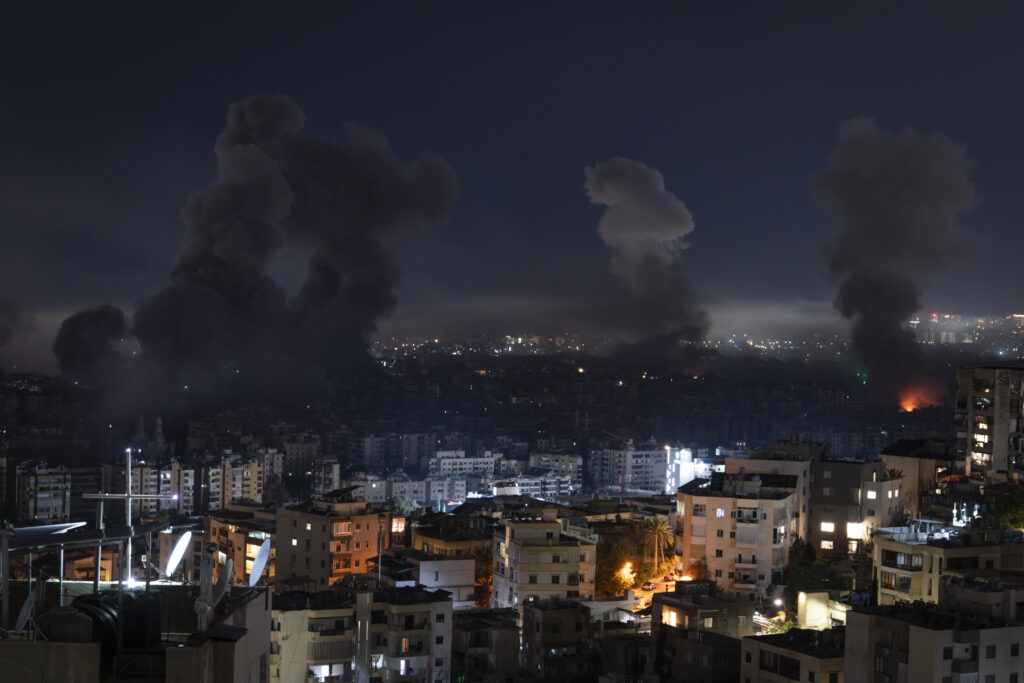
Israeli strikes overnight Thursday pummeled Beirut’s southern suburbs and Lebanese borderlands, provoking warnings of a humanitarian crisis. Families have crammed into schools and spilled out onto the streets of the Beirut waterfront, and traffic choked off roads needed by ambulances trying to reach the wounded.
Israel’s sweeping evacuation warnings in Lebanon have stoked fears of a long, crushing offensive. As the Trump administration is attacking Iran, officials and analysts say, Israeli leaders see an opportunity to fulfill a long-standing ambition of wiping out Hezbollah, a political and paramilitary group backed by Tehran, and extend their growing dominance in the region.
Cyprus, a European Union member, offered to host talks between Lebanon and Israel, according to one of the people familiar with the matter. But the Israeli government has been adamant, this person said, that now is the time to dismantle Hezbollah, which has pummeled northern Israel and driven residents away from the border in past wars. As a result, the campaign in Lebanon “could outlast the conflict with Iran,” this person said.
With Europe nervous about rising oil prices and a potential refugee crisis, French President Emmanuel Macron is working to broker a truce between Israel and Hezbollah separate from the war in Iran.
France, which had a colonial mandate to control Lebanon before its independence, has close ties to the country, but Macron is also seeking to project influence in the region after the Trump administration sidelined European powers in its decision to unleash a war in the Middle East. Macron sent his army chief to Beirut last week, has dispatched warships to the Mediterranean to help defend Cyprus and Persian Gulf allies from Iranian counterattacks and has suggested that French vessels could help secure shipping lanes.
Macron has warned Israeli Prime Minister Benjamin Netanyahu against another invasion of Lebanon. France has suggested its forces could back the Lebanese army in disarming Hezbollah — a mission they say Lebanon can’t complete while under bombardment.
But diplomats also say Israel appears intent on finishing the job it started in September 2024 against Tehran’s most powerful and prized proxy militia in the region. Israeli forces dealt Hezbollah a shocking blow that month with an attack by exploding pagers and the assassination of its longtime leader, Hasan Nasrallah.
The United States and France brokered a ceasefire that November. Lebanon, already battered by an economic collapse, is still reeling.
Israel did not stop bombing or withdraw its military from positions in southern Lebanon. Hezbollah rebuffed calls to surrender its weapons; Israeli officials said the Lebanese government was not doing enough to disarm it.
With U.S. attention focused on Iran, one diplomat briefed on mediation efforts said, Israel sees a window to “get rid of Hezbollah once and for all.” The Israeli military sent reinforcements to the border Wednesday.
Asked Wednesday about the conflict in Lebanon, President Donald Trump said: “We love the people of Lebanon, and we’re working very hard. We gotta get rid of the Hezbollah.”
Hezbollah launched rockets at Israel last week to avenge the U.S.-Israeli strike that killed Iranian Supreme Leader Ayatollah Ali Khamenei. The decision to join the war has deepened the group’s political isolation in Lebanon, as the Shi’ite community from which the group draws its core support bears the brunt of the war.
Israeli strikes have pounded Beirut’s southern suburbs and southern Lebanon, where Hezbollah is dug in. Israeli officials say they’re targeting the group’s capabilities, but the offensive has also emptied out diverse, densely populated neighborhoods on the capital’s edge and agricultural lands in the south. Residents of some Christian villages, who had sought to distance themselves from the war, have also been forced to flee this week.
The Israeli military has in recent days invaded some border villages, clashed with Hezbollah militants, and issued evacuation orders covering roughly 10 percent of the country in an area that Israel occupied until a U.N.-monitored withdrawal in 2000.
At least 800,000 people have been displaced, according to Haneen al-Sayed, Lebanon’s minister of social affairs, in an exodus greater than that of the 2024 war.
“There is a national emergency,” she told The Washington Post. “We are mobilizing very quickly. … Unfortunately, we have been through emergencies before, and we have not collapsed. But we are facing challenges.”
Joshua Zarka, Israel’s ambassador to France, has suggested that Aoun’s openness to direct negotiations and his growing criticism of Hezbollah are no longer sufficient to stop the Israeli campaign. “What would end it is the disarmament of Hezbollah,” he said this week.
The Israeli military has said it is considering “all options.” A far-right minister warned Beirut’s southern suburbs would look like Gaza.
In recent months, the Lebanese government has walked a tightrope, under pressure from Trump envoys to force Hezbollah to disarm.
Lebanon’s president, appointed last year after the ceasefire, pledged to establish a monopoly on weapons as the state confiscated some of Hezbollah’s arsenal. But Hezbollah has resisted Israeli demands to disarm completely, and Lebanese officials have been wary of reigniting strife. The country teeters on a fragile political, sectarian balance between communities that fought a bloody 15-year civil war.
The United States, France and other Western nations have long backed the Lebanese army as a potential counterweight to Iranian influence in the country. Still, support for the cash-strapped force is no match for U.S. military aid to Israel or Tehran’s backing for Hezbollah.
Mohanad Hage Ali, a senior fellow at the Carnegie Middle East Center, said the Lebanese government had “actually acted against Iranian influence” and sought to degrade Hezbollah’s sway recently, including by seizing weapons and curbing Iranian flights. But, he added, the message from Israel now seems to be “You have no military power and we dictate what we want. Complete surrender or nothing, that’s what’s on the table.”
Hezbollah, which has long cast itself as defender of Lebanon’s south, grew into the dominant force of Lebanon’s fractious parties. But the last war with Israel depleted its arsenal and influence.
While Hezbollah might be suffering losses, and its Iranian sponsors are under attack, its fighters are steeped in guerrilla warfare.
Peace appears most elusive to those left stranded by Israeli strikes, many of whom fear they might never be able to return home.
Nahida, a 50-year-old mother of two, fled her home in suburban Beirut with her husband and children to shelter with many others at Beirut’s landmark racetrack. They’ve been sleeping on the ground. “I know we cannot go back to our home,” she said. “It is completely destroyed, and who will rebuild?”
Pope Leo, who visited Lebanon on his first foreign trip in December, paid tribute to a Lebanese priest who officials say was killed as Israel bombed southern Lebanon this week.
“We insist on staying in our homes. If we leave, then we will lose them,” said the Rev. Antonios Farah, another priest from the parish. “If we leave, where do we go? … We are attached to our land and we want to preserve it.”
Francis reported from Brussels. Liar Soroka in Tel Aviv contributed to this report.
The post War against Iran expands into Lebanon as Israel battles Hezbollah appeared first on Washington Post.