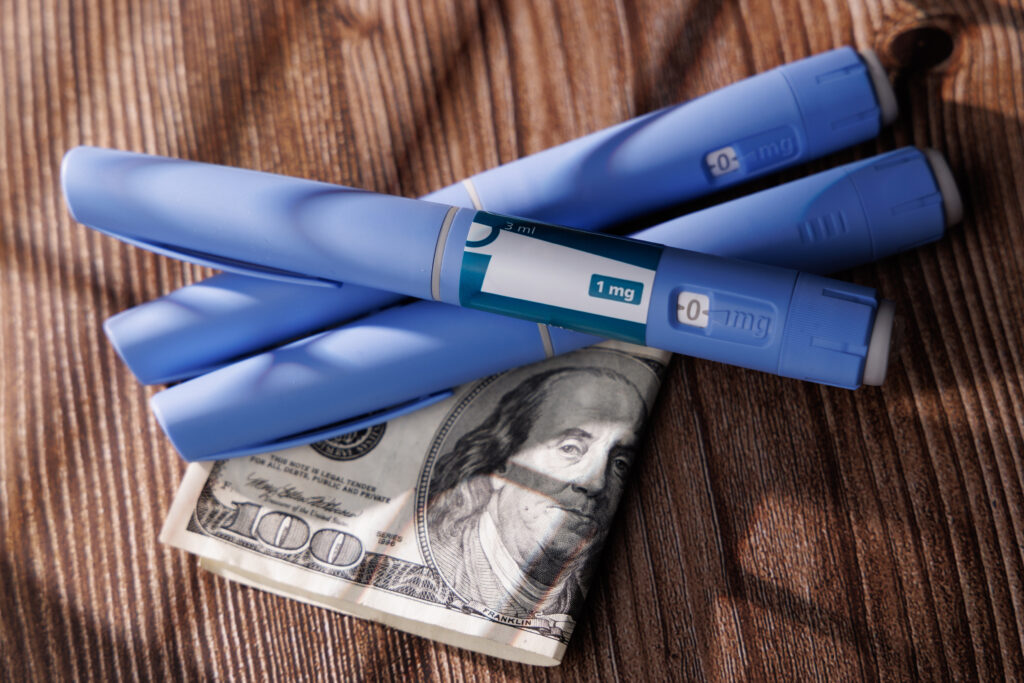
Ashley Elizabeth Harden logged on recently from her home in small-town Louisiana and searched for a weight-loss drug. She found plenty of options and settled on a cheaper, imitation version of the name-brand drugs for $177 a month that she could buy without going through insurance.
“It’s absolutely odd,” she said of paying a cash price for medicine she sees as vital but whose cost rivals her monthly electric bill, “having to research, compare prices and make decisions online for something so important just to access it.”
This may be how consumers are accustomed to shopping for shoes and electronics, but in a country where the vast majority of prescriptions are filled through insurance, the exploding demand for weight-loss drugs is changing how Americans are buying medicine.
While President Donald Trump has claimed credit for lowering prices with his TrumpRx website and is making the initiative a talking point in the run-up to the midterm elections, the reality is that the prices were already coming down before he unveiled his glossy website with its Trump-branded coupons. Much bigger market forces are at work.
Spotty insurance coverage and robust competition have spawned a marketplace where cash is king — and prices are falling.
The two main drug companies selling branded versions of the revolutionary drugs, Eli Lilly and Novo Nordisk, are dropping prices as they compete for market share. Meanwhile, compounding pharmacies that sell cheaper knockoffs of these products are disrupting the marketplace.
Lower prices for a relatively new class of prescription drugs is unusual in a U.S. health care system that typically features increasing costs. The last two years have seen a dramatic shift in price and access for semaglutide, the main ingredient in Novo Nordisk’s Wegovy, which has had a list price (the cost before insurance) of more than $1,300 a month; now, with cash pricing for those not using insurance and off-brand versions sold by compounders, starter doses of Wegovy or an off-brand version can be had for $200.
Consumers appear to be setting aside cautions from the Food and Drug Administration that it does not inspect or approve compounded copies of the drugs.
“Typically, prices go up after launch in the United States among brand name drugs, not go down,” said Rena Conti, associate professor of markets, public policy and law at Boston University’s Questrom School of Business. “It is an unusual dynamic. The preponderance of patients paying out of pocket for these products is actually creating this dynamic where the companies are lowering their list price to compete for cash-paying customers.”
Insurance gaps are shifting the weight-loss economy
The cash-only weight-loss drug economy starts with patchy insurance coverage.
GLP-1 drugs are generally covered for diabetes, but insurance companies and employers have been more reluctant to do the same for weight loss — in large part because they are so popular and require long-term use often enough that total spending threatens to spiral out of control. Depending on the size of the company, 16 to 43 percent of employers surveyed last year opted to cover them, according to an analysis by the Peterson Center on Healthcare and health policy organization KFF.
So even if you have insurance, odds are high your Wegovy or Zepbound will not be covered for weight loss.
The manufacturers of those two drugs, Novo Nordisk and Eli Lilly, respectively, have responded by creating secondary sales channels, outside of insurance, offering cash prices that are dramatically discounted from the “list price” that is used as the starting point for negotiation with insurance companies. Depending on dose strength, Novo Nordisk’s noninsurance, cash price for Wegovy injections range from $199 to $349 a month. Eli Lilly’s Zepbound ranges from $299 to $449.
Last month, Novo Nordisk declared that in 2027 it will slash its list price by up to 50 percent, to $675 a month. The current list price is $1,350.
“Private and public payers, as well as patients, want access and have been calling for lower list prices,” Jamey Millar, executive vice president for U.S. operations of Novo Nordisk, said in the announcement.
Zepbound’s list price is $1,086, according to Eli Lilly’s website. The company did not respond when asked if it planned to cut its list price in 2027.
Market disrupters
The GLP-1 cash market also happens to be transparent, which vastly differs from the opaque, convoluted price negotiations between manufacturers and pharmacy benefit managers for most prescription drugs.
Late last year, Eli Lilly and Novo Nordisk signed on to the president’s TrumpRx, a cash-pay referral site that the White House launched last month. It sends consumers to the direct-purchase cash website of Eli Lilly or, in the case of Novo Nordisk, offers discount coupons that can be used at a pharmacy.
Trump’s is attempting to bring prices into line with what European health systems pay, an effort called “most favored nation” pricing. White House spokesman Kush Desai said in an email Thursday that TrumpRx is offering consumers weight loss drugs “at deeply discounted prices compared to what they previously had access to.”
The other disruptive factor has been a proliferation of compounding pharmacies selling weight-loss drugs at lower prices than the brand companies. Compounders traditionally make personalized drugs for individuals by mixing ingredients. In the weight-loss craze, they have teamed up with telehealth websites, which heavily market GLP-1s to consumers on social media platforms and even in TV ads.
These also are cash-based sales, no insurance accepted, with multiple competitors.
Uniquely massive demand for the drugs from 2022 until early 2025 allowed compounders to gain a foothold in the first place. They took advantage of FDA rules that permit competition on patented drugs when the brand manufacturers cannot produce enough of a supply.
“There was an extreme drug shortage which triggered these rules that allowed compounded drugs to enter the market, and the compounded drugs were way more affordable,” said Stacie Dusetzina, a professor of health policy and cancer research at Vanderbilt University School of Medicine.
Hims & Hers, a publicly traded company, is perhaps the most prominent marketer of compounded weight-loss drugs, having placed Super Bowl ads in 2025 and 2026. The FDA declared more than a year ago that there was no longer a shortage and, this month, announced it had sent letters to 30 telehealth companies that warned them to stop illegally marketing compounded GLP-1s.
The FDA says drugs are “misbranded” when compound pharmacies claim on websites and in advertising that their drugs are the same as the branded versions, when they are not inspected, certified or authorized to make such assertions. Hims & Hers received a warning letter from the FDA in September.
On Monday, Hims & Hers announced a new partnership with Novo Nordisk, after an earlier attempt at a pact crumbled last year. In the announcement, it said it would no longer advertise compounded GLP-1s on its platform or in its marketing. It said “existing patients will have the opportunity to transition to FDA-approved medicines when determined clinically appropriate by their providers.”
Still, many average consumers like Harden, who lacks insurance, find the cash prices daunting.
In Maurepas, Louisiana, Harden said she is buying her GLP-1, semaglutide, which is the generic name of Novo Nordisk’s Wegovy, from a telehealth company called Amble. (Amble does not appear in the FDA’s list of warning letters.) While the price is low relative to the list prices of the brand drugs, it’s still a strain on her family’s budget. To her, the promised health benefits are worth it.
“When $177 a month still competes with groceries, utilities and kids’ needs, it shows the system itself isn’t built with affordability in mind,” she said. “Lower is better, but ‘lower’ doesn’t automatically mean accessible.”
The post How GLP1s are changing the ways Americans buy medicine appeared first on Washington Post.