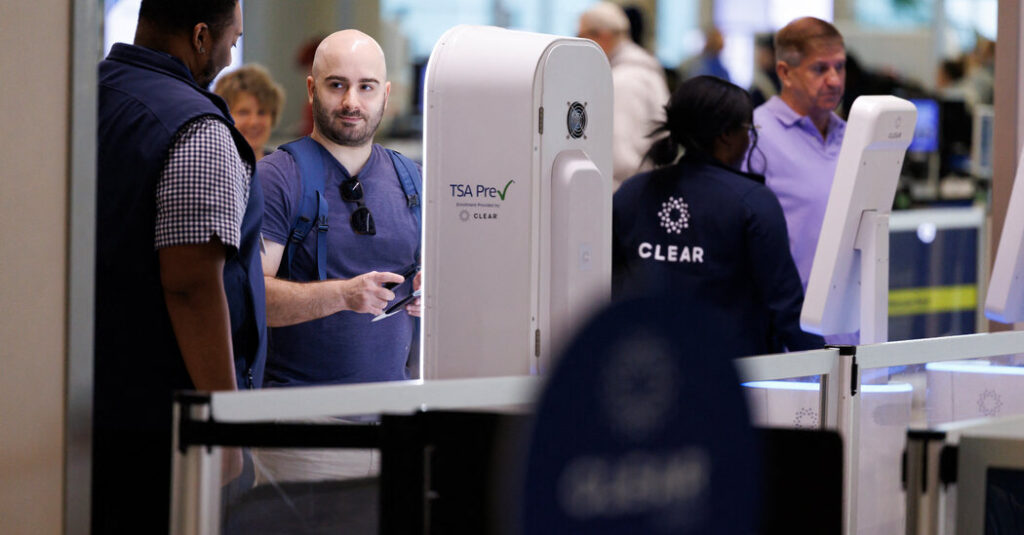
Hourslong waits in Houston. Lines stretching to the parking garage in New Orleans. Images of exasperating delays at airport security checkpoints have reverberated across social media this week, alarming travelers as the partial government shutdown drags into the spring break vacation rush.
About 50,000 Transportation Security Administration officers have been working without pay since Feb. 14, when Congress let funding for the Department of Homeland Security, which oversees the T.S.A., expire over a disagreement on immigration enforcement.
So far, though, despite scattered instances of long lines at T.S.A. checkpoints, most major air-travel hubs across the United States have experienced few sustained shutdown-related disruptions. But experts warn that may soon change.
Here’s how the partial shutdown has played out at airports, and what could come next.
So, how long are the lines?
Officials at Louis Armstrong New Orleans International Airport and at William P. Hobby Airport in Houston blamed last weekend’s delays, and the temporary closure of the T.S.A. PreCheck line in Houston, on limited staffing caused by the shutdown. But disruptions at other major hubs have so far been modest.
For example, at 5 p.m. Eastern on Wednesday, security wait times at Dallas Fort Worth International Airport were less than 20 minutes at each of its 12 open checkpoints; no more than eight minutes at Denver International Airport; and between 12 and 34 minutes at each of Kennedy Airport’s five terminals, according to each airport’s real-time data.
Alnissa Ruiz-Craig, a spokeswoman for Hartsfield-Jackson Atlanta International, the world’s busiest airport, said security wait times there “were higher than normal on Sunday and Monday,” though they had since dropped back down to just a few minutes.
Will things get worse?
Staffing shortages are likely to accelerate after Friday, when affected D.H.S. employees are set to miss their first full paycheck.
“Officers would like to come to work, but they’re unable to make it there because they don’t have the financing,” said Darrell English, a T.S.A. officer at Chicago Midway International Airport and the president of the American Federation of Government Employees Local 777, a union representing T.S.A. officers in Illinois and Wisconsin.
Mr. English, a two-decade veteran of the T.S.A., said he expected a “drastic change” after paychecks stop arriving, as officers increasingly take on second jobs to pay their bills. He warned that travelers “need to come to the airport a lot earlier than they anticipated, because you can’t control how many officers are going to be able to make it to work.”
Ha Nguyen McNeill, the T.S.A.’s acting administrator, told a House committee last month that during the record 43-day shutdown last fall, some T.S.A. employees slept in their cars at airports to avoid paying for gas and sold their blood plasma to make ends meet.
More than 300 T.S.A. employees have quit during this shutdown, D.H.S. said on social media on Wednesday.
D.H.S. did not respond to requests for comment.
Air traffic controllers, who sometimes had to take on second jobs during last fall’s shutdown, leading to delays, are being paid during this partial shutdown because Congress has already funded their employer, the Department of Transportation.
What about Global Entry and PreCheck?
The Trump administration said on Wednesday morning that after a suspension lasting more than two weeks, it had restarted Global Entry, the expedited immigration processing program for vetted travelers entering the United States, and airports across the country confirmed their kiosks were back online.
The administration had suspended Global Entry and T.S.A. PreCheck in the early days of the partial shutdown, but reversed course on PreCheck just hours later.
Christine Chung contributed reporting.
Follow New York Times Travel on Instagram and sign up for our Travel Dispatch newsletter to get expert tips on traveling smarter and inspiration for your next vacation. Dreaming up a future getaway or just armchair traveling? Check out our 52 Places to Go in 2026.
Gabe Castro-Root is a travel reporter and a member of the 2025-26 Times Fellowship class, a program for journalists early in their careers.
The post Are T.S.A. Lines Really That Long? What’s Going On at Airports. appeared first on New York Times.