In the least charitable—and probably accurate—view, President Trump went to war with Iran out of a delusional faith in himself. He believed that the worst-case scenarios that have deterred past presidents from attacking Iran wouldn’t come true for him, because he is Donald Trump.
In the most charitable—and probably accurate—view, the president had reasons to believe that all of the catastrophic warnings about the most hair-raising consequences of an attack wouldn’t come to pass this time. The 12-day war, which Israel and the United States fought last June, demonstrated that they could strike Iran without provoking catastrophic retaliation. Having endured that assault on the country’s military infrastructure, and then wave after wave of protest by its own citizens, the Islamic Republic was isolated and weak. So why shouldn’t Trump exploit that fragility to land a death blow against a murderous adversary?
I could nearly convince myself of these arguments, except that almost no other foreign-policy question has been studied harder over the past 20 years or so than the likely effect of U.S. military strikes on Iran. The many years spent pondering and preparing for a potential attack on Iran are the reason that the first days of the war were, for the most part, a bravura display of American power. Yet all of that study also pointed out the risks: spiking oil prices, the spread of violence throughout the Middle East, civilian casualties of the sort now evidenced by an apparent U.S. missile strike near an Iranian elementary school. When past presidents balked at the possibility of war with Iran, they weren’t just dodging a hard choice; they were deterred by all of the obvious reasons a conflict could perilously spiral. Nobody should be shocked that the expected is now coming to pass.
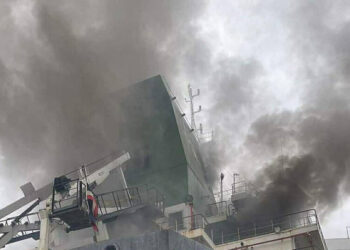
To begin, there’s geography. Just 35 miles across at its narrowest, the Strait of Hormuz links the Persian Gulf to the rest of the world and is surrounded on three sides by Iran. One-fifth of the world’s oil and liquefied-natural-gas supply passes through an Iranian turkey shoot. Fighting for its survival, Iran has the capacity to choke fossil-fuel markets by launching sporadic attacks on passing tankers, enough to deter companies and their insurers from justifying that risk. A hard fact of geography was always going to be a hard fact of war.
[Read: What Iran might do when it has nothing else]
Another daunting obstacle to victory is the nature of the Iranian regime, a theocracy that celebrates martyrdom and has spent its entire history preparing for what it considers an inevitable war with the United States. Every time protests fill public squares, I allow myself to believe that the terrible government in Tehran will crumble. But its willingness to kill to survive is the biggest obstacle to its toppling. And Trump intervened after the regime killed tens of thousands of its most determined foes. Calling for revolution after the revolution has been crushed is belated timing, to say the least. Perhaps the Trump administration will succeed in further weakening Iranian authoritarianism—the attacks will certainly set back the country’s already struggling economy—so that after the bombs stop falling, regime opponents will rush into the streets. But, thus far, decapitating the regime has succeeded only in replacing one Ayatollah Khamenei with another. By all accounts, the son is no less fanatical than his father and believes with theological certainty that the most brutal means justify his righteous ends.
Because airpower isn’t likely to dislodge the regime, the crucial question was always going to be “How does this end?” The lesson that the Trump administration seemed to learn from the failed planning for postwar Iraq is that planning isn’t worth the effort at all. When asked what comes next, Trump can manage only several contradictory answers, sometimes in the course of a single sentence. But the most plausible of these answers is that the administration finds a faction in the government willing to cut a deal favorable to the United States, an Iranian version of Delcy Rodríguez—the Venezuelan official who quietly negotiated her government’s survival after U.S. forces captured Nicolás Maduro. Such an outcome would undercut every promise that Trump made to protesters about help being on the way. It’s hardly encouraging that the administration doesn’t have a plausible candidate for this job after nearly two weeks of conflict—and that the existing regime hasn’t begun suing for peace, even though it’s fighting for survival.
By trumpeting unachievable objectives—unconditional surrender, regime change—as his war aims, Trump has given his enemies the opportunity to claim survival as victory. He’s left himself with no evident end point to what he recently called a “short-term excursion.” If he had wanted to weaken Iran’s ballistic-missile threat—a worthwhile aim—he could have focused U.S. strikes on launchers and production sites. Much as he did after attacking Iranian nuclear facilities last year, Trump could have declared that limited goal and walked away a victor a few days later. Or he could have allowed Israel to carry out attacks, with U.S. support, which might have limited fallout in the Gulf. If he wanted to topple the regime, he could have helped organize and support the opposition, nurturing and supplying the movement to better equip it to succeed. Instead, Trump ignored the obvious and went to war. Now the obvious is seeking its revenge.
The post The Obvious Is Taking Its Revenge on Trump appeared first on The Atlantic.