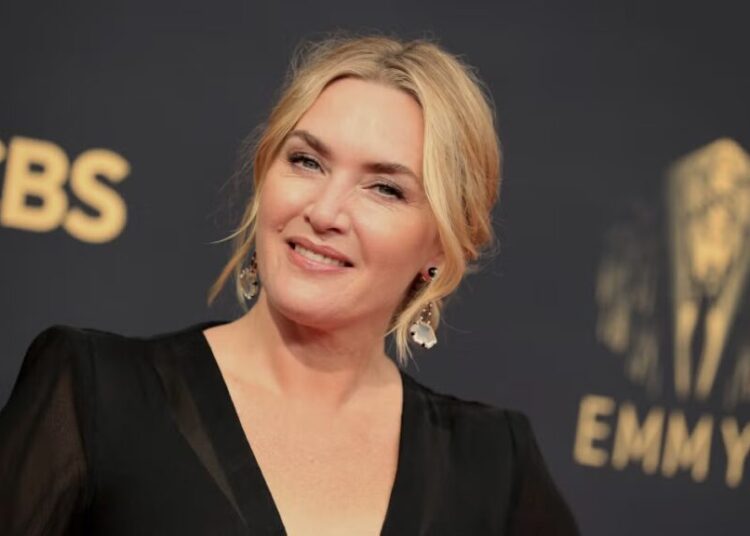
Thanks to multiple historic donations last year and an eye-popping volume of philanthropic gifts, MacKenzie Scott has etched her way to becoming one of the world’s most generous philanthropists.
But the Chronicle of Philanthropy doesn’t see it that way.
Although Scott donated more than $7 billion to more than 120 organizations last year through her philanthropic organization, Yield Giving, the Chronicle didn’t recognize her on its list of the top 50 donors this year.
Scott’s donations in 2025 alone eclipsed that of her ex-husband Jeff Bezos’ lifetime giving, but the billionaire philanthropist’s playbook got in the way of her being recognized on the list. Scott is notoriously secretive and under-the-radar with her donations, never seeking press coverage for her gifts and rarely offering insights into the donations she’s made.
“MacKenzie Scott is among the notable absences on the Philanthropy 50 list,” according to the Chronicle. “While it is possible she made gifts to her donor-advised funds that would have earned her a spot on the Philanthropy 50, she and her representatives declined to provide such information to the Chronicle.”
It’s essentially impossible to contact Yield Giving (Fortune has tried and failed innumerable times to receive more information about donations she’s made in the past). So, confirming donations for a list like the Chronicle compiles wasn’t possible. Still, Scott has appeared on other generous donor lists, including Forbes, which recognized her for the speed at which she gives and the amount of her net worth she’s donated (at least 40%).
Since 2020, Scott has donated $26 billion, while Forbes currently estimates that Bezos and his wife, Lauren Sánchez Bezos, have given about $4.7 billion to charity over their lifetimes. That’s just about one-fifth of what Scott has donated since her 2019 divorce from Bezos, when she received about 4% of Amazon stock, amounting to roughly $36 billion to $38 billion at the time. Scott’s net worth (currently $38.9 billion) continues to be buoyed by the ever-increasing upward trajectory of Amazon shares, though.
window.addEventListener(“message”,function(a){if(void 0!==a.data[“datawrapper-height”]){var e=document.querySelectorAll(“iframe”);for(var t in a.data[“datawrapper-height”])for(var r,i=0;r=e[i];i++)if(r.contentWindow===a.source){var d=a.data[“datawrapper-height”][t]+”px”;r.style.height=d}}});
“Scott awarded grants totaling about $7 billion to at least 120 charities last year through her Yield Giving fund, but she continues to decline to provide details about how much money she is funneling into the grant maker,” the Chronicle continued.
Still, critics find the Chronicle’s exclusion bizarre.
“I find it odd that MacKenzie Scott isn’t on this list,” Hans Peter Schmitz, the Bob and Carol Mattocks distinguished professor in nonprofit leadership at North Carolina State University, told The Conversation. “She says she gave $7.1 billion in 2025. If she had met the Chronicle of Philanthropy’s criteria, that would have landed her in first place by far.”
Schmitz recognizes, though, the Chronicle’s methodology knocked Scott from the list since she’s “never provided sufficient information about her generosity since becoming a major donor on her own, following her 2019 divorce from Amazon founder Jeff Bezos.”
“And that leaves her off the list year after year,” Schmitz said.
How MacKenzie Scott makes donations
Scott can be considered one of the most generous philanthropists in the world, but she’s also the most mysterious—so much so, some donors have even thought donation emails were spam. That has to do with the fact that Yield Giving typically contacts organizations to offer a donation rather than the other way around. Still, her process for sussing out organizations is extensive, sources have told Fortune.
The hallmark of Scott’s giving style is making unrestricted gifts, meaning organizations can use the donations however they choose. That comes after a thorough due diligence process, though, Anne Marie Dougherty, CEO of the Bob Woodruff Foundation, told Fortune. Scott donated $15 million to the veteran-focused nonprofit organization in 2022 and made a subsequent $20 million donation in fall 2025. The $15 million gift was the largest in history at the organization, which was founded in 2006—the same year military reporter Bob Woodruff was severely injured by a roadside bomb in Iraq.
The due diligence process for Scott included sharing information such as the organization’s strategic plan, audited financials, business plans, organization chart, and grant-making process, Dougherty said. But after the donation was made, Yield Giving was very hands-off, she added.
“Unlike traditional funding processes that often involve lengthy applications, specific restrictions, and reporting requirements, her style empowers organizations like ours to determine how best to direct funds quickly and innovatively to address pressing issues,” Noni Ramos, CEO of Housing Trust Silicon Valley, told Fortune in late 2024, when her organization received a $30 million gift from Scott.
The fact that Scott doesn’t make a big to-do about her donations and largely allows organizations to use gifts however they see fit goes back to her overall philanthropic philosophy: She’s just one cog of a generosity wheel, and works to inspire others as others have inspired her.
“[The] dollar total [I’ve donated] will likely be reported in the news, but any dollar amount is a vanishingly tiny fraction of the personal expressions of care being shared into communities this year,” Scott wrote in a December 2025 essay. “It is these ripple effects that make imagining the power of any of our own acts of kindness impossible.”
Indeed, every time she’s made a donation, she’s thought about the generosity from others she’s experienced in her life, including free dental work from a local dentist in college when she was using denture glue to get by—and her college roommate who loaned her $1,000 so she wouldn’t have to drop out during her sophomore year at Princeton University.
“The potential of peaceful, non-transactional contribution has long been underestimated, often on the basis that it is not financially self-sustaining, or that some of its benefits are hard to track,” Scott wrote. “But what if these imagined liabilities are actually assets?”
The post MacKenzie Scott gave away more than $7 billion last year—but her secretive style got her snubbed from a top donors list appeared first on Fortune.