The war against Iran showed no sign of letting up on Wednesday, its 12th day, as blasts shook Tehran and Beirut, Lebanon, and Iran escalated a campaign to choke off a crucial conduit for the world’s oil.
At least three cargo ships were hit near the Strait of Hormuz, the Persian Gulf channel that carries a fifth of global oil supplies. The intensifying conflict over the strait added pressure to oil and gasoline prices, despite the announcement of an agreement by a coalition of more than 30 countries to release 400 million barrels of oil from their emergency oil reserves.
President Trump, who has sent contradictory signals about the duration of the war against Iran, portrayed victory as just around the corner in an economic speech in Kentucky. “Over the past 11 days, our military has virtually destroyed Iran,” he said. “Their air force is gone. Totally gone.” But Mr. Trump has also said only Tehran’s “unconditional surrender” would end the war, and Iran has shown no sign of halting its attack.
Here’s what else happened on Wednesday:
-
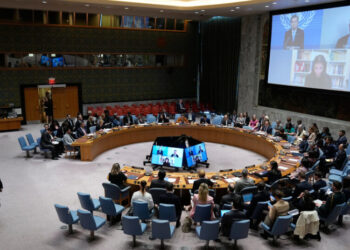
Death toll: At least 1,940 people have been killed since the start of the war, most in Iran. Iran’s representative to the United Nations, Amir Saeed Iravani, told the Security Council Wednesday that more than 1,348 civilians had been killed. Lebanese officials said that more than 630 people had been killed and over 1,500 others injured in the country. More than 800,000 people there have been displaced.
-
Iran: Israel said on Wednesday it had launched a wave of strikes on Tehran, the Iranian capital, targeting what it said was the regime’s infrastructure. Residents and state media reported repeated drone strikes on street checkpoints manned by the Basij militia, killing several people and spreading fear among many Iranians about the dangers of traveling around the city.
Earlier in the day, thousands of Iranians gathered in the streets of Tehran to mourn military commanders killed by American and Israeli strikes.
-
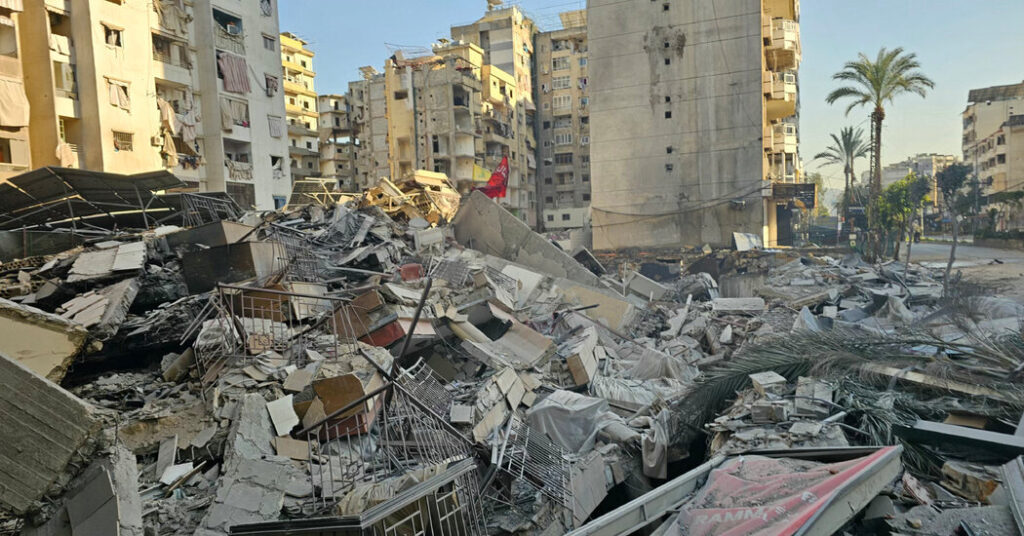
Lebanon: Israeli forces escalated the military campaign against the Iran-backed armed group Hezbollah, launching a wave of heavy strikes across Lebanon that injured at least four people, according to the country’s national news agency.
Early in the day, Israel issued an evacuation warning for the densely populated southern outskirts of Beirut, a Hezbollah stronghold, indicating that an attack was imminent. The Israeli military, which has been pushing its forces deeper into Lebanon since Hezbollah attacked Israel last week, said it was sending an additional infantry brigade to the Lebanese border.
-
Persian Gulf: At least three ships were hit in and around the vital waterway connecting the Persian Gulf to the northern Arabian Sea, according to a British maritime monitoring group. One was a Japanese container vessel owned by Mitsui, a large global shipping line, according to Kpler, a global ship tracking company. The other two ships were bulk carriers, or vessels designed to transport loose cargo like grain or iron ore.
Iran appeared to claim responsibility for the attack on one of the bulk carriers, the Thai vessel Mayuree Naree. In a post on social media, Alireza Tangsiri, the naval commander in Iran’s powerful Islamic Revolutionary Guards Corps, said the vessel’s crew had “ignored the warnings” from Iran and “ended up getting caught.” He added that “any vessel that intends to pass must obtain permission” from Iran.
The other bulk carrier, the Star Gwyneth, was hit while anchored in the Persian Gulf, said Petros Pappas, chief executive of Star Bulk, the vessel’s Greek owner.
The attacks came after the United States Central Command said Tuesday evening that it had attacked 16 Iranian mine-laying vessels near the strait, as Iran and the United States wrestled over the ability of merchant ships to pass through the oil route.
-
Israel: Hezbollah fired rockets toward several areas in Israel, with no casualties reported, amid an escalation of tit-for-tat attacks between the two countries.
Chris Cameron contributed reporting.
Ashley Ahn covers breaking news for The Times from New York.
The post Here’s What Happened in the War in the Middle East on Wednesday appeared first on New York Times.