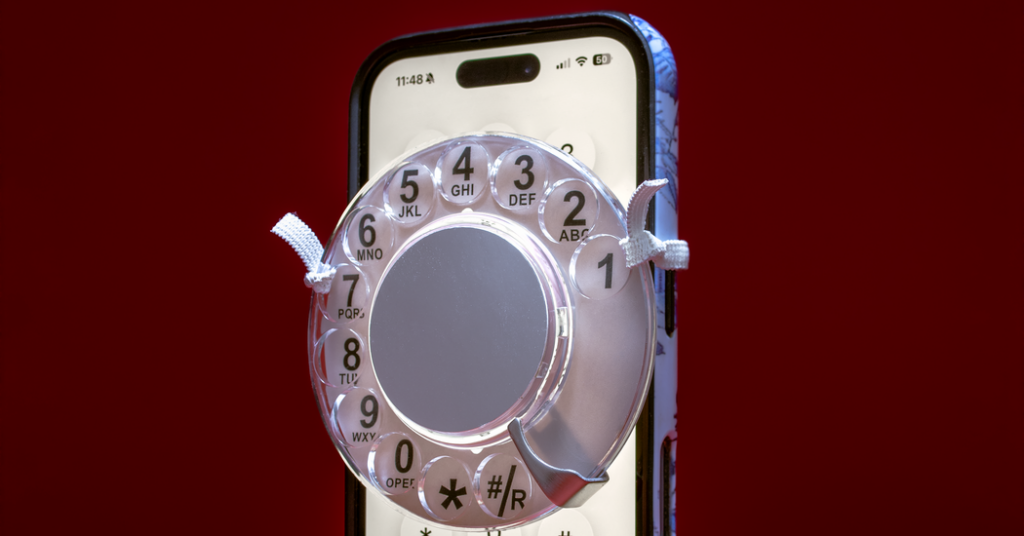
Exactly 150 years ago, Alexander Graham Bell made the world’s first phone call. “Come here,” he shouted into the fuzzy, one-way phone line at his partner Thomas Watson. “I want you!” (He had spilled acid on himself.) With these words, he sparked a revolution in ordinary life. As the telephone spread, people could call for help when their home caught on fire, talk to a doctor if their child was sick or simply speak with someone more than a block away.
I began researching the telephone after learning of an obscene caller who plagued my grandmother in the 1950s. I was surprised such things went on then. I was more surprised to learn obscene calls happened in the 1890s. The telephone wrought great changes, and yet in reviewing over 40,000 articles — including every headline in a newspaper database containing “telephone” or “phone” for the technology’s first 30 years of existence — I found no evidence of panic. There was nothing like the current alarm over, say, smartphones. Histories of the phone don’t show much distress, either. “There was little serious controversy about the telephone,” Claude Fischer wrote in his study “America Calling.”
Yet the telephone offered plenty to dislike. Swindlers abounded, as did practical jokers. (A favorite prank before any refrigerators were running: “This is the city electrician’s office. Will you please see if the arc light on the corner is burning?” “Yes,” the person would answer after going to look out the window. “All right, don’t blow it out.”) Telephones even opened the door to violence. “Lured to Her Death by a Call,” read a 1909 Cincinnati headline, one of many about people called from their homes to be robbed or killed.
Such stories present glimmers of our modern discomfort around the smartphone — fraud, sexual harassment, invasion of privacy, animosity, misinformation — and yet almost nobody was saying society shouldn’t have the telephone or that it was an inherently dangerous technology. A few lamented the new interruptions in their home life, but they weren’t saying phones would destroy people’s attention spans or ruin their mental health.
And yet the early phone could kill you.
Take the brief life of Joseph Shipka. In 1911, Mr. Shipka, a 38-year-old real estate agent, got caught in the rain, so he ducked into a Cleveland liquor store to call his wife and let her know he’d be late for dinner. He stepped up to the phone box on the wall, pulled the receiver from the hook — and froze. The store’s owner heard a gasp and looked over to watch as Mr. Shipka, device still in hand, began sliding to the floor.
The owner ran to him and tried to stop his fall, grabbing him around the waist. Now he found himself stuck as tightly to Mr. Shipka as the caller was to the phone. Another man ran over. Stuck, too. Mr. Shipka was already dead, but a fourth man heard the others’ yelps and ran to their aid. Seeing the phone in Mr. Shipka’s hand, he knocked the phone box off the wall with a wooden broom. Somewhere, an electrical wire had crossed with a telephone wire, sending high voltage through it. It wasn’t a unique occurrence. The fourth man used the broom to pin the bundle of wires against the wall as he waited for help. But then, when he was for a moment distracted, one of the wires slid down the broom handle and touched his hand, killing him instantly.
It’s a perfect metaphor for smartphones today: A tool of connection and convenience exerts an overpowering force that binds people to it and to one another until they beg for release yet somehow still can’t bring themselves to let go. But in the early years of the telephone, such deaths provoked no notable panic. It made some people cautious when picking up the phone, but I could find only one writer worried about death by phone, and even that frenzied 1889 essay in Nature was responding to a spate of power line fatalities. The author apparently never wrote about phones again.
And this was during the muckraking era. Journalists frequently hammered at issues until change — better food, labor or housing standards — happened. Yet the phone’s problems were looked on with little concern.
That’s not to say there was no criticism. There was fretting about telephones making businessmen quick to anger, about girls talking to their boyfriends while in their nightgowns and about the mouthpiece as a disease vector. One writer complained that telephones had “made people absolutely unscrupulous about breaking an engagement.” But there was nothing like the steady drumbeat of concern that the smartphone has elicited. You can’t find entire books on problems with the early telephone; there’s no equivalent to Jonathan Haidt’s “The Anxious Generation” or Catherine Price’s “How to Break Up With Your Phone.”
Much of today’s smartphone anxiety centers on children. This is the most startling contrast with early phone history. Youth phone usage wasn’t a worry, even though by the 1960s, children phoned so much that some families got a second number, listed in the phone book as, say, “Smith, Teenagers.” Teens hogged the phone, but this was fodder for an Erma Bombeck humor column, not an Atlantic cover story.
Why no alarm? Consider the era. Today we greet scientific advances with awareness of subsequently discovered side effects, like air and water pollution, or nuclear fallout. But the 19th century presented a seemingly endless stream of technological breakthroughs, from the locomotive to the telegraph to the camera to the lightbulb, without all the baggage. As the historian Leo Marx put it in “The Machine in the Garden,” America then considered its inventors “the intellectual heroes of the age” who had created “an intoxicated feeling of unlimited possibility.” The telephone immediately sparked predictions of more breakthroughs: wireless phones, video phones, smell phones (still waiting).
And the telephone was wildly useful — but not so wildly demanding as the smartphone. Inventive mothers anticipated the baby monitor by setting the receiver in their baby’s crib and telling the operator to reach them at the grocer’s if the baby cried. During an epidemic, people could stay at home and attend church or school by phone. There was a little Google to the phone then, too. In Cincinnati in 1912, as many as 200,000 callers a day would ask switchboard operators for live baseball scores. But the old landline’s cord kept its use in check, ironically making people less tethered to the phone and less exhausted by it.
Sometimes commentators will cherry-pick early phone laments to suggest that fears over the newest tech, like smartphones or artificial intelligence, are an irrational panic we’ve seen before. But in looking at the larger public reaction, we can see that people do not necessarily panic because of change itself. Such claims serve only to shield powerful companies from fair criticism and quiet a necessary discussion. Sometimes there are reasonable concerns about new innovations. Asbestos insulation caused cancer. Cars led to pollution and traffic deaths. Chlorofluorocarbons depleted the ozone layer.
The old telephone, for all its problems, was still just a household appliance, limited in its fascination by the number of people willing to entertain your voice. The new one, with the internet inside and social media algorithms designed to addict you, is limitlessly captivating. Your great-great-grandparents were probably pretty happy with the phone. If your feelings about your smartphone are more mixed, don’t let anyone tell you you’re panicking.
Andrew Heisel is a writer based in New Haven, Conn. He is writing a history of the telephone’s dark side.
The Times is committed to publishing a diversity of letters to the editor. We’d like to hear what you think about this or any of our articles. Here are some tips. And here’s our email: [email protected].
Follow the New York Times Opinion section on Facebook, Instagram, TikTok, Bluesky, WhatsApp and Threads.
The post The First Phone Call Was 150 Years Ago. Where Did We Go Wrong? appeared first on New York Times.