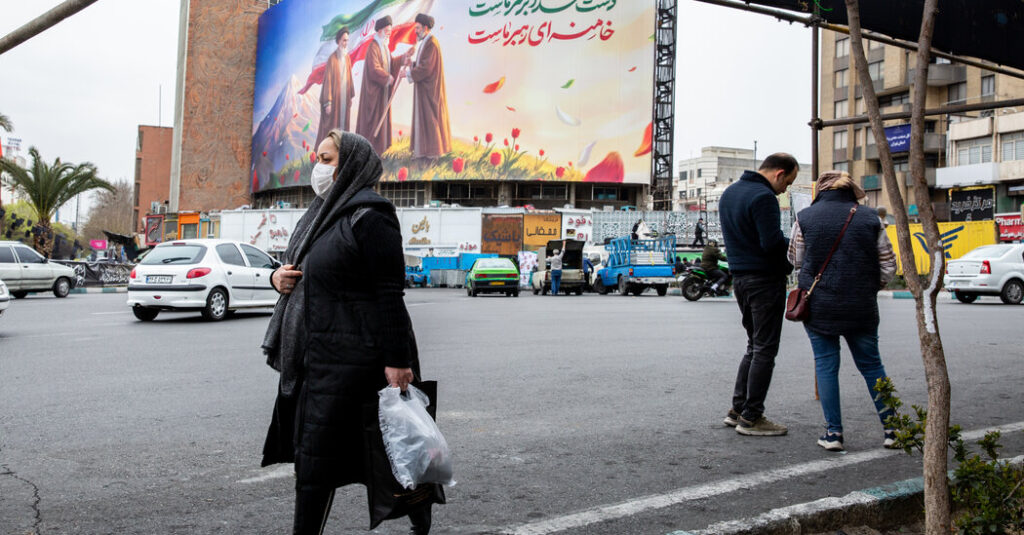
For days, the densely populated Iranian capital, Tehran, and other cities have been battered by fierce U.S.-Israeli bombardment. Some residents described the strikes overnight Monday into Tuesday as among the worst they had experienced.
“It seems they are striking everywhere: homes, schools, mosques, hospitals,” one resident, Javad, said. Like most people who spoke from inside Iran, Javad asked that his full name be withheld out of concern for retaliation.
From 10 p.m. to past midnight, people in the capital could hear the sound of bombing “north, south, east and west,” he said. “If they keep hitting Tehran like this for another 10 days, nothing will remain of Tehran.”
The scope of the strikes has expanded in recent days from mostly military and security sites. Cultural heritage sites in the ancient city of Isfahan have been damaged, officials said. In Tehran, residents say strikes were hitting critical infrastructure.
“The air is not breathable,” said Javad. “Last night they hit the high-voltage electricity lines. They will also strike gas and water. Acid rain fell and the air is polluted. They will hit all the infrastructure, and they have no hesitation about killing.”
It was hard to gauge the civilian toll amid the strikes. Local journalists say that the authorities often block them from gaining access to bomb sites to get a sense of the casualties and rescue operations.
Some U.S. officials have said that even more punishing strikes were to come. In a news conference on Tuesday, Pete Hegseth, the secretary of defense, said, “Today will be yet again our most intense day of strikes inside Iran. The most fighters, the most bombers, the most strikes.”
The experience of being bombed is even more terrifying because the government is sharing little information and sending few alerts, said Ali, an engineer in Tehran. Ordinary Iranians are cut off from the internet, and Ali said people had resorted to calling friends and relatives in areas where they saw fighter jets headed.
The ferocity of the attacks has divided sentiment among opponents of the government after a brutal crackdown on nationwide protests by security forces last January. Thousands were killed.
“Some people are comfortable with the bombings — I know that may sound strange,” said Ali. “They are upset if there is a night without bombing, and fear the war might end while the regime remains. You can see this clearly. People say we have already paid enough of a price and the Islamic republic must go.”
Ali said he was sympathetic to that view. “Our lives have no value for the Islamic republic,” he said. “We are the government’s human shields.”
The U.S. Central Command has said it is not targeting civilians. But it has accused Iran of using civilian areas to conduct military operations and has argued that those “could become legitimate military targets.”
“Who decides who is an agent or a person of the Islamic republic?” said Javad. “A traffic officer, an ordinary police officer, a criminal court, a family court; do these belong to the Islamic republic? I don’t think so. Who decides who is a criminal and who is not? This is a very strange phase. It’s a human and moral catastrophe.”
The post ‘Nothing Will Remain of Tehran,’ Iranians Say Amid Heavy Bombing appeared first on New York Times.