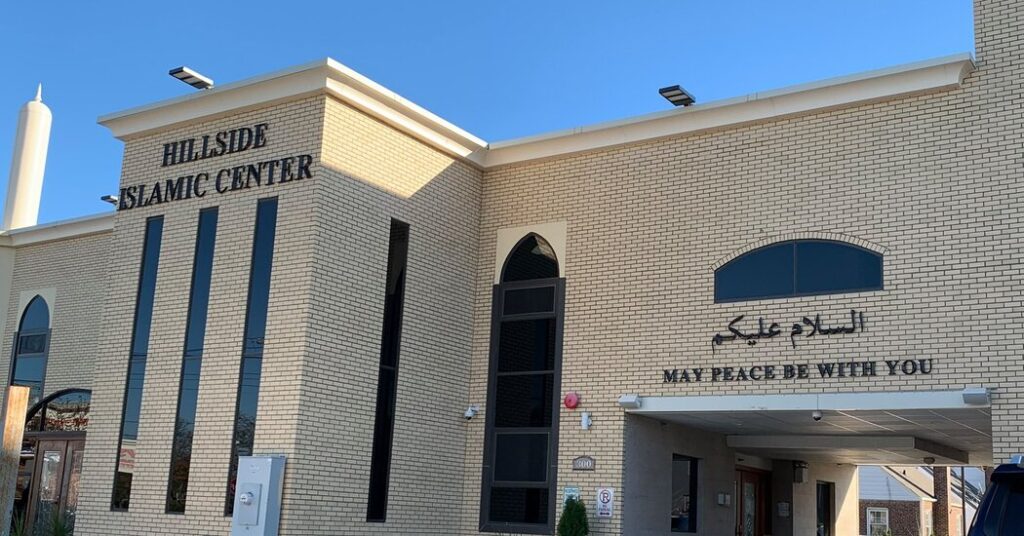
During the holy month of Ramadan, services at a mosque on Long Island are so full that congregants spill from the two-story building to pray in the parking lot, dropping their mats to kneel as cars zoom past.
The mosque, the Hillside Islamic Center in New Hyde Park, N.Y., has for years tried to expand its facilities to allow everyone to pray indoors. Those attempts have been repeatedly obstructed by town regulations, according to a federal lawsuit filed on Tuesday by the mosque, which argues that the rules unfairly target Muslims.
The Town of North Hempstead, according to the mosque’s suit, has undertaken a “campaign of obstruction” against the community, giving in to the anti-Muslim hostility of local residents by blocking plans to demolish the building and rebuild it as a new, three-story, “code-compliant” structure.
“The ideal way to pray is so you can concentrate,” said Abdul Aziz Bhuiyan, chairman of the mosque’s board and a plaintiff in the suit. Under current conditions, he said, “there’s no way you can concentrate.”
The suit is the latest legal and cultural battle to unfold between mosques and towns on Long Island, just east of New York City, as the island’s suburban counties have shifted to the right politically in recent years.
The obstacles to the construction and renovation of mosques have often taken the form of nettlesome zoning regulations, but Hillside congregants say that anti-Muslim sentiment is present just beneath the surface. Congregants at mosques around Long Island have faced persistent verbal harassment in recent years, according to the plaintiffs, as well as vandalism at their places of worship.
Jennifer DeSena, the town supervisor for North Hempstead, did not immediately respond to a request for comment.
Congress passed a law in 2000 aimed at stopping towns from misusing land-use regulations to block the construction of houses of worship for minority groups. Last year, Masjid Al-Baqi, a mosque in the hamlet of Bethpage, sued the Town of Oyster Bay and accused it of violating that law, after a dispute that started in 2018 over the congregation’s planned expansion.
In that case, the mosque and the town had reached a settlement to allow an expansion, but many of the town’s residents reacted with fury, and the agreement never came to a vote. The two sides finally arrived at a $5 million settlement last December, with the town agreeing to a version of the mosque’s renovation plans.
The Hillside Islamic Center, which was founded in 2005, is a larger mosque. It serves thousands of congregants, primarily of Bangladeshi, Pakistani and Indian descent, who during Ramadan gather to break their fast with iftar meals that include biryani, samosas and kebabs. It was initially housed in an abandoned car dealership that had been converted; the current structure was built in 2011.
The dispute with the town began in 2021, when the mosque submitted a plan to expand to three stories, along with proposed upgrades in its landscaping, drainage and asphalt paving.
The mosque’s plan overcame several regulatory hurdles, and multiple town departments confirmed that there were no environmental, parking or safety issues, as did Nassau County’s planning commission, according to the lawsuit.
But by 2023, during public hearings before the town board, residents voiced their opposition to the planned renovation, some citing those same issues. The mosque’s congregants, one town resident said, were “strangers,” and their arrival had brought with it many inconveniences. Others expressed worry about threats to their quality of life.
The lawsuit filed Tuesday further cites comments from residents on social media that it describes as Islamophobic, including ones referring to the congregants as “terrorists” and saying that Muslims should not be allowed into the country.
In early 2024, the town board denied the initial application, and the mosque has appealed the town’s ruling by suing in New York State Supreme Court. That suit is still pending.
Mr. Bhuiyan, 67, who moved to New York from Bangladesh in 1981, said that “rhetoric from public officials” had turned many non-Muslim residents spiteful toward their neighbors.
“Our primary goal here is to coexist peacefully,” Mr. Bhuiyan said.
Santul Nerkar is a Times reporter covering federal courts in Brooklyn.
The post Mosque Blames Islamophobia in Suburbs for Hostility to Its Expansion appeared first on New York Times.