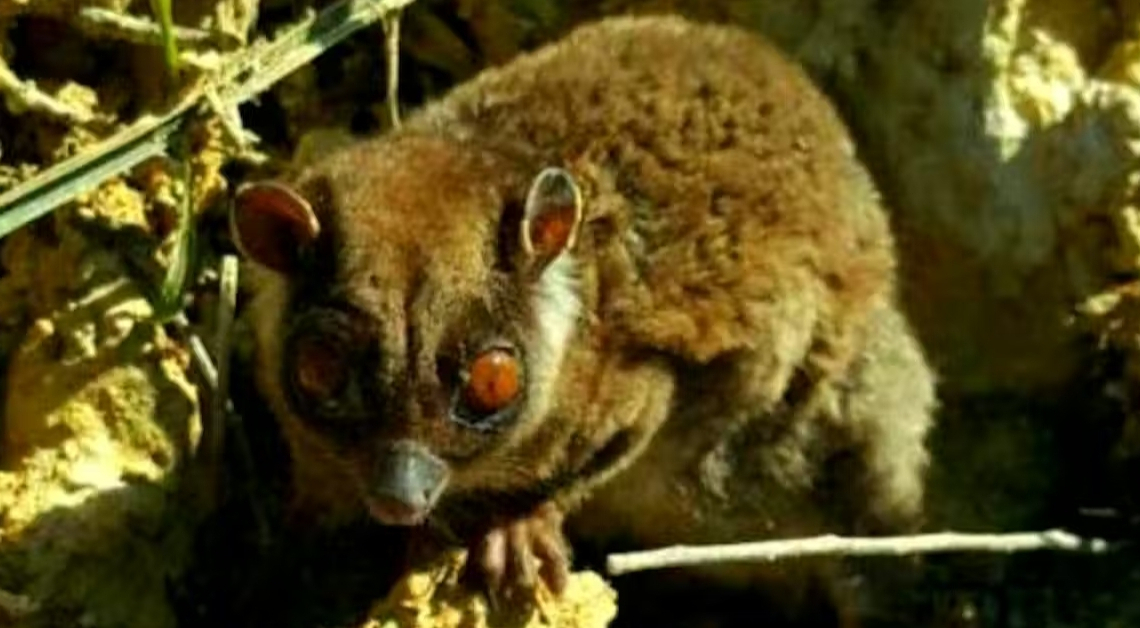
It’s always fun when science tragically, mournfully deems a species extinct and then, years later, rains that back by offering whoopsie-daisy when they find that it wasn’t extinct after all. Instead, it was just really, really hard to find.
And you know what? I get it. It happens. The world is big, and some animals are very small.
The latest animal to rise from the not-so-dead is the aptly nicknamed Lazarus taxa, and researchers working in the rainforests of New Guinea re-added its name to the list of creatures that are actually very much still alive.
Writing in The Conversation, researchers Erik Meijaard, Kristofer M. Helgen, and Tim Flannery say that in Indonesia’s Vogelkop Peninsula, the pygmy long-fingered possum, aka Dactylonax kambuayai), aka Lazarus taxa, a tiny tree-dwelling marsupial thought to have vanished more than 6,000 years ago, is still alive.
This ‘Extinct’ Marsupial Was Alive the Whole Time, Study Finds
The animal had previously been known only from fossil fragments dated to roughly 7,500–6,000 years ago, after a period of global cooling known as the Misox oscillation. Paleontologists assumed the species had disappeared sometime after that.
But it didn’t. It’s been hiding in one of the least studied forests on Earth. Pretty good place to hide.
The rediscovery came as researchers examined all the evidence of the creature’s existence currently in museums. Turns out, some preserved animals sitting in museum jars for decades had been misidentified.
The pygmy long-fingered possum is small, striped, and equipped with a freakish adaptation: a single finger on each hand that’s twice as long as the others. It’s used to probe tree bark for insect larvae.
In the process, researchers also identified an entirely new genus of gliding marsupial, named Tous, based partly on photographs taken by a plantation worker participating in a biodiversity monitoring project. Now classified as Tous ayamaruensis, it looks a bit like a cross between a squirrel and a chameleon.
Finding a new mammal species is rare. Establishing an entirely new genus is even rarer. Local indigenous communities already knew these animals existed. Elders from the Tambrauw and Maybrat clans helped researchers identify and name the glider, providing providing info that wound up being essential to confirming the discovery.
Now the concern is about keeping them alive. Logging and agricultural expansion may help the human race thrive, but it threatens these animals’ natural habitats. It would be a real shame if, after thousands of years of being presumed dead, we went ahead and actually made them extinct.
The post Marsupial Found Alive After Being Thought Dead for 6,000 Years appeared first on VICE.