In the weeks after Iranians rose up in historic numbers earlier this winter to protest the government, prisons swelled with citizens caught in a deadly crackdown. Now they, along with other prisoners, face a new threat: airstrikes from the United States and Israel.
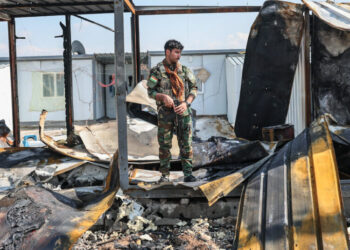
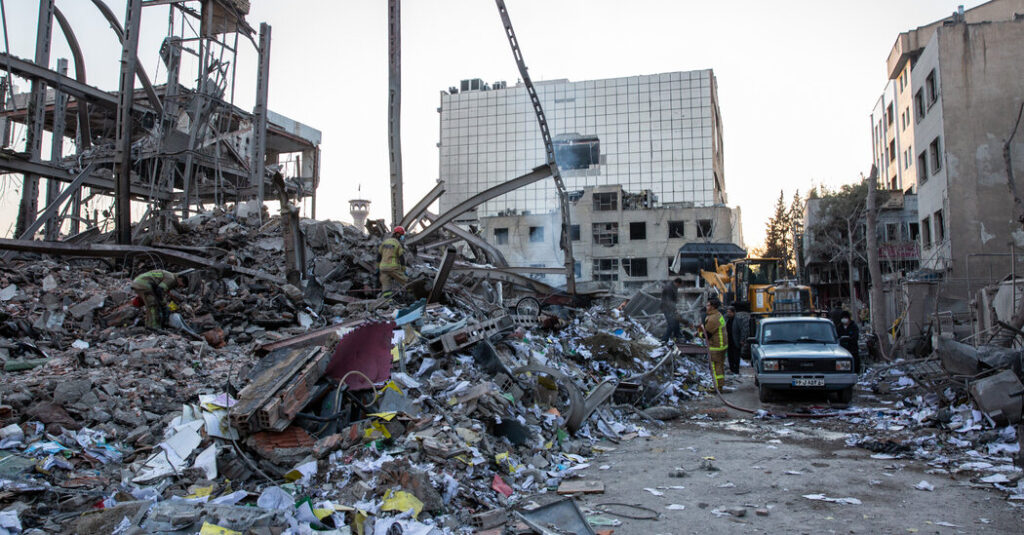
At least two places holding prisoners in Tehran have suffered moderate damage from nearby blasts, according to Iranians who spoke to imprisoned relatives. And at least one detention center has been struck and heavily damaged, according to videos and satellite imagery analyzed by The New York Times.
Iranian prisons hold a mix of people accused of criminal activity and those swept up in the crackdown on political dissent. At one point in January, Amnesty International reported that tens of thousands of Iranians had been “arbitrarily detained,” but it is unclear how many are still being held.
Some family members said they had been unable to reach imprisoned relatives.
“We’ve entered a dark tunnel,” said Taghi Rahmani, the husband of Narges Mohammadi, a human-rights activist and Nobel Peace Prize laureate. “There’s no telling when we’ll come out of it.”
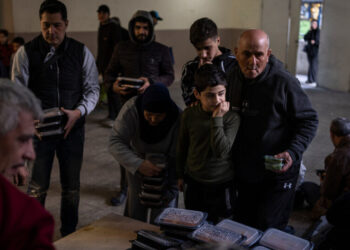
Mr. Rahmani said he had learned that his wife was moved from the notorious Evin prison in Tehran to a prison in the northern town of Zanjan two weeks before the attacks began. Other families said they no longer knew where their imprisoned relatives were being held.
Shailin Asadollahi said her brother, Ali Asadollahi, an award-winning poet, had also been detained at Evin after a nighttime raid on his home roughly a month ago, with no formal charges filed. But a day after the attacks began on Feb. 28, said Ms. Asadollahi, who is now based in Germany, a family member went to Evin and was told by an officer that the detainees in Mr. Asadollahi’s ward had been relocated.
Family members then traveled to the Revolutionary Court in Tehran to inquire about his whereabouts only to find that the court, too, had been damaged in airstrikes.
Ms. Asadollahi said that the family had not received any information from the authorities about her brother, and that other prisoners were in the same situation.
“Their lives are at risk,” she said.
A spokesman at the Iranian Mission to the United Nations declined to comment after he was asked on Tuesday about conditions at the prisons and the relocation of detainees.
A British couple detained in Iran last year while on a motorcycle tour around the world has also been caught up in the airstrikes. The couple, Craig and Lindsay Foreman, was also being held at Evin when it was damaged, family members said.
“A bomb exploded so close to the facility that the blast blew out the windows of the ward where Craig Foreman is held and sent ceiling plaster raining down on the inmates,” the family said in a statement. It added that when Lindsay Foreman was speaking to her son on the phone during the explosion, “She described a scene of mass hysteria as women dived under metal bunk beds for cover, waiting for the next strike.”
Last week, the Center for Human Rights in Iran, an organization based in New York, warned that Iran had “a history of using the shadow of war and crises to carry out abuses in prisons and retaliate against political prisoners.”
Iran’s leaders have made clear that they will be even less tolerant of dissent during the war.
The chief justice of the Islamic Republic, Gholam-Hossein Mohseni-Ejei, warned that “any act aligned with the enemy’s will” would be punished. Text messages sent to Iranians’ phones in recent days, and shared with The Times, urged people to report anyone sharing images with “the enemy.”
The United States and Israel have been striking Iran’s police stations, detention centers and intelligence offices in an apparent effort to weaken the country’s security apparatus.
In Sanandaj, the provincial capital of Iran’s Kurdish region, a military compound on Shebli Boulevard was heavily damaged in strikes on the city, according to satellite imagery analyzed by The Times. A former detainee confirmed that it was the Shahramfar base, which has been used by the Revolutionary Guards and the Ministry of Intelligence.
The Hengaw Organization for Human Rights, based in Norway, reported that “several detainees and Kurdish political prisoners were injured.”
Shiva Amelirad, a Kurdish activist in Toronto, said the detainees were caught in the middle of the war.
“The prisoners are taking hits from the Islamic Republic on one side and from the U.S. and Israel on the other,” she said.
Christiaan Triebert, Haley Willis, and Lizzie Dearden contributed reporting.
Parin Behrooz is an associate editor and writer for The New York Times.
The post Imprisoned in Iran, and Under Bombardment appeared first on New York Times.