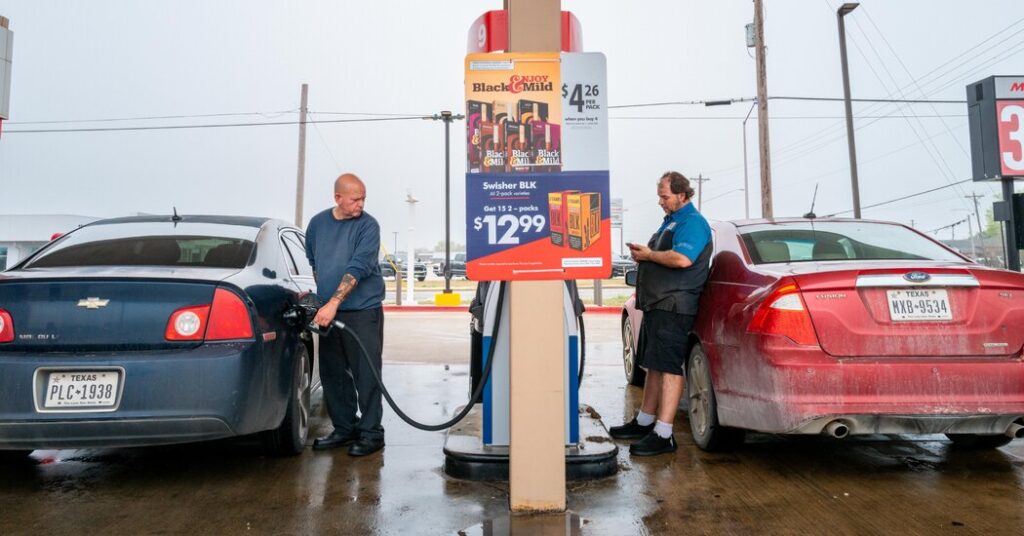
The price of gasoline in the United States rose again on Tuesday, to an average of $3.54 a gallon, according to data from the AAA motor club, raising the cost of a fuel many Americans purchase frequently.
That’s an increase of 19 percent in since the United States and Israel attacked Iran, inciting a regional conflict that has engulfed oil production, storage and shipping from the Persian Gulf to the rest of the world.
In financial markets, concern that oil shipments from the region won’t resume soon has lifted the price of crude oil — the largest factor in the cost of a gallon of gas — about 37 percent in the same period.
On Tuesday, West Texas Intermediate crude fell nearly 8 percent to around $88 a barrel, after having surged above $118 a barrel late Sunday, moving wildly in part as President Trump sent conflicting messages about the path of the war.
The whipsawed trading has shown just how vital the Persian Gulf region is to global energy supplies — and how interconnected global energy markets are, even if the United States produces plenty of oil.
At one point on Monday, Mr. Trump said in a phone interview with a CBS News reporter that the war “is very complete, pretty much,” prompting a sharp drop in oil prices.
A few hours later, he backtracked from any suggestion that the fighting would begin easing, warning of even more aggressive action if Iranian leaders tried to cut off the world’s energy supply.
Emmett Lindner is a business reporter for The Times.
The post Gas Prices Hit $3.54 a Gallon, Up 19% Since Attacks on Iran appeared first on New York Times.