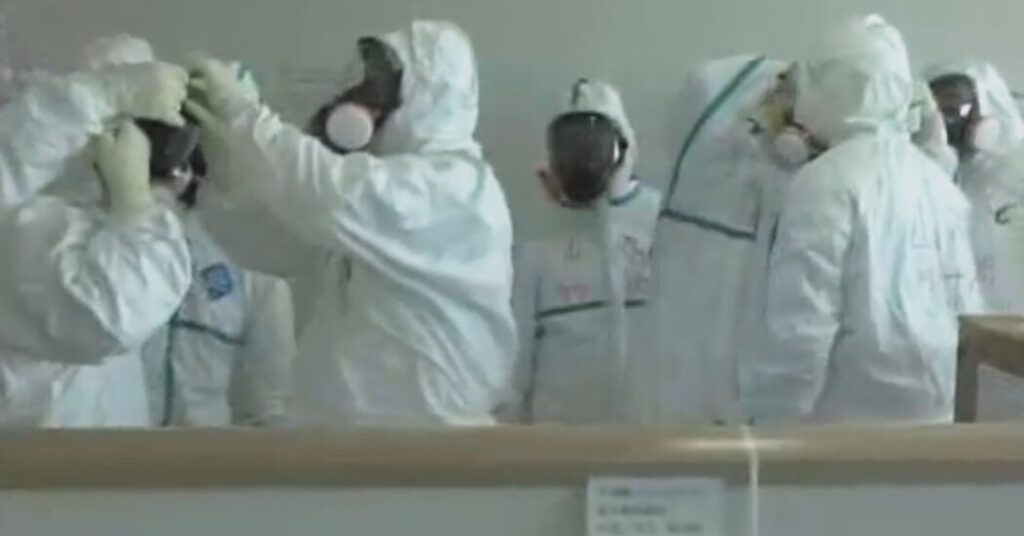
“We were told Japan would cease to exist if we failed.” On March 11, 2011, a 8.9-magnitude earthquake and a tsunami struck the northeast coast of Japan, precipitating a series of hydrogen explosions at the Fukushima Daiichi nuclear plant.
The new HBO documentary “Fukushima: A Nuclear Nightmare,” directed by James Jones (“Chernobyl: The Lost Tapes”), offers a tense rundown of the aftermath by pairing archival footage with testimonies from the people who witnessed the events firsthand.
In the days following the earthquake and tsunami, workers at the plant hurried to contain what they knew could become a nuclear catastrophe. Using diagrams, the documentary strives to convey the dangers on an elementary-school level: Without electricity, the reactors’ cooling systems failed, causing the fuel rods to melt and spew radioactive material. The schematics are paired with a tense score and sinister-looking footage of fiery explosions.
In an emotional interview, an engineer named Ikuo Izawa recalls remaining on-site while the majority of the plant’s crew was evacuated. Knowing that he might not survive, he sent an email to his family members, imploring them to look after one another. Izawa became part of the Fukushima 50: the everyday shift workers who risked their lives for the welfare of Japan. Although chiefly a straightforward — and at points repetitive — synopsis of the events, “Fukushima: A Nuclear Nightmare” distinguishes itself in its devotion to elevating these men as heroes.
Fukushima: A Nuclear Nightmare Not rated. Running time: 1 hour 30 minutes. Streaming on HBO Max.
The post ‘Fukushima: A Nuclear Nightmare’ Review: An Emotional Choice appeared first on New York Times.