Since the start of Operation Metro Surge in December, the Donald Trump administration has waged an economic battle on the Somali community, using the threat of detention — including of legal residents, citizens, as well as refugees who had their temporary protected status revoked — to scare away commerce in once-bustling places like Karmel Mall.
Now, the administration is extending the siege all the way to Africa, putting up new taxes and regulations on the transfer of money from Americans to Somalia.
Hamdi Issek, a nurse at a home care facility and a shop owner at Karmel Mall, said the effort to curb the practice of sending money to Somalia will have far-reaching effects. The money she sends to family in Somalia each month covers essentials such as food, rent, clothing and education for her family there, Issek said.
More than half the population of Somalia lives in poverty, defined as just over $2 per day.
The diaspora sent $1.73 billion in remittances to their families and friends in Somalia in 2023, significantly surpassing all humanitarian aid and development assistance, according to The Interpreter.
These remittances — typically small individual monthly contributions — account for approximately 16.5% of Somalia’s gross domestic product.
That means the Trump administration’s new obstacles to remittances could have the unintended effect of further destabilizing East Africa, which could in turn fuel still more migration.
The Department of the Treasury did not respond to a request for comment.
Bessent’s rules
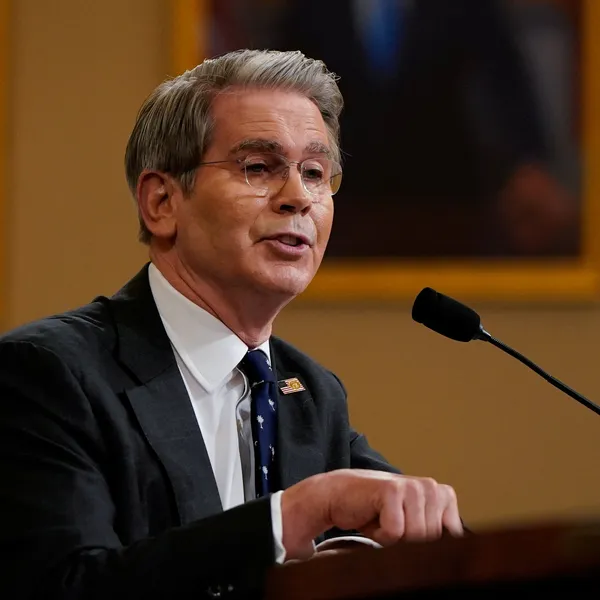
Treasury Secretary Scott Bessent announced in January an investigation of Somali money transfer businesses after an unsubstantiated article in a right-wing journal alleged ill-gotten gains were intentionally being funneled to al-Shabaab, a Somali militant group designated as a Foreign Terrorist Organization by the U.S. government.
The allegation linking Somali Americans to terrorist organizations is false and damaging the community’s reputation, Issek said.
“We are hardworking people, and most of us worked for what we have,” she said.
On Jan. 9,Treasury’s Financial Crimes Enforcement Network, or FinCEN, issued a Geographic Targeting Order, or GTO, requiring money transfer companies and banks in Hennepin and Ramsey Counties to report to FinCEN anyone who transfers $3,000 or more to Somalia and other countries. This measure took effect on Feb. 12 and will end on Aug. 10, though it may be extended at the Treasury’s secretary’s discretion.
Ostensibly, FinCEN is investigating whether the money sent overseas came from a federal, state or local safety net program to investigate fraud. (In reality, convicted and indicted fraudsters have shown no propensity for sending their ill-gotten gains to Somalia, with its unstable government and economy.) Bessent has said in a statement, “We have traced where the money went and are examining it.” He did not specify where or how his department would do so.
Uncle Sam takes his cut
President Donald Trump’s signature domestic policy law, the One Big Beautiful Bill Act, introduced a 1% tax on money sent from the U.S. to foreign countries, which amounts to $10 per $1,000 sent.
The OBBBA’s new section 4475 went into effect on Jan. 1. The new 1% tax is in addition to the $5 transfer fee typically charged by the transfer company.
These companies are required to collect this 1% tax and pay it to the IRS quarterly or risk taxman trouble.
Paul Vaaler, a professor at the University of Minnesota’s Carlson School of Management, said this is a double standard directed at certain immigrants. Many already face obstacles that prevent them from opening bank accounts, leaving them with one option, which is using transfer money companies to send money to their relatives in their home country. “We know this law is discriminatory because it does not apply to all international transfers equally,” said Vaaler, who specializes in international business and law.
The administration is also mulling a measure that could push some immigrants out of the banking system. As The Wall Street Journal recently reported, the Trump administration is considering new banking requirements to verify customers’ citizenship status, which would discourage some immigrants from using banks and force them into alternative — and often problematic — financial arrangements like payday lenders, check cashing storefronts, cryptocurrency, or simply hiding cash in a shoebox.
Vaaler said many of these taxes and regulations appear neutral, but they are discriminatory in practice and are intended to make it harder to send money back home.
Abdulaziz Sugule, the chairman of the Somali American Money Service Association, said Bessent’s remarks show a lack of understanding of the role that Somali money transfer companies play.
“Money transfer companies service everywhere in Somalia, including small towns and rural areas where traditional banks don’t reach; that’s why they are a critical lifeline to the people in Somalia,” he said.
And, as with any other financial services firm, they must abide by Treasury regulations, he said.
He said most people send only $450 to $500 per month, which is less than the $3,000 that triggers the new regulations, though they will be subject to the 1% tax. Although most people won’t be affected by the new rules, Sugule said, Bessent’s comments, with their ethnic and geographic targeting, could create panic in the community about sending money.
A few others will be more directly affected. Sugule said on a rare occasion, some people send $10,000 to $20,000 to help families start businesses so they can be self-sufficient and no longer need $500 every month.
Even people in the Trump administration are uncomfortable with the targeting of the Somali community, according to recent reporting in The Washington Post.
Citing anonymous sources, the Post reported that John Hurley, who was appointed undersecretary for terrorism and financial intelligence, “had recently conveyed his concerns to Bessent about a project to enhance federal monitoring of international payments from the Minneapolis area.” Career officials at Treasury, the Post reported, viewed the regulations as “clumsy and an inefficient way to root out potential fraud and an improper use of Treasury resources used on what looks like a partisan attack on a blue state.”
Julie Siegel, who served as a senior Treasury official in the Biden administration and is now a nonresident senior fellow at the Atlantic Council, told the Post that the Geographic Targeting Order isn’t actually targeted and could affect everyone in the Twin Cities.
“GTOs are really important tools for law enforcement and national security investigations. Using them like this — in broad, untargeted ways — diminishes their ability to be used in targeted, useful ways, and undermines the trust of American people in FinCEN, and in their financial institutions in ways that have long-lasting effects that are hard to foresee,” Siegel told the Post. “To undermine trust in those tools, and potentially lose those tools, is a big deal.
Sofia Ahmed, a shop owner at Karmel Mall, said the money she sends to relatives back home is a matter of survival, especially with the Trump administration suspending all U.S. aid to Somalia. “The unemployment in Somalia is high, and most people (here) support their families,” Ahmed said.
Somalia’s unemployment rate has been 19% or higher since the early 1990s, around the fall of Somalia’s government, according to data from Macrotrends.
The post Feds make it harder for immigrants to send money to family appeared first on Raw Story.