Australia granted asylum to five members of the Iranian women’s soccer team, after a days-long operation involving federal police and other government agencies — and a demand from President Donald Trump that they be given protection.
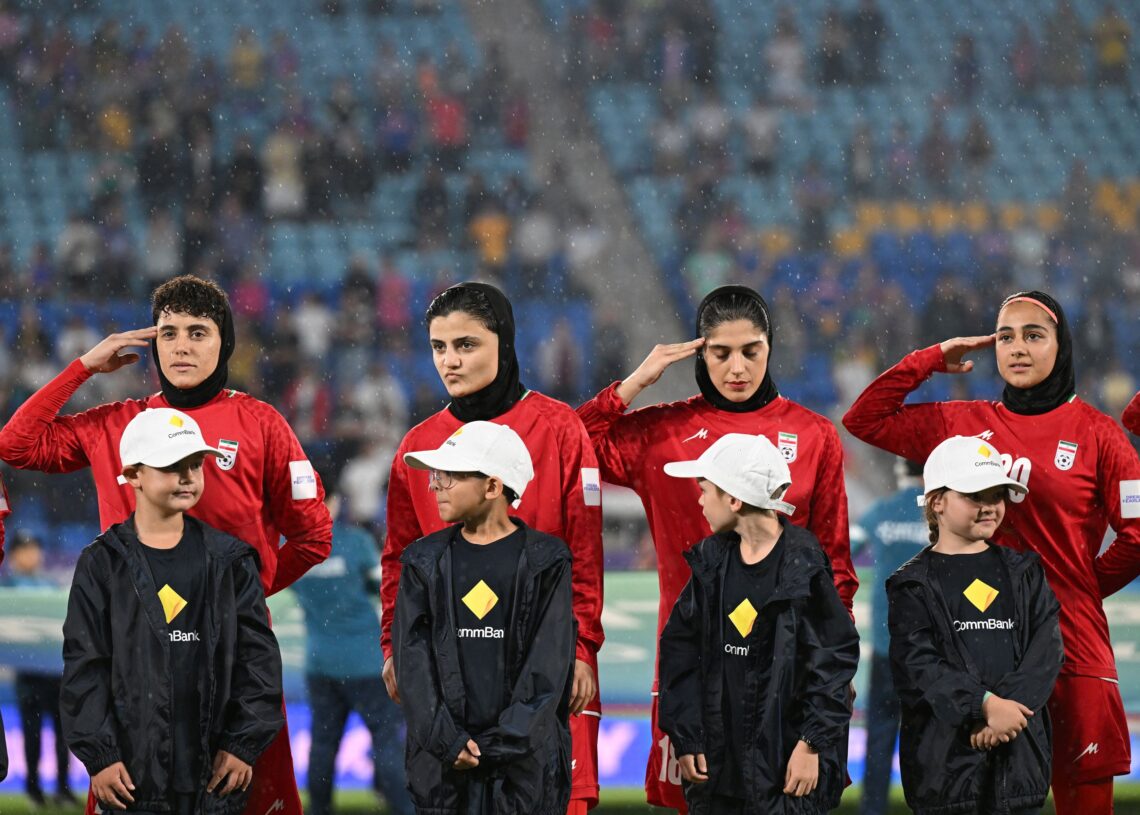
The late-night visa approval came hours after Trump urged Australian Prime Minister Anthony Albanese to give the women asylum amid the political uncertainty and military operations in Iran. The team has been in Australia for the Asian Cup. The players drew the ire of Iranian hard-liners after they stood silently while the Iranian national anthem played before their first match, a tournament opener against South Korea on March 2.
In a post shared on X on Tuesday local time, Australian Home Affairs Minister Tony Burke confirmed that five of the players had been granted asylum. “Last night I was able to tell five women from the Iranian Women’s Soccer team that they are welcome to stay in Australia, to be safe and have a home here,” Burke said.
Last night I was able to tell five women from the Iranian Women’s Soccer team that they are welcome to stay in Australia, to be safe and have a home here. pic.twitter.com/2JQp9q9Z8W
— Tony Burke (@Tony_Burke) March 9, 2026
Australia’s Federal Police said in a statementTuesday that they had been providing assistance for the previous three days to “relevant agencies” and the government’s Home Affairs Department, which is responsible for issuing visas, citing a “long and enduring relationships with the Iranian diaspora.”
Albanese said at a news conference Tuesday that the government had been “preparing for this for some time” and that Federal Police Commissioner Krissy Barrett was “directly involved” with the planning.
“Once it was made clear that these women wanted assistance, the Australian Federal Police moved them to a safe location, where they remain,” he said. “We’re willing to provide assistance to other women in the team, noting that this is a very delicate situation and it is up to them. But we say to them, if you want our help, help is here and we will provide that.”
Albanese said he had spoken with Trump by phone overnight and informed him the players had received help and were safely located. “He’s on it!” Trump wrote on Truth Social. “The Prime Minister is doing a very good job having to do with this rather delicate situation. God bless Australia!”
On Tuesday evening local time, the remaining members of the team returned to Sydney, where they were due to fly out of the country, according to Australian media reports.
Exact details of how the five women first made contact with Australian authorities remains unclear; however, Burke said his team had worked to ensure they provided a “maximum number of opportunities” for the women to seek assistance. The five team members who ultimately decided to stay were moved to a safe house by police, where he met with them, he said, with the visas processed around 1:30 a.m. local time.
Migration agent Naghmeh Danai told Australia’s national broadcaster that she had met with the women in a private room and that they were worried about their family in Iran and scared of repercussions from authorities. “We were telling them, ‘Look, this is the other way around here. In Australia, police is for your safety and security. It’s not like in Iran that police is there to take you away,’” she said.
Iranian Foreign Ministry spokesman Esmaeil Baqaei urged the players to return home in a Tuesday post on X: “To Iran’s Women’s football team: don’t worry — Iran awaits you with open arms. Come home.”
In an earlier post about the team Monday, Trump had said that the players would “most likely be killed” if they were forced to return to Iran. He also said the United States would offer them asylum if Australia was unwilling to do so.
In recent months, Iran’s security forces have killed thousands of protesters after demonstrations in January that were fueled by the country’s faltering economy. Among those killed while protesting was 27-year-old Zahra Azadpour, who played for the women’s team.
Though the players did sing the anthem in later matches, Mohammad Reza Shahbazi, a presenter on Iranian state TV, calledthe players “traitors” and demanded that they be punished for displaying “dishonor and betrayal.”
On Monday, Reza Pahlavi, the son of Iran’s ousted former ruler, said in a statement on Xthat the players “are facing intense pressure and ongoing threats from the Islamic Republic following their courageous act of refusing to recite the regime’s anthem, and they may face very serious consequences if they return to Iran.” Pahlavi also urged the Australian government to give the players support.
In a separate post, Pahlavi said that amid fears for their safety, five members of the team “have successfully sought refuge in Australia by leaving the team’s training camp.” The Washington Post was not immediately able to confirm this claim. Earlier Monday, CNN Sports reportedthat five members of the squad had left the team’s hotel in Australia and sought Australian police protection.
FIFPRO Asia/Oceania, the continental division of the world players’ union, on Friday demandedthat the Asian Football Confederation (AFC) and FIFA, the sport’s global governing body, “urgently engage” with the Iranian football federation and the Australian government to protect the players.
In a statement to The Post, FIFA said the safety and security of the players “are FIFA’s priority, and we therefore remain in close contact with the AFC and the relevant Australian authorities, including Football Australia, in relation to the team’s situation.”
Spokespeople for the AFC and Football Australia did not immediately respond to requests for comment.
The State Department did not immediately respond to a request for details on whether Trump’s offer to take in the soccer team represented a broader shift in U.S. policy toward Iranians.
Since Trump began his second term last year, his administration has taken a hard line on Iranian asylum seekers and refugees and has enacted a travel ban on people holding Iranian passports. As recently as January, the administration had deported Iranian migrants, including some seeking asylum, flying them back to Iran amid the wave of violence that followed anti-government demonstrations there that month.
Similar repatriation flights occurred under an agreement reached last year. The move marked a shift in U.S. policy, which had long considered Iran a “recalcitrant” country that had refused to take back its citizens.
“We are thankful the President is now interested in offering Iranians asylum. We wish it hadn’t come while he was bombing Iranians and after denying them visas, refugee status and deporting Iranians who had sought asylum in recent months,” Ryan Costello, policy director at the nonprofit National Iranian American Council, said in a statement.
It was unclear what the asylum offer might mean for Iran’s men’s soccer team, which had been due to travel to the United States for this summer’s FIFA World Cup before the administration’s new visa policy went into effect.
“I really don’t care” if Iran plays, the president said in an interview with Politicoshortly after the war started.
On Sunday in Australia, as the Iranian women’s team bus pulled away from a stadium after the players lost their final match of the tournament, video showed supporters crowding the bus and yelling at authorities to “save our girls.”
The post Australia grants asylum to 5 Iranian soccer players after Trump pressure appeared first on Washington Post.