Irene Zhang is an analyst at ChinaTalk.
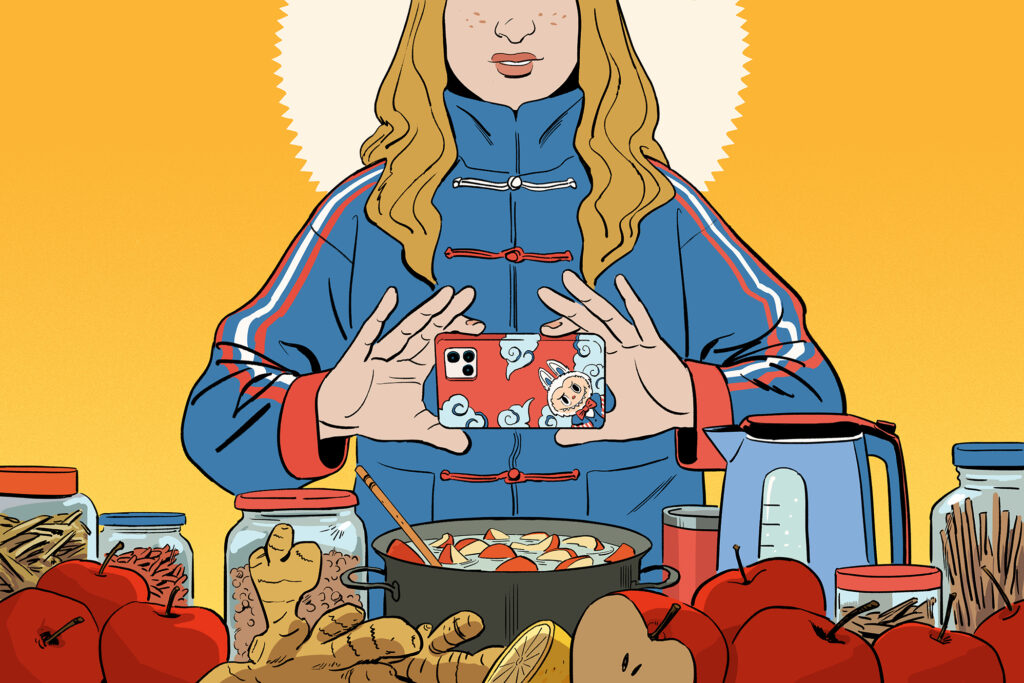
If you pick up your phone and scroll through TikTok, you will probably come across video clips of American influencers “becoming Chinese.” The common term for the trend is “Chinamaxxing,” which usually means something like drinking a cup of warm water in the morning, ditching coffee for green tea or practicing tai chi-inspired slow movements for daily exercise.
But is the social media fad really, as CNN called it, a “soft power boost” for China?
It’s no secret that Beijing seeks to project cultural influence abroad. President Xi Jinping has made “cultural confidence” a core ideological pillar of his nationalist revival, investing heavily in cultural diplomacy to shape China’s image abroad. It’s tempting to view Chinamaxxing as evidence of China’s soft power rise, but there’s something subtler going on.
Americans, by and large, aren’t actually consuming China’s modern cultural output, adopting the Communist Party’s worldview or learning traditional Chinese values. Despite the recent electoral success of a few democratic socialists, including New York Mayor Zohran Mamdani, and surveys findingthat a majority of Gen Z respondents hold favorable views of socialism, Americans are far more skeptical of communism than they were a century ago. Chinamaxxing is an effective meme precisely because Americans still see China, the world’s second-largest country by population and only other superpower, as incredibly alien. In particular, the focus on traditional Chinese medicine says more about American anxieties than Beijing’s cultural influence. The trend is surging at a time when the Make America Healthy Again movement is ascendant and trust in the medical establishment has plunged.
TikTok, where Chinamaxxing runs rampant, is a hotbed of “wellness culture.” Influencers peddle a wide range of practices and products promising health improvements. “Becoming Chinese” on the platform is more likely to involve amorphous promotion of well-being than learning Mandarin. The foods, drinks and exercises associated with the trend are rooted in traditional Chinese medicine. Like any holistic medical tradition, these practices reflect centuries of expertise that have helped people maintain health, but their effects are understudied and highly varied. Few Chinamaxxers are seriously studying traditional Chinese medicine. They are cherry-picking practices unlikely to do much for their health. It doesn’t mean that Beijing has established a meaningful cultural foothold in the West.
Throughout the 20th century, Americans periodically turned to China for answers to their own dilemmas. Pearl Buck’s Nobel-winning fiction popularized the image of noble Chinese peasants in the American consciousness, at a time when Great Depression-era Americans grew increasingly wary of modernity and industrialization. Langston Hughes wrote the poem “Roar, China!” after a visit to Shanghai in the 1930s, envisioning China’s liberation from imperialism as part of the breaking of chains that would eventually dismantle Jim Crow. The Black Panther Party adopted Maoism’s call to “serve the people” in the 1960s as an organizing principle within Black communities. These are fascinating moments of historical collision. But they aren’t a genuine adoption of Chinese cultural or political principles. They are reactions to American problems wrapped in a Chinese veneer.
Chinamaxxing reflects the same dynamic. Americans are soaking their feet and boiling apples not because these habits are Chinese, but because they live in a public health environment that increasingly rewards “woo” over evidence-based care. Despite its best efforts, the People’s Republic is struggling to take advantage of this moment to showcase its “cultural confidence.” Most Americans probably cannot name a single living filmmaker, pop singer or author from mainland China. Beijing’s grim censorship regime has resulted in a cultural footprint that’s amazingly small relative to the country’s size.
Political scientist Joseph Nye coined the term “soft power” in 1990 to describe the accumulation of national power not from forceful coercion, but from cultural and political attractiveness. Nye’s writing coincided with the collapse of the Soviet Union and the peak of American soft power. States from the Baltics to East Asia transitioned to liberal democracy, American music and film defined global “cool,” and massive aid projects warmed hearts and minds to the U.S. national project. We no longer live in that world, but the idea of soft power remains closely tied to America’s image in the post-Cold War period. China, though not for a lack of trying, is not yet able to match that status.
As a person of Chinese heritage living in the United States, I’m delighted to see young Americans be genuinely curious about a country whose people and culture are close to my heart. But I can see that Chinamaxxing reveals China’s failure to project its soft power. Chinese cultural products’ lack of mainstream global appeal means that “Chinamaxxers,” absent other enticing ways to immerse themselves in all things Chinese, will eventually move on. These social media trends have certainly raised awareness of China among Western audiences and could improve general perceptions of the country. But instead of rushing to conclude that China is winning the soft power war, Americans should look closer to home to understand the pull of becoming Chinese.
The post Americans are ‘Chinamaxxing.’ It’s not cause for geopolitical panic. appeared first on Washington Post.