When I think of literary references in music, my mind immediately goes to “Wuthering Heights” by Kate Bush. But there are so many other songs that pull from literature. Even just within rock, and even just within the 90s. These four songs include references that you may not have even thought of before.
“The River” by PJ Harvey
PJ Harvey’s “The River” was released on the 1998 album Is This Desire? and is interesting for its literary references to Flannery O’Connor. The lyrics are pulled from O’Connor’s 1953 short story “The River”, much of them verbatim or otherwise paraphrased. In the story, a boy with a difficult home life is taken to a church revival by his babysitter to meet a faith healer, who baptizes the boy in the river. When the boy is still ignored at home despite being told that he “counts” in the eyes of God, he runs away. He goes back to the river and baptizes himself again to recreate the earlier experience, but drowns instead.
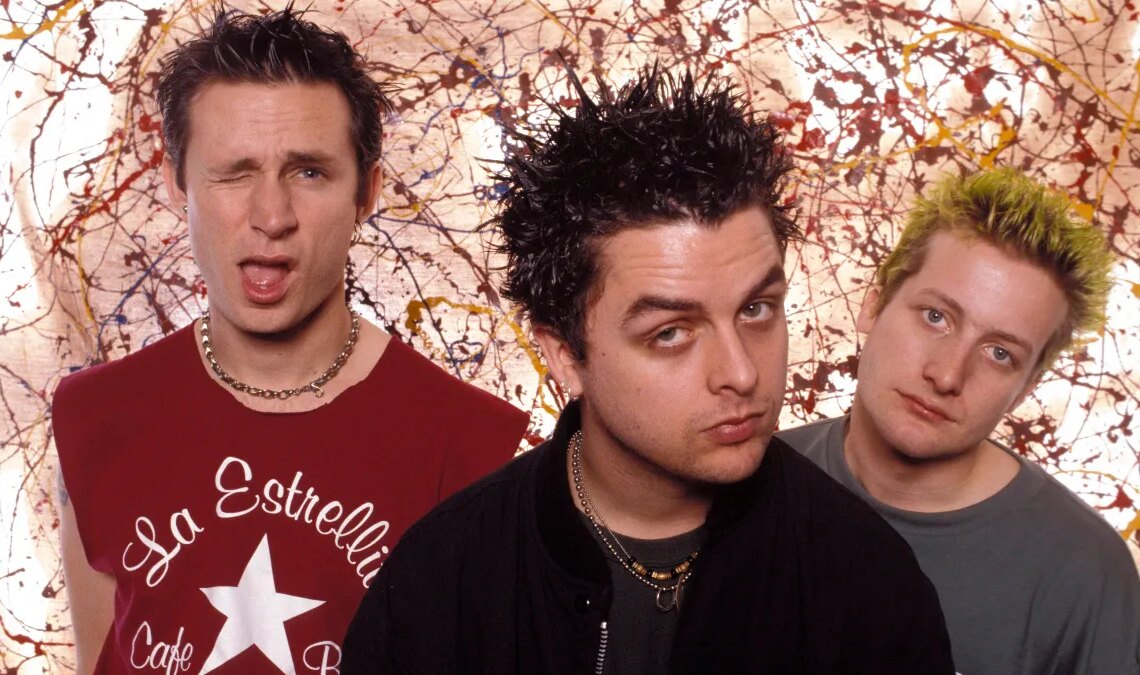
“Who Wrote Holden Caulfield?” by Green Day
“Who Wrote Holden Caulfield?” is a deep cut on Green Day’s 1991 album Kerplunk, and its literary references include the main character of J.D. Salinger’s 1951 coming-of-age novel, The Catcher in the Rye. Holden Caulfield became an icon for teenage rebellion due to his quick wit, sardonic observations, and relatable attitude. But the character’s reality is that he was an unreliable narrator who refused to mature by the end of the novel. He didn’t so much come of age as he stagnated in his immaturity. Green Day’s homage to Holden Caulfield draws upon his true character as a “phony,” an insult he often used for others. There are references to him “getting lazy” and having no motivation, which “makes him crazy.” Holden chooses to stay in his bubble of cynicism and disdain, and so never matures through his experiences.
“Sahara” by Eddie From Ohio
Eddie From Ohio’s 1993 album Actually Not featured the song “Sahara”, which referenced the story of Chris McCandless, the subject of the book Into the Wild. McCandless’ journey was first introduced in a January 1993 feature in Outside magazine by John Krakauer, who would then write Into the Wild. Around 1990, McCandless essentially abandoned his life, donated his possessions, and began traveling alone through the western United States. In April 1992, he hitchhiked to Alaska’s Stampede Trail, where he then traveled with limited supplies and inadequate clothing. His body was found in September 1992 in an abandoned bus, where he had apparently died the month before. He managed to survive for roughly 113 days. The following year, Krakauer retraced McCandless’ two-year journey for his article, aided by McCandless’ diary.
“I Fought In A War” by Belle and Sebastian
Belle and Sebastian’s track “I Fought in a War” was released on the 2000 album Fold Your Hands Child, You Walk Like a Peasant. Its literary references were inspired by J.D. Salinger’s 1950 short story “For Esme—With Love and Squalor”. The story was Salinger’s attempt to counteract the pervasive wave of conformity and patriotism that swept the country after WWII. At that time, there was an overall romanticism of the war. Memories of the horrific realities faded in favor of overzealous patriotism. Salinger’s story was written for the WWII veterans who were having trouble adapting to civilian life. Many still suffered from “battle fatigue,” which was actually PTSD. The narrator, Sergeant X, was a character for veterans to see themselves in, offering them a bit of hope as well as a lesson for civilians.
Photo by Robert Knight Archive/Redferns
The post 4 of the Best Literary References in 1990s Rock appeared first on VICE.