“The first duty of the American government is to protect American citizens,” President Trump said in his State of the Union address last month, daring Democrats to remain seated (which they did) when he asked them to stand to show concurrence. It was, arguably, effective political theater. But when it comes to life-or-death reality — the actual safety of American citizens — Mr. Trump’s cavalier approach to the war with Iran is recklessly endangering hundreds of thousands of Americans in the Middle East.
The lack of preparedness on the U.S. government’s part is bewildering. For weeks there had been talk of the possibility of war if diplomacy failed. The Trump administration should have given sufficient warning to its embassies and instructed them to plan for departures of both its staff members and civilians, following established procedures. Communication to civilians about evacuations needed to be clear and timely, with instructions for how to seek help. Instead, there was disarray and confusion; many civilians were left to fend for themselves. As midlevel American officials tweeted “DEPART NOW,” only two U.S. Embassies in the region seemed to be operating anywhere near normal.
The State Department did not authorize the departure of diplomats and their families until the day before the war started — and that was only in Israel and Lebanon. Mandatory departure for most countries did not begin for days into the war.
Yet the Iranian response to the military campaign seeking to collapse the regime was entirely predictable. They have targeted the Gulf states, especially soft targets like airports and hotels, in a desperate attempt to expand the conflict and save themselves by escalating the cost for America and its allies.
The Trump administration failed to plan for evacuating either its diplomats or its citizens and did not adequately warn either. When evacuation orders did come, they were not accompanied by details about how, or whether, the U.S. government would assist them.
In addition, U.S. coordination with regional partners, so they could take steps to protect their citizens, appears to have been minimal. Americans overseas were not warned; neither were our partners.
At the same time, it seems clear that the United States was not expecting the scale of the Iranian response, one that has largely shut down air travel across the region and targeted sites in the United Arab Emirates, Bahrain and Qatar, among other countries.
It didn’t have to unfold this way. The two of us have firsthand experience with how to protect American lives overseas during a crisis. It happened in 2006 when the Hezbollah militant organization in Lebanon provoked a war with Israel. As the U.S. ambassador in Lebanon and the Pentagon’s Levant director, respectively, we responded quickly, organizing what was then the largest noncombatant evacuation of Americans in U.S. history.
The challenges were daunting. Without warning, the U.S. Embassy in Beirut suddenly ended up on the front lines. Israel cratered airport runways, blockaded ports and destroyed crossing points to Syria. Airstrikes hit vehicles considered suspicious. All commercial exits from Lebanon were blocked or bombed.
Except for a helicopter pad on the embassy compound to ferry handfuls of people to Cyprus, we had no military assets positioned in Lebanon to evacuate the Americans waiting outside embassy gates, desperately looking to their government for help.
In the initial frenetic days, professionals in the White House, State Department, Pentagon and three military commands worked with the embassy around the clock on the evacuation efforts. The closest troops were participating in a military exercise in Jordan — a group of Marines from the same battalion that faced huge losses during the 1983 suicide bombing of the U.S. barracks in Beirut. It was a painful history — there was much debate in the Pentagon about asking the units to return to ground zero of the huge attack 23 years before. Yet when called, they raced up to Lebanon to help evacuate their fellow citizens.
Consular officers verified and updated citizenship documentation, created phone banks and activated a communication network to keep worried American citizens apprised of the evacuation proceedings. Embassy and military officials from the United States and Israel coordinated to ensure Israeli strikes did not conflict with our evacuation routes. Once our operations started, we moved nearly 15,000 American citizens to safety in less than a month.
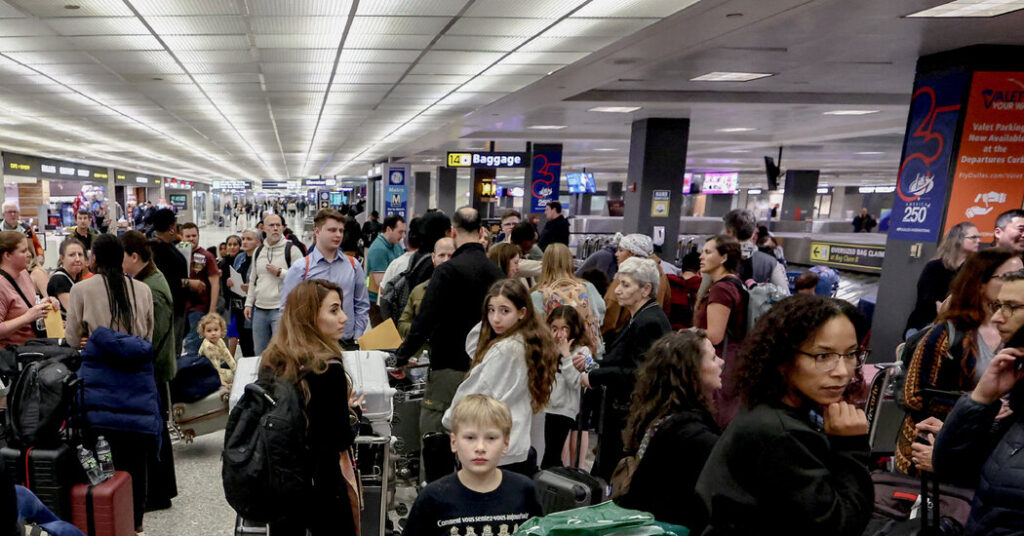
Compare that frenzy of activity to now. The U.S. Embassy in Beirut is one of several in the region that have simply closed their doors, suspending consular operations at a time they are most needed. Only after the escalation of violence and on the third day of the Iran war did the Trump administration urge American citizens to depart 14 countries in the region — on their own, via commercial transport that, with closed airspace, is mostly unavailable.
Many of the embassies do not have confirmed ambassadors to serve as a point of reference for the host nations. The void in the ranks of senior State Department and military personnel created a gap, in contrast to 2006, when we had an experienced civilian-military network. It took until Tuesday, the fourth day of the war, for the State Department to acknowledge that the government might have to assist with evacuations.
So much of this was avoidable. The argument that the administration did not anticipate the scale of Iran’s military response displays willful, perhaps intentional, ignorance. With the benefit of the advance notice that we lacked in Lebanon in 2006, the Trump administration could have planned for contingencies, quietly assembling the financial and contractual tools to accelerate the hiring of commercial ships and means of transport for evacuating American citizens.
It’s true that this evacuation is so much more complicated than our Lebanon experience — involving potentially hundreds of thousands of evacuees, rather than 15,000; 14 countries of departure rather than a single one; and the apparent inability to coordinate evacuation means with Iran. But that makes the lack of planning even more bewildering.
Vile as the Iranian regime is — with its brutal repression of its people, its dangerous, destabilizing regional role in the Middle East and its nuclear ambitions — it did not pose an imminent danger to the American people. Mr. Trump’s war, however, does create immediate and acute risks to American civilians in the region. When the administration began planning this war, it should have also planned to protect Americans — the “first duty of the American government,” as the president said.
Jeffrey Feltman, former assistant secretary of state for Near Eastern affairs, was U.S. ambassador to Lebanon from 2004 to 2008. Mara Karlin, former assistant secretary of defense for strategy, plans and capabilities, was Levant director in the Pentagon in 2006 and 2007. Both are visiting fellows in the Brookings Institution.
The Times is committed to publishing a diversity of letters to the editor. We’d like to hear what you think about this or any of our articles. Here are some tips. And here’s our email: [email protected].
Follow the New York Times Opinion section on Facebook, Instagram, TikTok, Bluesky, WhatsApp and Threads.
The post Trump’s War, Americans’ Risk: How the President Betrayed His First Duty appeared first on New York Times.