The Uniform Code of Military Justice serves as the criminal-justice framework for America’s armed forces. It covers offenses recognized by civilian law as well as crimes and infractions unique to the military, from insubordination to cowardly conduct. The code contains 158 articles; the Manual for Courts-Martial itself runs nearly 1,000 pages. It is an obvious truth that discipline, morale, and order can be maintained in military formations only if everyone—from four-star generals to the youngest “boot” privates—is held equally accountable for their actions.
A cursory review of recent courts-martial suggests that the enforcers of military discipline don’t miss much. In December, a Marine private first class was convicted of “contempt or disrespect towards a noncommissioned or petty officer, and disrespect towards a superior commissioned officer in command.” The private was held in confinement for five days and was reduced in rank. In September, an Air Force lieutenant was convicted of engaging in conduct “unbecoming an officer” after drinking on duty and cursing superior officers. He was sentenced to 30 days of confinement and received a presumably career-ending reprimand. In November, a senior airman, a medical specialist, was found guilty of failing to “safeguard protected health information from unauthorized disclosure.” She was sentenced to one month of confinement, and received a temporary pay reduction and a reprimand. Also in September, an Army specialist was convicted of disrespecting a superior by “interrupting her when she was speaking and then walking away,” among other charges. A military judge reduced the specialist’s rank and prevented her from leaving her military facility for 14 days.
Many soldiers are punished for infractions related to the handling of their weapons—the unfortunate Louisiana National Guardsman who recently left his rifle in the bathroom of a hotel bar could face a court-martial. And members of the armed forces are also punished for mishandling information. The military is necessarily unforgiving of those who violate operational security—“loose lips sink ships,” in the age-old shorthand. That is why seemingly quotidian bits of information—the dates and times that units are moving from one base to another, for instance—are held so closely. According to the UCMJ’s Article 92, the punishments for the release of unauthorized information vary, but could include two years’ imprisonment. A unit commander, operations-security guidance states, must “protect from unauthorized disclosure any sensitive and/or critical information to which they have personal access.” In October of last year, a retired Army colonel, Kevin Charles Luke, who was at the time a civilian Department of Defense employee, was found guilty of sending a photo of a classified email to a woman he’d met online. The email contained information about an upcoming military operation. In early February, Luke was sentenced to two years in prison for his crime.
[Read: The Trump administration accidentally texted me its war plans]
It has been almost a year since the national-security scandal that came to be known, inevitably, as Signalgate erupted on my iPhone, and I’ve been thinking through its consequences. Michael Waltz, the official who invited me into a Signal chat group whose members included most of America’s national-security leadership, was removed as the president’s national security adviser. But he soon received (what is to my mind, at least) a promotion, and is now serving as U.S. ambassador to the United Nations. The Signal Foundation, the nonprofit organization that owns the messaging app, saw a dramatic increase in usage following the scandal. The Atlantic itself saw an unparalleled burst of subscription growth, and I personally managed to avoid prison and extract a brand-new iPhone from my employer. President Trump suffered no negative consequences from Signalgate. In fact, he found it professionally riveting, carefully studying the way in which The Atlantic temporarily dominated the news cycle. (He also suggested to me, in an Oval Office meeting that took place as the scandal was subsiding, that he should receive more credit for The Atlantic’s success than I have granted him.)
As for Pete Hegseth, the secretary of defense who shared what were quite obviously military secrets in a discussion, held on a privately run messaging app, that he didn’t even know included a journalist—well, more on him later.
Allow me to recount, as efficiently as possible, the sequence of implausible events here. On March 11 of last year, I was invited to connect on Signal by a user purporting to be Waltz. Soon after, I was invited to a chat called the “Houthi PC small group.” PC refers to principals committee, which included people identified as Vice President J. D. Vance, Secretary of State Marco Rubio, Hegseth, CIA Director John Ratcliffe, and Tulsi Gabbard, the director of national intelligence.
I am suspicious by profession, and so I assumed that this was an entrapment scheme, or a foreign-intelligence-service operation, or a simulation beyond easy comprehension. But I know Waltz (please keep this fact in mind), and I have reported on national-security matters for decades, so the invitation wasn’t entirely outlandish. (A reasonable guess is that my telephone number can be found—or could be found, before Signalgate—in the contact lists of seven or eight members of the 18-person “small group.”)
The chat itself was highly realistic, and fascinating. I watched as a substantive debate was held over whether the U.S. should immediately launch strikes against Houthi-terrorist targets in Yemen. The vice president, quasi-isolationist in outlook, argued against such strikes, noting that Europe—not his favorite continent—would benefit disproportionately. A little while later, the chat participant identified as Hegseth wrote, “Waiting a few weeks or a month does not fundamentally change the calculus,” though he added, “We are prepared to execute, and if I had final go or no go vote, I believe we should.”
The colloquy came to a sudden end when the user “S M,” whom I took to be the Trump confidant Stephen Miller, wrote, “As I heard it, the president was clear: green light, but we soon make clear to Egypt and Europe what we expect in return.”
That was that. Hegseth wrote, “Agree,” and the dissident vice president said nothing. And then came the day of the Yemen strikes. At 11:44 a.m. on Saturday, March 15, I was at a supermarket—a Safeway in the Chevy Chase neighborhood of Washington, D.C.—when the following alert came in over Signal from Hegseth: “TEAM UPDATE.” What followed was information that, had it been seen by an enemy of the United States, could have been used to kill American military and intelligence personnel. Hegseth promised that Yemen would be attacked within two hours.
I’ve seen strange things in my career, but nothing quite like this. I stayed in my car in the Safeway parking lot and waited. I took screenshots of the chat and searched X and other platforms for news of U.S. military activity. Hegseth had said in the chat that the first detonations would be felt at 1:45 p.m. eastern time. At approximately 1:55 p.m., credible news reports started appearing about an attack.
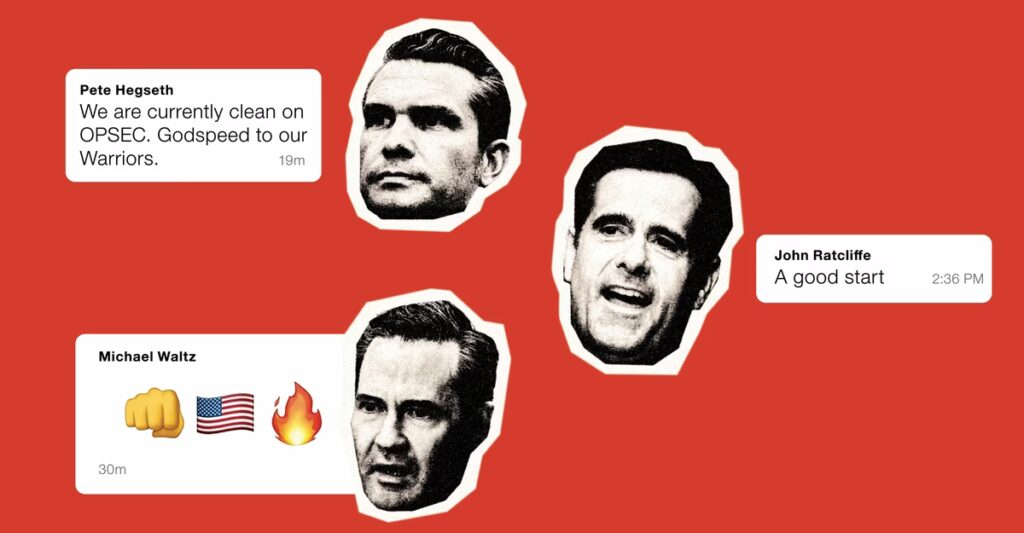
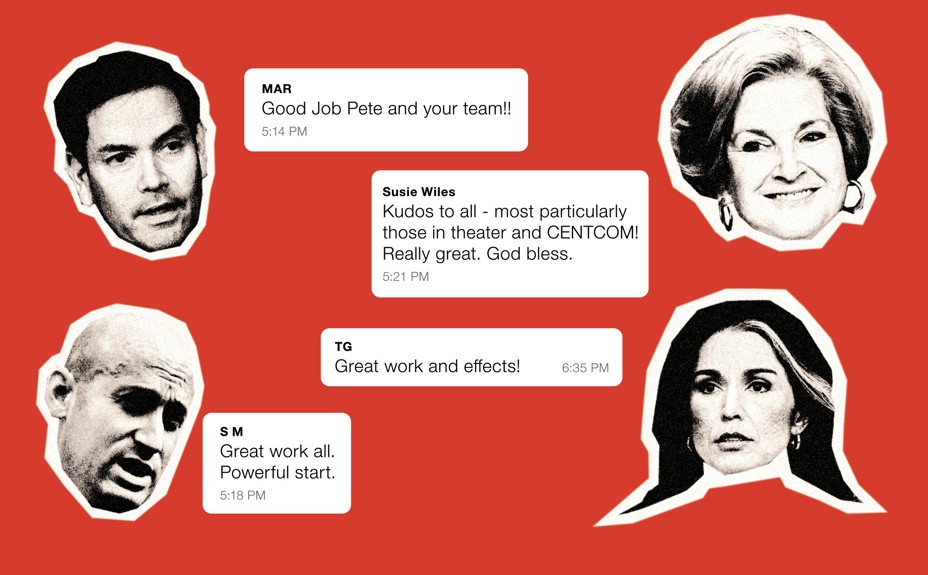
In the chat, congratulations began to pour in. Waltz posted three emoji: a fist, an American flag, and fire. Steve Witkoff, Trump’s all-purpose, in-over-his-head global-conflict negotiator, responded with five emoji: two praying hands, a flexed bicep, and two American flags. Later, the Houthi-run Yemeni health ministry reported that at least 53 people had been killed in the attack (the number has not been confirmed independently). The Houthis are despicable terrorists, and in my opinion should be fought and defeated, but there was still something disturbing about the proliferation of emoji.
Proof that the chat was authentic forced me (and a growing number of advisers, sworn to secrecy) to make a choice. I was interested in exposing a security breach at the highest reaches of government; I was less interested in being accused of violating the Espionage Act. I would thus exit the chat later that same day. The Signal group would be alerted that I had left, so timing was important. That evening was the annual dinner of the Gridiron Club, at which Washington journalists host senior administration officials and members of Congress and make mainly mild fun of them from the stage. I heard that Waltz might be attending. I didn’t want the FBI raiding the dinner to seize my phone, so I waited until the end of the dinner to leave the chat. I spent the next hours awaiting recognition by the federal government that I was an apostate member of the “Houthi PC small group.”
But, nothing.
As a reporter, I was relieved; as a citizen, I was appalled by the violation of the first commandment of digital hygiene: Thou Shalt Know Who Is in Thy Group Chat.
The next week rushed by as we prepared the story for publication. I decided not to include some of the key operational details shared by Hegseth, Waltz, and Ratcliffe, the CIA director. I wanted to expose their incompetence without releasing information that could hurt American troops. Early on Monday, March 24, I wrote to Waltz and Hegseth on Signal (of course) and then others by email, asking for confirmation and comment. I would learn that my requests set off a scramble in the White House. The National Security Council called an emergency meeting in the Situation Room, where the mood, as participants later described it to me, was one of incredulousness and anger. According to people who participated in the meeting, Alex Wong, who was then the principal deputy national security adviser, briefed officials, but he didn’t have much information. The White House counsel, David Warrington, asked, slowly and repeatedly, “How. Did. This. Happen?”
To their credit, White House officials quickly responded to me and confirmed the authenticity of the chat, and we published our story. These officials publicly argued that nothing secret or sensitive had been disclosed in the chat, which was nonsense, though their argument was helped by my decision to keep actual operational details out of the story. It was my word against theirs.
There were two main worries in the White House that morning. The first: Who would tell the president? It is my understanding that Susie Wiles, the White House chief of staff, instructed Waltz to tell Trump. (Wiles, we would later learn, disliked Waltz, who treated her poorly.) The second worry was that Hegseth, who was then flying to Hawaii aboard the Pentagon’s “Doomsday” plane, would be unable to muster a mature reaction to the story. Over the course of the day, officials spoke with him and texted him repeatedly while he was in the air, pleading with him to respond to questions by saying only that no classified information had been disclosed.
Temperament is destiny, and Hegseth responded frantically and defensively. “You’re talking about a deceitful and highly discredited so-called journalist who’s made a profession of peddling hoaxes time and time again,” he told reporters when he landed. He was referring to my reporting, in 2020 and in 2024, that Trump had made various contemptible comments about American troops, including that soldiers who fell in war were “suckers” and “losers,” and that Trump had also said, “I need the kind of generals that Hitler had.” (Multiple sources confirmed that Trump had made these comments, including John Kelly, a former White House chief of staff and a retired Marine general.)
Waltz also responded in a juvenile manner, telling Fox News the next day that I am “the bottom scum of journalists. And I know him in the sense that he hates the president, but I don’t text him. He wasn’t on my phone, and we’re going to figure out how this happened.” Waltz went on to say, “Of course I didn’t see this loser in the group.” (I believe this is what is known as “projection.”) And he made a comment that provided material for a week’s worth of late-night comedy. In explaining how I may have been added to the chat, he said, “Well, if you have somebody else’s contact, then somehow it … gets sucked in. It gets sucked in.” (I recently learned that Wiles ordered Waltz to turn his phone over to Elon Musk—at the time a kind of one-man Genius Bar for White House officials—who reported back to Wiles that my phone number did not get “sucked in” to Waltz’s phone.) Waltz also denied ever having met me, which is not true.
The ad hominem campaign by Waltz, Hegseth, Gabbard, the CIA, and White House Press Secretary Karoline Leavitt, combined with the assertion that no classified information had been included in the chat, presented me with a dilemma. I knew, of course, that the information I’d seen on my phone would ordinarily be judged top secret by the military, and I knew that the White House lies were meant to undercut the credibility of this magazine. I simply could not understand why the administration was goading me into releasing the full message chain, which would show that I was correct in stating that the information was highly secret.
We devised a plan: My colleague Shane Harris, who covers the intelligence community, and I would speak with leaders of the relevant government agencies and ask them if they objected to the publication of the rest of the messages. This written statement, from Leavitt, illustrates the sophistication of the administration’s response: “As we have repeatedly stated, there was no classified information transmitted in the group chat,” she wrote. “However, as the CIA Director and National Security Advisor have both expressed today, that does not mean we encourage the release of the conversation. This was intended to be a an [sic] internal and private deliberation amongst high-level senior staff and sensitive information was discussed. So for those reason [sic]—yes, we object to the release.”
[Read: Here are the attack plans that Trump’s sdvisers shared on Signal]
We published a follow-up story and included the operational messages from Hegseth and Waltz. Here is the key text from Hegseth: “TIME NOW (1144et): Weather is FAVORABLE. Just CONFIRMED w/CENTCOM we are a GO for mission launch.” Centcom, or Central Command, is the military’s combatant command for the Middle East. He continued:
“1215et: F-18s LAUNCH (1st strike package)”
“1345: ‘Trigger Based’ F-18 1st Strike Window Starts (Target Terrorist is @ his Known Location so SHOULD BE ON TIME)—also, Strike Drones Launch (MQ-9s)”
“1410: More F-18s LAUNCH (2nd strike package)”
“1415: Strike Drones on Target (THIS IS WHEN THE FIRST BOMBS WILL DEFINITELY DROP, pending earlier ‘Trigger Based’ targets)”
“1536: F-18 2nd Strike Starts—also, first sea-based Tomahawks launched.”
“MORE TO FOLLOW (per timeline)”
“We are currently clean on OPSEC.”
“Godspeed to our Warriors.”
It would have been more accurate to have written, “We are currently clean on OPSEC, except that I’m sending this information to the editor of The Atlantic.” To honestly believe that this information was not secret would require Hegseth to achieve Olympian levels of self-deception.
As all of this was happening, I was receiving messages from various military officials expressing disdain and anger that Hegseth refused to take responsibility. None of them went public with their outrage, however.
Other people did, including a modest number of Republicans. Senator Roger Wicker, the chair of the Senate Armed Services Committee, told reporters, “The information as published recently appears to me to be of such a sensitive nature that, based on my knowledge, I would have wanted it classified.” Wicker and his Democratic counterpart, Senator Jack Reed, asked for a Pentagon investigation. I doubted that this would occur, because the administration was dismantling the inspector-general system across the federal government. But an investigation was soon said to be under way.
Only two administration figures did not seem especially alarmed or defensive during the controversy. The first was the vice president, who, we would later learn, made one final joking addition to the “Houthi PC small group” chain late on the night after my first story appeared: “This chat’s kind of dead,” he wrote. “Anything going on?”
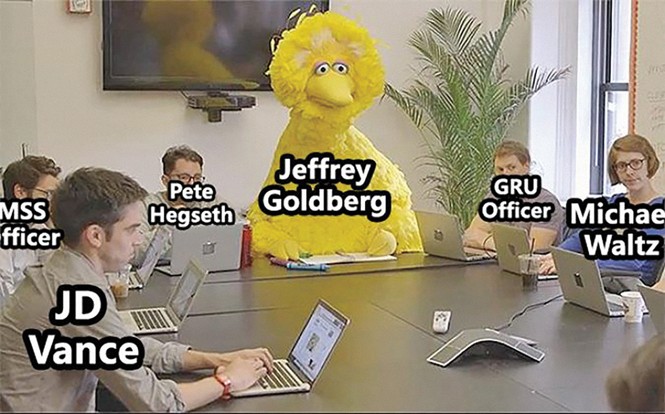
The other was the president himself.
I was worried that the Signal story would complicate already complicated efforts by my colleagues Ashley Parker and Michael Scherer to get an interview with Trump. But instead—and this was somewhat predictable to those of us who have paid close attention to Trump over the years—he not only granted them an interview, but invited me to participate. He could not resist the temptation to troll us along the way, however. Three hours before our scheduled visit to the Oval Office, he posted the following message on Truth Social:
Later today I will be meeting with, of all people, Jeffrey Goldberg, the Editor of The Atlantic, and the person responsible for many fictional stories about me, including the made-up HOAX on “Suckers and Losers” and, SignalGate, something he was somewhat more “successful” with. Jeffrey is bringing with him Michael Scherer and Ashley Parker, not exactly pro-Trump writers, either, to put it mildly! The story they are writing, they have told my representatives, will be entitled, “The Most Consequential President of this Century.” I am doing this interview out of curiosity, and as a competition with myself, just to see if it’s possible for The Atlantic to be “truthful.” Are they capable of writing a fair story on “TRUMP”? The way I look at it, what can be so bad—I WON!
When we entered the Oval Office, Trump said, “This will be very, very interesting. You think Biden would do this? I don’t think so.”
(He was correct.)
“Thanks for announcing the interview on Truth Social,” I said.
“I wanted to put a little extra pressure on you,” he said. “But at the same time, you’ll sell about five times more magazines.”
I asked him, in the course of the interview, what he meant by “I will be meeting with, of all people, Jeffrey Goldberg.”
“Oh, you like that? I had to do that,” he said. “I had to explain to people. That’s my way of explaining to people that you’re up here, because most people would say, ‘Why are you doing that?’ I’m doing that because there is a certain respect.”
“Are you saying that Signalgate was real?” I asked.
“Yeah, it was real. And I was gonna put in something else, but I didn’t have enough time.” This led me to ask, out of sheer curiosity, “How long does it take you to write these?”
“Not long,” he answered. “I go quickly as hell. You’d be amazed. You’d be impressed. And I like doing them myself. Sometimes I dictate them out, but I like doing them myself. What I’m saying is that it became a big story. You were successful, and it became a big story.”
Me: “But you’re not saying that it was successful in the sense that it exposed an operations-security problem that you have to fix?”
Trump: “No. What I’m saying is, it was successful in that you got it out very much to the public. You were able to get something out. It became a very big story.”
I then asked him directly if there were any other possible lessons to be learned from the Signal breach.
The president answered, “I think we learned: Maybe don’t use Signal, okay?”
Months went by. We heard, again and again, that the Defense Department’s inspector general would investigate, but nothing came of it. Finally, in December, the report was released. It found what had seemed obvious from the outset: that Hegseth’s use of Signal to discuss bombing Yemen could have exposed U.S. tactics and endangered troops.
“The Secretary sent information identifying the quantity and strike times of manned U.S. aircraft over hostile territory over an unapproved, unsecure network approximately 2 to 4 hours before the execution of those strikes,” the report reads. “If this information had fallen into the hands of U.S. adversaries, Houthi forces might have been able to counter U.S. forces or reposition personnel and assets to avoid planned U.S. strikes. Even though these events did not ultimately occur, the Secretary’s actions created a risk to operational security that could have resulted in failed U.S. mission objectives and potential harm to U.S. pilots.”
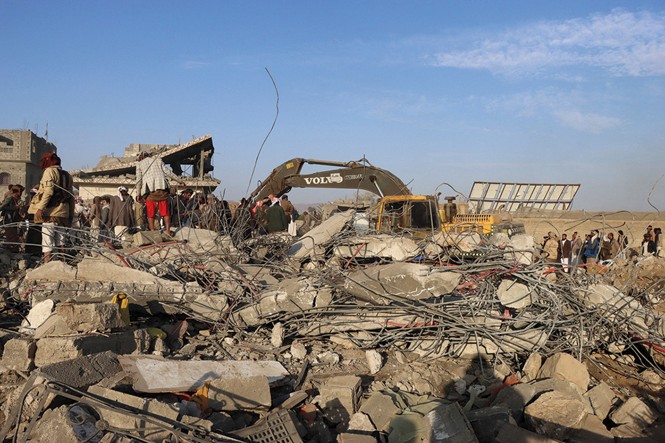
The report concluded, however, that because the secretary of defense possesses “original classification authority”—meaning he has the power to declassify secrets at will—he wasn’t technically in violation of any rules governing secrecy, only rules banning the use of private messaging apps for official Pentagon business.
Hegseth claimed that the report cleared him of all wrongdoing. “No classified information,” he posted on social media. “Total exoneration. Case closed. Houthis bombed into submission. Thank you for your attention to this IG report.”
He had not always been so forgiving when it came to matters of operational security. In 2016, at the height of the furor concerning Hillary Clinton’s email server, Hegseth, then a Fox News host, said, “How damaging is it to your ability to recruit or build allies with others when they are worried that our leaders may be exposing them because of their gross negligence or their recklessness in handling information?”
The U.S. is now engaged in another bombing campaign, larger and more sustained than the strikes on the Houthis. Every day, hundreds of aviators are ordered into the airspace above Iran. Their lives depend on the operational security that the military’s culture of accountability is designed to safeguard.
The Department of Defense employs nearly 3 million people, uniformed and civilian. All are subject to rules and regulations governing many aspects of their behavior. Any one of them would have faced serious consequences for announcing, on an insecure messaging app, that the U.S. was about to send its pilots over enemy territory.
All except one.
*Lead-image sources: Mandel Ngan / AFP / Getty; Tom Williams / CQ Roll Call / Getty; Andrew Harnik / AFP / Getty.
This article appears in the April 2026 print edition with the headline “The Unbearable Lightness of Signalgate.”
The post The Unbearable Lightness of Signalgate appeared first on The Atlantic.