The emerging shock of climbing oil prices rumbled through Asia, where countries, rich and poor, tried to contain the economic fallout from the escalating war in the Middle East.
South Korea announced on Monday it would cap prices at the pump for the first time in nearly 30 years. In India, the city of Pune has temporarily suspended gas-based cremations, asking customers to use wood or electricity instead. Pakistan said it would increase gasoline prices by about 20 percent to throttle demand from regular drivers and allow diesel costs to remain low for trucks and buses.
As the price of crude oil soared above $100 а barrel, governments are being forced to take increasingly extreme measures to protect consumers from punishing price increases and to constrain energy use to prevent shortages in a conflict with no end in sight. Few parts of the world are as acutely exposed as Asia to the curtailment of oil and gas from the Middle East, which accounts for a majority of the region’s energy imports.
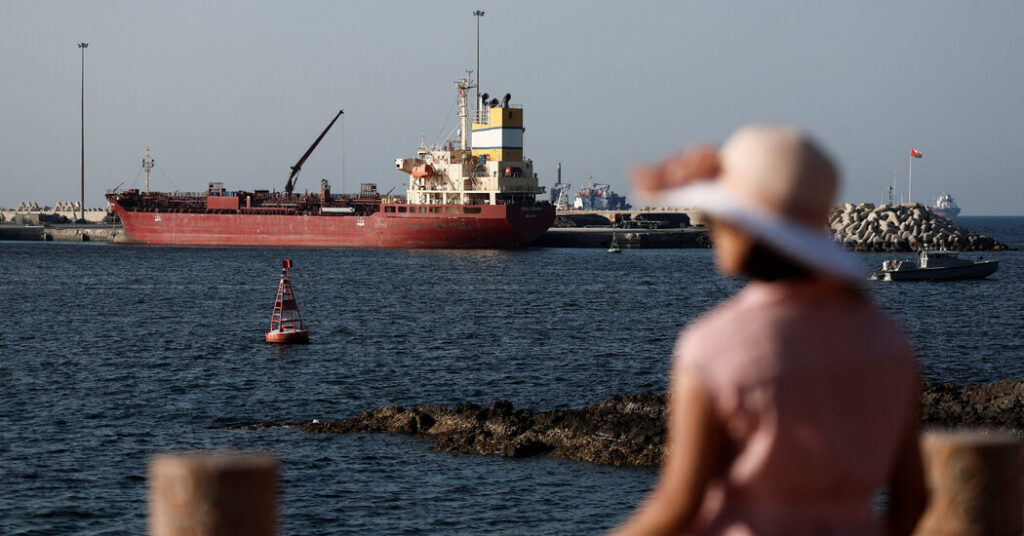
The Strait of Hormuz is a narrow passage between Iran and Oman that separates the world’s biggest oil and natural gas producers from their customers. Historically, roughly 20 million barrels pass through it each day, most of it bound for Asia. The strait has been effectively closed to seaborne traffic because of the conflict, leaving governments scrambling for solutions to keep fuel flowing and prices from spiraling out of control.
“There’s no replacement for that,” said Edward C. Chow, a former executive at Chevron who led international external affairs and managed operations in China. “The market sees a physical supply shortage.”
At gas stations across Hanoi, Vietnam, “sold out” signs have started to appear, with around 15 to 20 stations shutting their pumps in recent days. The authorities tried to reassure people on Monday that the country had enough oil in reserve for at least a month, urging residents not to stockpile gasoline or diesel.
Hoang Van Thang, 29, a motorbike taxi driver, said he waited 30 minutes to fill up his tank at a gas station in central Hanoi; he usually waited five minutes. He said his daily spending on gasoline had risen about 20 percent over the past week as fuel prices continued to climb.
“The higher gasoline prices are eating into my daily income,” he said. “The increase in gasoline prices will push up the cost of everything else, from vegetables and meat to a bowl of pho.”
Even if fighting stops soon, officials and analysts say the disruption to energy supply chains could last weeks.
Across Asia, governments have responded in different ways. Some are looking to limit the pain for consumers, while others are trying to ration scarce supplies.
Tapping reserves.
Japan, South Korea and China are not ruling out the possibility of drawing down their vast reserves of oil set aside for times of crisis.
When asked by a reporter whether China has decided to tap its reserves, Guo Jiakun, spokesman for China’s foreign ministry, said in the briefing on Monday that the country “will do what is necessary to protect its energy security.”
In Japan, government officials have instructed domestic oil-storage bases to prepare for a potential release of strategic reserves, local media reported on Monday. In a news conference, the country’s chief cabinet secretary, Minoru Kihara, said that no formal decision had been made to tap the reserves.
But accessing petroleum reserves is easier said than done, according to June Goh, a Singapore-based oil market analyst at Sparta, a commodities data firm. Reserves may not be easily retrieved, and it is challenging to get fuel to refiners before existing inventory runs out, she said.
On Friday, Mitsubishi Chemical Group began scaling back production at a plant north of Tokyo that produces ethylene, a gas that is used to make plastics. Production at the plant was reduced after a disruption to the procurement of naphtha, a crude-derived feedstock used in ethylene production, according to a spokeswoman.
Capping prices.
In South Korea, officials on Monday moved to directly intervene in fuel markets. President Lee Jae Myung called for a price cap on gasoline and diesel and ordered the authorities to crack down on hoarding, collusion and price manipulation by refiners and gas stations.
Price caps generally apply at the pump, limiting how much gas stations can charge motorists even as global crude prices surge. But such measures can shift the financial pressure elsewhere.
“If the government caps the retail price but doesn’t subsidize it, the cost falls on refiners,” Ms. Goh said. With crude prices climbing rapidly, forcing refiners to absorb the difference is not economical and “not a feasible solution in the short or medium term,” she said.
The South Korean government has not yet announced how it will compensate suppliers for losses incurred from the price cap, the first of its kind in South Korea since the Asian financial crisis in 1997, said Kim Yong-beom, the chief policy coordinator at Mr. Lee’s office.
Taiwan, which imports more than 96 percent of its energy and gets about 60 percent of its oil through the strait, is racing to lock in supplies before they run out. About a quarter of its natural gas comes from Qatar, which halted production last week after Iranian strikes on two of its gas facilities.
To cover the shortfall through April, Taiwan needed to secure 22 vessels’ worth of natural gas shipments and had already contracted for 20 of them, the minister of economic affairs, Kung Ming-hsin, said Monday. “There will absolutely not be any gas shortages or power shortages,” he said. Taiwan also raised gasoline and diesel prices on Monday, but it said it was lowering commodity taxes at the same time to ease the impact on consumers and industry.
Reducing demand.
Other governments are instead focusing on reducing energy usage.
Several local governments in the Philippines shifted to four-day work weeks on Monday. The governments of Manila, the capital; Cebu; and Negros Occidental said they were following President Ferdinand R. Marcos Jr.’s order for the executive branch to slash the number of working days.
“We are victims of a war that is not of our choosing,” Mr. Marcos said in a statement on Friday, adding that the government was uncertain when the war would end.
The Philippines is one of the most exposed countries in Asia to an oil price shock, with nearly 90 percent of its oil imports sourced from the Middle East. Unlike its neighbors, such as Indonesia and Thailand, which are partially shielded by fuel subsidies, prices at the pump in the Philippines are more market-driven.
Bangladesh is also in a dire situation. On Friday, the country’s new government said it had ordered fuel rationing and closed universities to conserve electricity and reduce transportation needs.
In recent years, Bangladesh has been straining its national budget to buy gas for power generation. With most of its electricity now generated by gas-burning plants, it has become dependent on imports from the Gulf. The country’s new leaders, elected last month after protests toppled the previous authoritarian government, are desperate to avoid the kind of economic challenges that pressured the previous leaders.
In Vietnam, after two hikes in the price that the government sets for gas, diesel and household cooking gas — and the expectation of further increases — many people around Vietnam have lined up to fill up before prices go up again, while others are pausing travel plans.
Fishermen along the coast are already delaying their trips, at the start of peak season for fishing in the South China Sea. Truck drivers are also struggling to maintain their usual schedules for bringing supplies to factories, and food and finished goods to ports.
Reporting was contributed by River Akira Davis in Tokyo; Tung Ngoin Hanoi; Alex Travelli and Suhasini Raj in New Delhi; Xinyun Wu and Amy Chang Chien in Taipei; and Alexandra Stevenson in Hong Kong.
Choe Sang-Hun is the lead reporter for The Times in Seoul, covering South and North Korea.
The post Price Caps, Rationing and Stockpiling: Alarm Swells Over Oil Disruptions appeared first on New York Times.