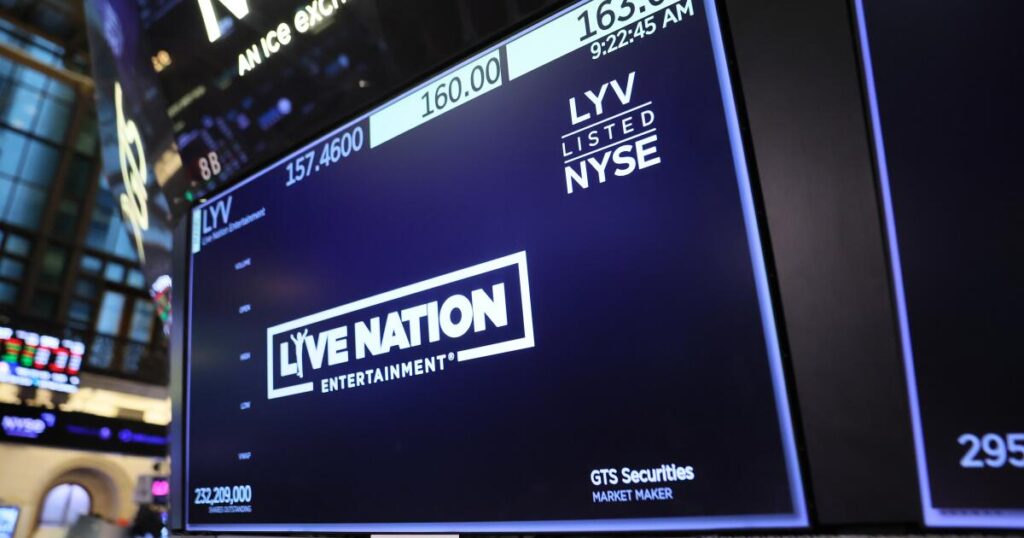
Live Nation has reached a settlement with the Justice Department in an antitrust case that put the entertainment giant at risk of being separated from Ticketmaster.
The ticket vendor’s settlement offer was announced, in a court hearing on Monday, less than a week after the long-awaited trial began. With pending approval from the judge, Live Nation will have to pay damages to the suing states and allow competitors to sell tickets on its platform. Media reports have said the company agreed to pay more than $200 million as part of the settlement.
The settlement caught Judge Arun Subramanian off guard. He said no one informed him of the tentative deal until late Sunday, even though a term sheet for a possible settlement was signed on Thursday, according to the Associated Press.
A 12-person jury was seated last Tuesday in a Manhattan federal courthouse and the trial had reached witness testimony by the end of last week. The complaint was filed in 2024, when the federal government, 39 states including California and the District of Columbia, alleged that Live Nation and Ticketmaster have monopolies in various aspects of the live music industry, such as concert promotion, venue operations, artist management and ticketing services.
Live Nation could not immediately be reached for a comment.
Many of the large monopoly claims were thrown out during a pretrial hearing last month, including an allegation that Live Nation’s industry power raises ticket prices and harms consumers. But the new settlement offers major structural changes to the company’s ticketing services.
If the trial judge approves the settlement, the Beverly Hills-based company will have to open parts of its platform to rival ticketing operators. This means third-party sellers like SeatGeek could list tickets and have access to Ticketmaster’s technology.
Another key claim in the lawsuit concerned Ticketmaster’s alleged exclusivity contracts, which required artists who booked Live Nation-owned venues to also use its ticketing services. The settlement now limits these contracts to four years and allows venues to place a number of its tickets on competing platforms.
The original lawsuit also argued that Live Nation manages more than 400 artists and controls more than 265 venues in North America — all while Ticketmaster simultaneously controls around 80% of the primary ticket marketplace and is increasing its involvement in the resale market. Under the pending legal agreement, Live Nation would have to divest more than 10 of its venues and Ticketmaster would also have to cap service fees at 15%.
Serona Elton, attorney and interim vice dean at the University of Miami’s Frost School of Music, said this outcome can be understood in two ways — it’s either a win that addresses anti-competitive behaviors or a deal that does not go far enough.
“It is important to understand that it is not illegal to be a monopoly and control a large portion of the market,” said Elton in a statement. “What is illegal is the use of anti-competitive tactics. In analyzing the settlement, the question to ask is if it does enough to address the alleged tactics and the harm they may have caused.”
Elton added that venues could benefit from these adjustments, but “music fans should not think this is going to bring ticket prices down to an affordable level as there are other causes behind the sky-high ticket prices.”
Stephen Parker, the executive director of the National Independent Venue Association, similarly expressed some skepticism about the potential settlement.
“The reported settlement does not appear to include any specific and explicit protections for fans, artists, or independent venues and festivals,” he said in a statement.
“Reported details also indicate that ticket resale platforms could be further empowered through new requirements for Ticketmaster to host their listings, which would likely exacerbate the price gouging potential for predatory resellers and the platforms that serve them,” Parker added . “If these facts are true, NIVA views this as a failure of the justice system.”
A settlement could mark the potential end to one of the major legal battles Live Nation is facing. The company is also being sued by the Federal Trade Commission and is dealing with a handful of class-action lawsuits from groups of concertgoers.
After the news of the settlement broke, Live Nation’s stock jumped over 5% to $164.03.
The post Live Nation reaches tentative settlement with Justice Department in antitrust lawsuit appeared first on Los Angeles Times.