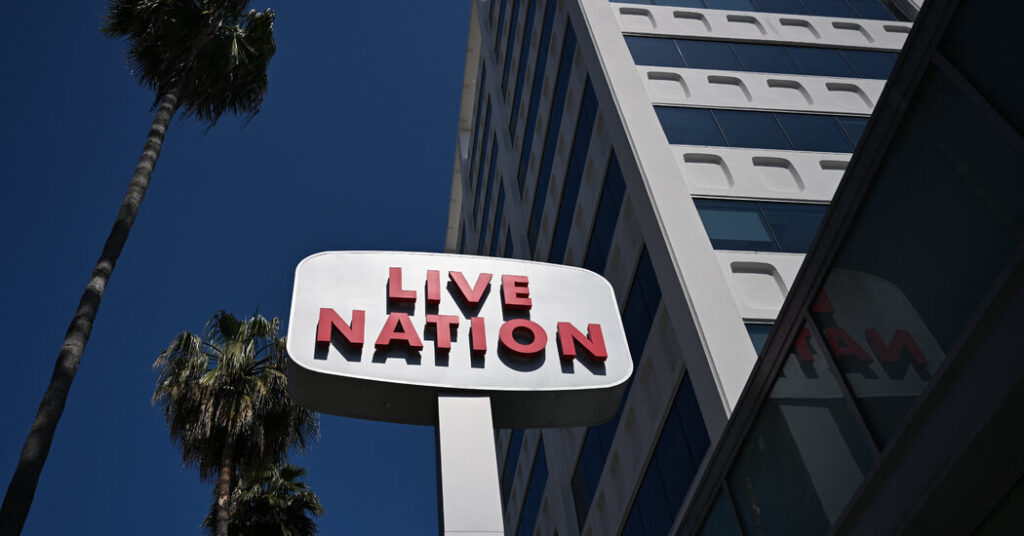
The Justice Department has reached a tentative settlement of its antitrust litigation against Live Nation, the concert giant that includes Ticketmaster, after a week of testimony in a high-profile trial that examined competition in the music industry.
Under the terms, which were confirmed by two people familiar with the agreement, Live Nation would agree to change how it makes ticketing deals with venues, allowing those businesses to use multiple vendors to sell tickets to fans, rather than work with Ticketmaster exclusively. In addition, the company would allow touring artists to use other promoters when performing in its amphitheaters.
Live Nation would also pay financial damages to the states that join the settlement, according to one of the people familiar with the agreement, who was not authorized to disclose the details publicly. Dozens of state attorneys general joined the Justice Department’s lawsuit that had been underway at Federal District Court in Manhattan.
The existence of the settlement was discussed in open court on Monday morning, and the judge overseeing the case who must approve the agreement, Arun Subramanian, appeared angry about how it was reported.
Outside the presence of the jury, lawyers told the judge that Live Nation and the Justice Department had signed a deal on Thursday. Judge Subramanian noted that at a meeting in his chambers on Friday morning, neither side told him it had executed an agreement.
“It shows absolute disrespect for the court, the jury and this entire process,” Judge Subramanian said in court on Monday. “It is absolutely unacceptable.”
In addition, lawyers representing some of the 39 states, along with the District of Columbia, who were involved in the litigation complained about the settlement and said they would seek a mistrial.
New York’s attorney general, Letitia James, said in a statement that New York would continue the case.
“We will keep fighting this case without the federal government,” Ms. James said, “so that we can secure justice for all those harmed by Live Nation’s monopoly.”
The news of a possible settlement came after a week of testimony in which witnesses from three venues across the country said that Live Nation employees — among them its longtime chief executive, Michael Rapino — had threatened to retaliate against the venues if they did not use Ticketmaster as their exclusive ticketing vendor.
Judge Subramanian said that he expected Mr. Rapino and Omeed A. Assefi, the acting head of the Justice Department’s antitrust division, to be in court on Tuesday to discuss their settlement agreement.
The settlement, if it goes forward, would allow Live Nation to put the case behind it with an outcome that is far less severe than the breakup that the government had requested when it filed suit in May 2024. That divestment, if decided by the judge in the case, would have effectively undone Live Nation’s 2010 merger with Ticketmaster in a deal that smaller companies have long since complained about, saying it created a monopoly with no equal in the music industry.
Live Nation’s agreement with the Justice Department comes in a case that had bipartisan political support in Washington. At a Senate Judiciary hearing in 2023, weeks after a botched sale by Ticketmaster for tickets to Taylor Swift’s Eras Tour, senators from both parties scolded a Live Nation executive and called the company a monopoly.
To those who had sought a breakup of Ticketmaster and Live Nation, however, the settlement deal underscored how President Trump has tempered the aggressive antitrust enforcement of the Biden administration. Federal regulators have allowed big corporate mergers to go forward and settled cases brought by their predecessors. In one of those settlements, the Justice Department ended a case against a software company accused of facilitating collusion between landlords to raise rents after the company agreed to limit the nonpublic data used by its software.
In its suit, the Justice Department had accused Live Nation of operating an illegal monopoly that reaches into nearly every aspect of the multibillion-dollar concert business. The company, the government said, stifles competition, pressures artists and venues into using its services and drives up ticket prices for millions of fans.
Live Nation has consistently denied those accusations, saying that it faces a robust competitive market for its services, including ticketing, and that it does not threaten venues or artists.
Live Nation is by far the biggest power in the live entertainment business, with a global reach and a sprawling business model whose breadth is unmatched by any rival. Last year, Live Nation put on 55,000 events and sold 646 million tickets, and the company owns or controls 460 venues and manages more than 300 artists, according to its annual report. In 2025, Live Nation had $25 billion in revenue — more than Spotify or the Universal Music Group, two other companies with a significant influence on the music industry.
Live Nation’s power, the government alleged, has left the wider business of live entertainment “suffocating under monopoly.” Among the accusations detailed in the Justice Department’s complaint are that Live Nation has pressured artists to work with their concert promotion division and threatened venues to strike exclusive deals to use Ticketmaster or face the risk of losing Live Nation-controlled tours by top artists.
The first witness at the trial, John Abbamondi, the former chief executive of the parent company of the Brooklyn arena Barclays Center, testified that Mr. Rapino threatened him with diverting concerts away from the arena after it chose a rival ticketer, SeatGeek.
On a recording of a phone call played in court, Mr. Rapino could be heard telling Mr. Abbamondi that it would “be a tough time to deliver tickets or concerts, with a new competitor in town, regardless of ticketing.”
Mr. Abbamondi testified that he interpreted that statement as a threat, and that Live Nation followed through with it, diverting shows away from Barclays; Live Nation has denied it was a threat and said Barclays lost shows because a new arena, UBS, had opened on Long Island, posing new competition.
According to the government, Ticketmaster is the exclusive ticketing vendor for about 80 percent of “major concert venues” in the United States, a category that the government defines as including arenas and large amphitheaters, though not stadiums. That control, the government says, has hindered technological innovation.
Live Nation has argued that the government misunderstands the complexities of the business, asserting that artists — not promoters like Live Nation — are ultimately responsible for setting ticket prices and that venues, not Ticketmaster, receive most of the revenues from the fees added to ticket prices. (For many shows, Live Nation may operate the venue or serve as the artist’s personal manager.)
For years, Live Nation has been scrutinized for violations of a legal agreement it signed with the Justice Department in 2010 as a condition to approve its merger with Ticketmaster. That agreement, called a consent decree, barred Live Nation from threatening to withhold concerts from venues that do not sign deals with Ticketmaster. In 2019, the government found that Live Nation had repeatedly violated that decree, and amended the agreement.
Ben Sisario, a reporter covering music and the music industry, has been writing for The Times for more than 20 years.
The post Justice Department and Live Nation Reach Settlement Terms in Antitrust Case appeared first on New York Times.