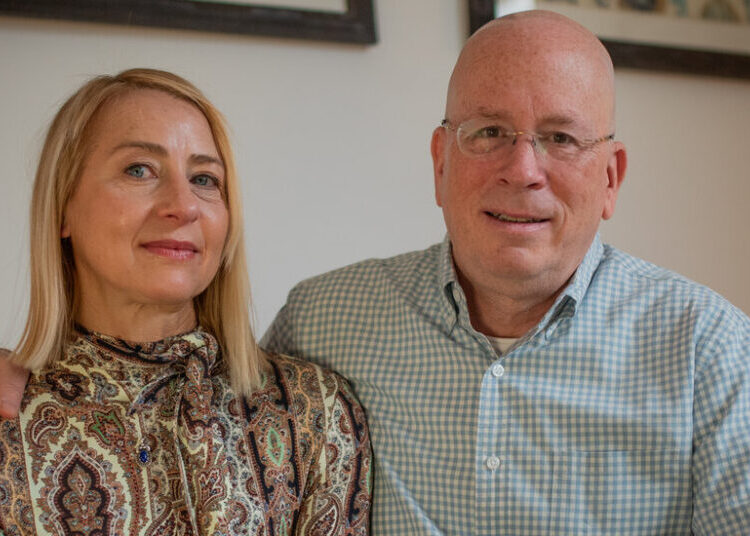
James Talarico, in one of his first interviews since winning the Democratic nomination for Senate in Texas, attacked the use of Christianity to promote conservative politics, saying his candidacy was part of a broader mission to counter what he sees as a partisan takeover of the American church.
Mr. Talarico, a state legislator and seminary student, used unsparing language to describe what he called “Christian nationalism,” saying such beliefs were “fundamentally un-Christian,” a “perversion” of his faith tradition, “unbiblical” and “heretical.”
The criticism amounted to a declaration of war against Christian conservative leaders in a deep red state who have successfully pushed policies that ban abortion, weaken the separation of church and state, and insert their Christian values into public schools.
Support from conservative Christians has fueled President Trump’s successful transformation of the American evangelical church into the backbone of his MAGA movement over the past decade. Christians from more progressive traditions have fought back with little success.
Now, Mr. Talarico, 36, is positioning his candidacy as an effort to break the stranglehold conservatism holds over both American politics and Christianity itself.
“I don’t see myself as challenging the Republican Party,” he said. “I see the real fight as all of us, whether we’re progressive or conservative, Democrat or Republican, uniting together to take on the very powerful people who have corrupted our politics and who are corrupting our church.”
His victory has unleashed a wave of fury from conservative Christian leaders attacking the theological underpinnings of his political positions and moral values.
Hours before his victory last Tuesday, prominent politicians, activists and pastors began assailing what they called Mr. Talarico’s “blaspheming tongue.”They blanketed podcasts, social media platforms and right-wing media outlets with video clips of him using the story of Jesus Christ’s conception to defend abortion rights, saying “God is nonbinary,” and finding spiritual truths beyond Christianity to support religious pluralism. Such positions, they argued, were an “abuse of Scripture” that disqualified him as a Christian leader.
As he moves into the general election, Mr. Talarico is pushing Christians to reclaim what he sees as core principles of their faith in American political life, including compassion for immigrants, helping the poor and loving one’s neighbor.
In doing so, he poses a new kind of threat to Republicans.
“If you’re playing to win in Texas, you would field a candidate like Talarico, who speaks the language of an evangelical while completely undermining the central truth claims of the Scripture,” said Andrew Kolvet, a spokesman for the conservative organization Turning Point USA, founded by Charlie Kirk. “That’s a dangerous path to be on.”
Mr. Talarico said he regretted the way he had articulated some of his progressive views on gender and race, which are now being seized upon by Republicans to paint him as an out-of-touch liberal.
“The principles that I was articulating that racism is immoral and wrong, that trans people deserve dignity and equality, those are certainly principles and values that I still hold, and that stem directly from my faith,” he said. “But I probably would have said them differently.”
In the interview, Mr. Talarico delivered a matter-of-fact critique of how faith has come to be expressed in the American church and warned that when “Christianity gets too cozy with empire, or with dictators or with authoritarians,” it weakens the “prophetic voice of the church.”
“What’s happening increasingly in the American church is that people are starting with their politics and their faith is growing out of that — it’s a fundamental reversal,” he said. “People are baptizing their partisanship and calling it Christianity.”
Asked if such conservative Christians are transgressing God’s call to love their neighbor, he said, “Yes.”
But he drew a distinction between the beliefs of theological conservatives and those of “Christian nationalists,” who, he said, were “trying to fundamentally change the Gospel into something that’s not.”
“That’s, to me, the opposite of conservative,” he said.
Frustration among more progressive Christians over the MAGA takeover of the church has been building for years.
Still, Mr. Talarico faces an uphill climb to win a general election in a state where no Democrat has won a statewide race since 1994. His two potential Republican opponents — Senator John Cornyn and Ken Paxton, the state attorney general — are locked in a runoff contest and, so far, have spent more time attacking each other.
Whether Mr. Talarico can successfully transform his challenge to the conservative Christian right into a voting issue remains unclear.
A Pew Research Center report showed that Democrats have a wide advantage among voters who have no religious affiliation. But a majority of Protestant voters, the largest religious group in the United States, align with Republicans. And there are signs of weakening Democratic support among other religious groups, including Hispanic Catholics.
As a progressive, white mainline Protestant politician, Mr. Talarico stands nearly alone in Democratic politics. Only a handful of religiously observant Democratic politicians are known for their public openness about their faith, a group that includes Black Christian leaders like Senator Raphael Warnock of Georgia, the pastor of the historic Ebenezer Baptist Church in Atlanta, and Jewish lawmakers like Gov. Josh Shapiro of Pennsylvania.
“Mainline Protestants, of which I’m one, have been more and more silent and reserved, and stepped back from explaining their priorities and values with any reference to faith,” said Senator Chris Coons of Delaware, who graduated from Yale Divinity School. “That’s been a mistake.”
Certainly no other Democratic politicians have made challenging the dominance of conservative Christian politics quite as central to their rise. As Mr. Talarico campaigned across the state during his primary campaign, he interwove his progressive Christian faith with a populist economic message, encouraging voters to embrace a “politics of love.” He cited the Gospel of Luke to encourage voters to channel their despair over the state of the country into defiant opposition.
But it was his attacks on “Christian nationalism” that helped transform Mr. Talarico into a national star.
In an interview on “The Late Show With Stephen Colbert,” Mr. Talarico called the rise of that movement a “betrayal of Jesus of Nazareth.”
“We need someone in the U.S. Senate who is going to confront Christian nationalism and tell the truth, which is that there is nothing Christian about Christian nationalism,” he said. “It is the worship of power in the name of Christ.”
The online clip was viewed nearly 10 million times after CBS, under pressure from the F.C.C., blocked the show from broadcasting the appearance on television.
A consultant involved in the race, who spoke anonymously to discuss private data, said polling found that Mr. Talarico’s religious observance did not boost his standing with past Democratic primary voters. But it helped him attract voters beyond the party’s traditional primary electorate.
Mr. Talarico’s faith has been a core motivator of his life since childhood. His grandfather, Mr. Talarico has said, was a Baptist preacher, who impressed on him that Jesus’ greatest commandment was to love God and to love your neighbor. He grew up in a mainline Protestant congregation in Round Rock, Texas. His pastor officiated same-sex unions against the policy of its denomination, the Presbyterian Church (U.S.A.), at the time.
He speaks often of how his faith drove him to public service, first as a teacher, then a politician and then a seminarian. (He is currently on leave from Austin Presbyterian Theological Seminary, with one year of coursework to go.)
In the interview, he cited a number of theological influences, including spiritual authors like Howard Thurman and Barbara Brown Taylor, as well as 20th-century German theologians like Dorothee Solle and Dietrich Bonhoeffer who opposed the Nazi regime.
Yet, at times, Mr. Talarico has been asked to answer for his use of theology to bolster his campaign.
During a virtual event hosted by Vote Common Good, a progressive organization that works to engage Christian voters, a pastor from a church in Fort Worth told him that she worries when politicians use Christian language, even to justify policies she supported.
Mr. Talarico replied that he was not trying to “claim Jesus for the Democratic Party” but envisioned a movement of “Christian populism.”
“When you read the Gospels, Jesus certainly wasn’t neutral,” he said. “He took a stand against the wealthy and the powerful on behalf of the marginalized.”
His focus on the Scripture’s literary style and historical context reflects how many mainline Protestants, and many Catholics, interpret the teachings of Jesus and their implications for public life. Conservative evangelicals generally have a more literalist view of the biblical text.
Those differing views have been on full display in recent days.
“This guy is as evil as they come,” Steve Toth, a candidate for Congress who has held leadership positions in evangelical churches, said in an interview on “The Charlie Kirk Show.”
“If you doubt that there is a wickedness and an evil and a demonic presence in the world, you’ll have to look at James Talarico,” he added.
That’s not how Mr. Talarico’s supporters see him.
As she waited for Mr. Talarico to speak at an event in Dallas earlier last month, Tina Bass, an independent, said it was his attacks on “the poison of Christian nationalism” that attracted her to his candidacy. Raised as an observant Christian, Ms. Bass now believes the evangelical movement in Texas as “gone off the tracks” when it comes to social issues like immigration and abortion.
For his part, Mr. Talarico is deeply aware of how his conservative Christian opponents view his reading of the Gospel.
On election night, he invoked the example of Jesus, “that barefoot rabbi,” who in the gospel story overturned the tables of money changers in the temple.
“They’re going to call me a radical leftist,” he warned supporters gathered in Austin. “They’re going to call me a fake Christian.”
Lisa Lerer is a national political reporter for The Times, based in New York. She has covered American politics for nearly two decades.
The post In Senate Race, Talarico Challenges ‘Heretical’ Right-Wing Christianity appeared first on New York Times.