Traders’ hopes for a quick resolution to the conflict in the Middle East are fading.
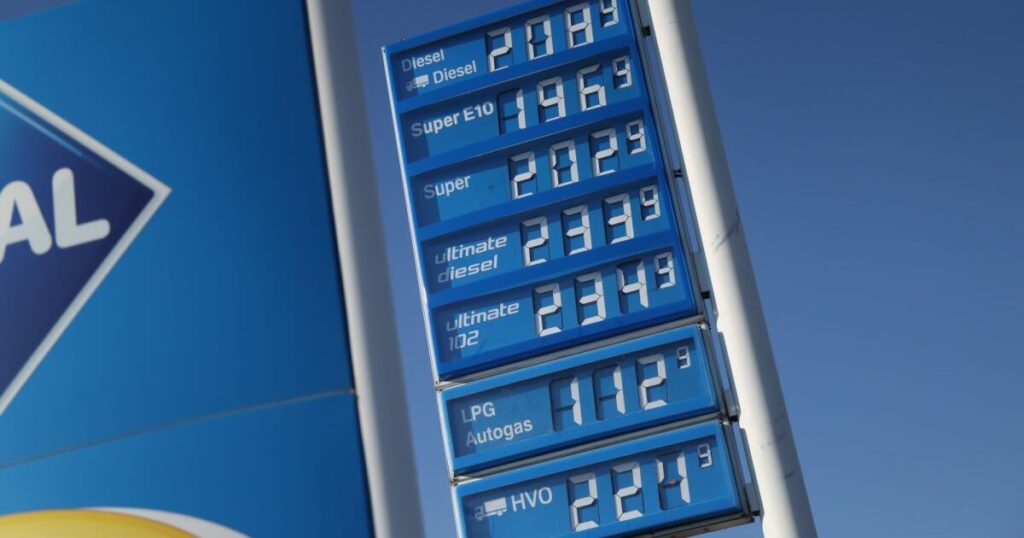
As oil prices soared past $100 a barrel and the Trump administration’s end-game for Iran looked increasingly elusive, last week’s wait-and-see stance in financial markets is giving way to something more ominous: fears that a deeper and longer-lasting supply shock will rekindle inflation and slam the brakes on the global economy.
“Investors have had to increase their probability of the worst-case scenario,” said Rajeev de Mello, a global macro portfolio manager at Gama Asset Management. “The challenge is the stagflationary nature of the shock.”
Those concerns caused the yields on government bonds to soar around the world as traders brace for higher consumer prices and slower growth — in a potential echo of the oil shock of the 1970s. In the UK, bond yields have jumped by about a half-percentage point since the war began, while they nearly doubled in Turkey. U.S. Treasury yields have also risen.
Meanwhile, a global stock selloff has wiped $6 trillion from the world’s equity markets on speculation that inflation could prevent central banks from reducing interest rates to offset the toll on growth. Traders are pricing in higher U.S. inflation over the next two years and pushed out the timing of the Federal Reserve’s next cut until September. In Europe, markets are anticipating that the European Central Bank and Bank of England will need to increase rates.
The concerns about stagflation set off significant market moves around the world on Monday. Japan’s Nikkei index tumbled over 5% alone, while in the UK two-year government bond yields jumped nearly 20 basis points. When U.S. markets opened, stocks slumped and short-term Treasury yields moved higher, with the two-year rate rising 2 basis points to about 3.58%.
The movements came after Iran chose Mojtaba Khamenei, the hard-line son of the assassinated Ayatollah Ali Khamenei, as its new supreme leader, signaling Tehran won’t back down in a war now raging across the Middle East. President Trump also said that $100 crude was “a very small price to pay” for “Safety and Peace.”
The hardening positions have dashed some early hopes that Trump would potentially find a way to contain the fallout of a crisis he triggered — as was the case last year, when he paused his tariff rollout after it set off a global market meltdown. But as the impact of the war spreads through the region and chokes off the flow of oil, markets are indicating that a swift resolution looks increasingly unlikely.
JPMorgan Chase & Co.’s head of global market intelligence, Andrew Tyler, on Monday turned “tactically bearish” on U.S. stocks, warning of a steeper drop in the Standard & Poor’s 500 Index. Veteran strategist Ed Yardeni raised the probability of a market meltdown to 35% from 20% previously, citing the “fast-moving times.”
In bond markets, German two-year yields climbed eight basis points to 2.39%, while their UK equivalents soared as much as 30 basis points to 4.17% before paring the jump. Benchmark yields rose by double-digit figures in New Zealand and Australia.
Although equities overseas trimmed declines and oil pared gains on the prospect that Group of Seven countries will discuss a possible joint release of petroleum from reserves, the moves were still striking.
“The risks are firmly placed to the downside from here with no clear timeline of an end to it,” said Matthew Haupt, a hedge fund manager at Wilson Asset Management.
Bond swoon
The tandem selloff in stocks and bonds moved from Asia and into Europe as the trading day wore on. Europe, which is particularly sensitive to rising energy prices, has been at the heart of the rout, with blue-chip stocks sinking as much as 3.1% on Monday. In the US, the drop was more muted, with the S&P 500 down by about 0.6%.
“The market is selling off across the board today, regardless of size or style,” said Taku Ito, chief portfolio manager at Nissay Asset Management. “If inflation persists while labor demand weakens, a U.S. recession would become inevitable. For equity markets, that would mean the game is up.”
With traders focused on the risks of an economic slowdown, the cost of protection against defaults on high-grade corporate bonds hit the highest level since May in both Europe and Asia. Even before the war began, parts of the credit market were showing signs of strain, as concerns over AI-driven disruption weighed on areas such as private credit and leveraged loans.
“When markets encounter a black swan, everything could fall at the same time,” said Anna Wu, a cross-asset investment strategist at Van Eck Associates in Sydney. “That’s what we’re seeing today — selling across every corner from equities to bonds and currencies, except for oil and dollar.”
Part of the decline reflects how far markets had run. South Korea and Taiwan had climbed to multi-year highs on insatiable demand for AI chips, leaving valuations stretched and investors sitting on sizable gains. The oil shock has compounded the pressure, highlighting Asia’s vulnerability to energy disruptions, particularly in the Middle East.
In the U.S., the stock market had already been weighed down by concern that artificial intelligence is poised to disrupt several industries. The U.S. economy has also been sputtering, with employers unexpectedly cutting jobs in February.
“The current situation is being dominated by emotions such as fear and disbelief,” said Hironori Akizawa, a fund manager at Tokio Marine Asset Management. “I am raising cash levels.”
Vishnoi and Hsu write for Bloomberg.
The post How an oil shock is reshaping Wall Street’s economic outlook appeared first on Los Angeles Times.