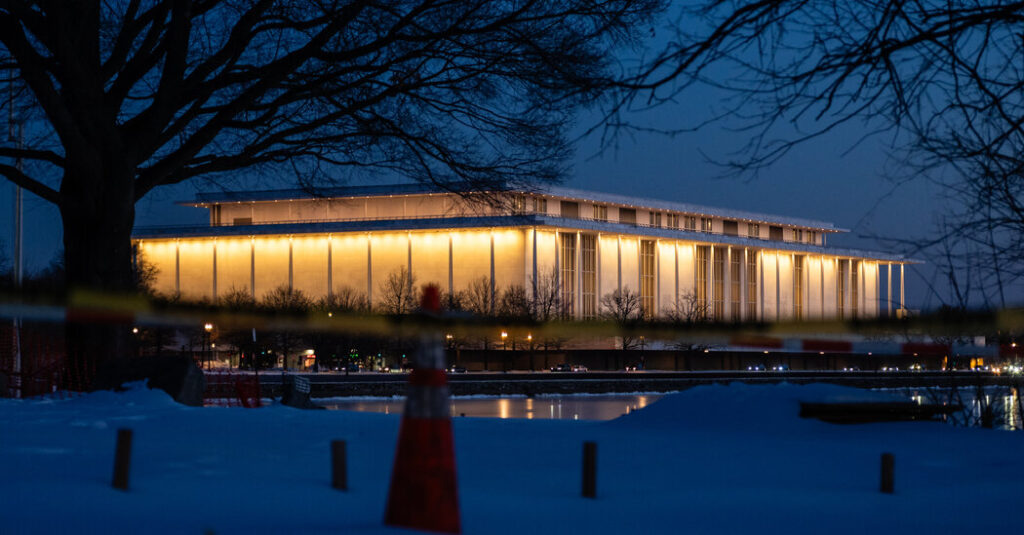
When President Trump announced last month that he would soon close the John F. Kennedy Center for the Performing Arts for two years for renovations, he made no mention of the patrons whose own schedules would be transformed.
Christine Smith, a retired art conservator in Alexandria, Va., has been a subscriber to the center for 25 years, taking in an untold number of ballet and modern dance shows. For the 2025-26 season, for instance, she paid a little more than $1,000 for tickets to a dozen dance performances.
But things have changed.
“I really love ballet, and I don’t know how I’ll ever see it again,” Ms. Smith, 76, said recently. “For anyone who likes dance, opera, orchestra or classical music, the Kennedy Center is a lifeline — and that’s been cut.”
Ms. Smith is far from the only Beltway resident who is worrying, amid all the recent turmoil at the area’s premier performing arts venue, if this beloved cultural institution will ever be the same. As Mr. Trump has overhauled the Kennedy Center, longstanding patrons like Ms. Smith seem to have been largely left out of the debate. Many of them find themselves looking to other local venues for their cultural fix. And they are wondering, even if the center reopens in 2028 as promised, will it still be the venue they have cherished across decades?
What Congress established as the National Cultural Center in 1958 was designated as a living memorial to the 35th president in 1964. When the Kennedy Center opened in 1971, with Leonard Bernstein presenting the world premiere of his “Mass,” The New York Times reported, “The capital of this nation finally strode into the Cultural Age tonight.”
In the ensuing decades, some three million people annually have relied on the Kennedy Center for concerts, plays and other cultural offerings, according to the Government Accountability Office. The center typically stages more than 2,000 shows a year across a half-dozen stages and other spaces at the complex.
But over the last year — as Mr. Trump has purged the center’s board of its Biden appointees, replaced its longtime president with a loyalist, made himself chairman and added his name above Kennedy’s on the building’s facade — more than two dozen musicians, dancers, theater companies and other creative groups have canceled performances there. The Washington National Opera abandoned the hall where it has played since the building opened.
Last week, the executive director of the National Symphony Orchestra, which performs at the center, said she was stepping down. Not long before, the San Francisco Ballet withdrew from a series of performances at the center, a few days after the center announced that its annual ceremony honoring cultural figures will now bear the president’s name: “The Trump Kennedy Center Honors.”
The tumult, including the unexpected announcement of the temporary closing starting in July, has all but deprived dedicated patrons of an esteemed performing arts venue. Ticket sales at the center were already falling sharply, and attendance is down about 50 percent compared with the season before Mr. Trump returned to office.
For years, Ms. Smith has saved the ticket stubs of the Kennedy Center performances she has attended, occasionally annotating them with her reactions (“43 years old! Her face showed age, but not her dancing,” she wrote of Gillian Murphy’s performance in American Ballet Theater’s production of “Romeo and Juliet” in 2023). Ms. Smith had tickets to see the Martha Graham Dance Company and Doug Varone and Dancers this spring, though both pulled out of those appearances. (The center reimbursed her for the events, she said.) Ms. Smith last attended a performance there in October, to see the Stuttgart Ballet and the contemporary dance company Bodytraffic. She has decided to let the handful of tickets she has remaining for this season go to waste.
Roma Daravi, the vice president of public relations at the center, said in a statement that audiences continued to embrace its “common-sense approach” to programming, adding that donors gave more than $130 million last year.
The Kennedy Center, she said, remained “committed to offering all Americans a place to come together and celebrate artistic excellence that uplifts and unites, rather than divides.”
Liz Huston, a spokeswoman for the White House, added in a separate statement that Mr. Trump had taken action to “rescue and revitalize” the Kennedy Center. “The president is strengthening its finances, removing divisive woke programming and initiating major building upgrades for all patrons to enjoy,” she said.
For many loyal patrons, the question has become how to fill the void left by the cancellations and the impending two-year closing.
Dr. Marijane Hynes, a physician in Bethesda, Md., used to go to the Kennedy Center every couple of months. “I won’t go, and I miss it,” she said.
But, Dr. Hynes added, “it’s not like we’re not doing any arts.” She and other devoted Kennedy Center patrons have come to lean on local concerts or plays at smaller venues, including the Music Center at Strathmore in North Bethesda, Md., and the Hylton Performing Arts Center at George Mason University in Manassas, Va.
Sales for the Baltimore Symphony Orchestra, which performs at the Strathmore, rose 16 percent between January 2025 and January 2026, according to the orchestra. A spokesman for the Hylton said that venue, along with a sister one in Fairfax, Va., had seen an increase in attendance to classical music offerings from the Vienna Boys Choir, the Royal Philharmonic Orchestra and the vocal ensemble Chanticleer. Survey data from audience members, he said, reflected “excitement about discovering a new venue.”
Venues closer to the Kennedy Center have also reported a surge in interest. A spokeswoman for the Shakespeare Theater Company, not far from the White House, said that it was on pace to have one of its highest-selling seasons ever and that inquiries from other performing arts groups looking to use its facilities had also increased.
At the Arena Stage, in southwest Washington, ticket sales for the current season have been selling significantly ahead of last season. “We know that our audience crossover with the Kennedy Center has always been a factor in our sales performance,” said Edgar Dobie, an executive producer there.
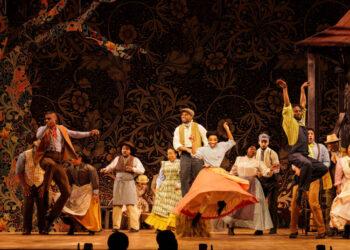
After announcing its departure from the Kennedy Center, the Washington National Opera said it would stage two operas — “Treemonisha” and “The Crucible” — this month at the Lisner Auditorium at nearby George Washington University. The company has sold nearly all of its tickets for “Treemonisha,” according to the opera.
All the while, anxiety over the turbulence at the Kennedy Center has begun to circulate far beyond the nation’s capital. Celine Nieto, 57, a communications professional and freelance writer in Plano, Texas, said that visiting the center was on her bucket list and that her family was considering a trip to New York and Washington this summer.
“The Kennedy Center probably would have been a part of that,” she said, “but we’ll just have to rethink that.” Her family now might skip Washington altogether.
Derrick Bryson Taylor is a Times reporter covering breaking news in culture and the arts.
The post For Longtime Kennedy Center Patrons, a ‘Lifeline’ Has Been Cut appeared first on New York Times.