A cluster of union workers, chatting about politics at a gathering in Jackson, Miss., were in agreement about one thing: it was good to see younger candidates make a run for Congress and challenge the longtime incumbents.
“I love it,” said Sedric Lawrence, 53. “Keeps the old guys on their toes.”
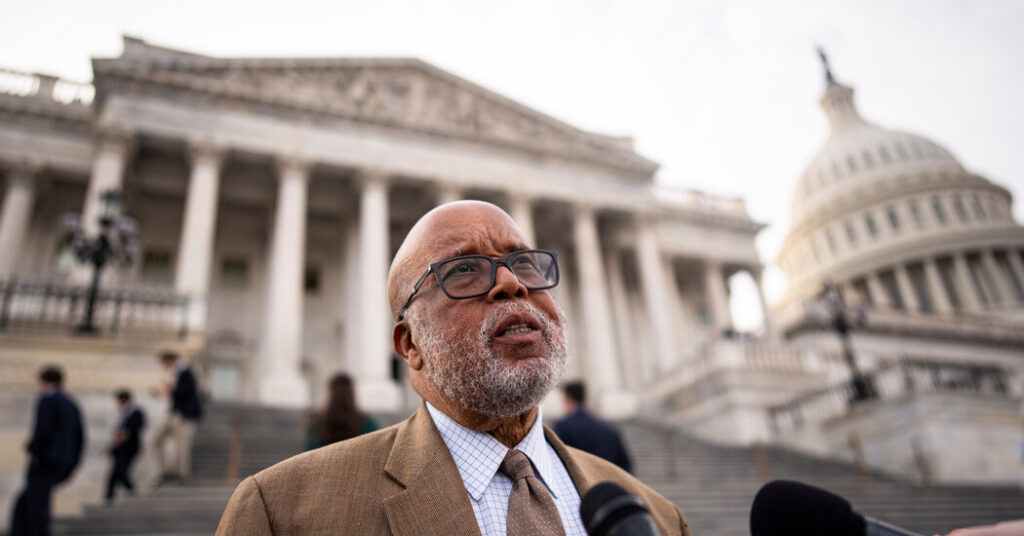
But when the conversation came around to their representative, Bennie Thompson, and whether to side with a new voice over the 78-year-old Black Democrat who was first elected in 1993, it was no longer a simple choice. Some said they were drawn to Evan Turnage, the 34-year-old antitrust lawyer mounting a long-shot primary bid. Others, like Mr. Lawrence, were going to stick with Mr. Thompson.
“I think Bennie’s been doing a good job,” Mr. Lawrence said. “He is somebody who is going to fight against that mess up in Washington.”
Because the district has long supported Democrats, the winner of Tuesday’s primary is likely to be elected to Congress in the general election.
Mr. Thompson first forged that reputation as a young activist in segregated Mississippi in the 1960s, rising through the ranks to become the top Democrat on the House Homeland Security Committee. But he now finds himself among the politicians across the country who are facing not only a young challenger in a primary election, but also a groundswell of voter frustration with an aging guard of lawmakers who have been reluctant to step back from Washington.
Mr. Turnage, who recently worked in Washington as legal counsel to Senator Chuck Schumer of New York, said that after returning to Jackson, Miss., he saw an opportunity this year to break through.
“I can’t just keep waiting my turn,” Mr. Turnage, who is also Black, told a group of residents at a community center in the small town of Walnut Grove, about an hour northeast of Jackson. In the room, warmed by the early spring heat, he was surrounded by displays that showcased Black valor and accomplishment in war and in Washington.
The Second Congressional District, which stretches for hundreds of miles through the Mississippi Delta and includes the capital, Jackson, carries some of the state’s most enduring legacies of civil rights, music and agriculture. With one of the highest concentrations of Black voters — more than two-thirds of the population is Black — it is also among the poorest districts in the nation, kneecapped by decades of financial neglect and ravaged by segregationist and racist policies.
“My legislative record on voting for uplifting districts like mine is perfect,” Mr. Thompson said in a phone interview as he drove between a series of campaign events on Saturday, all dozens, if not as more than a hundred, of miles apart. He pointed to his votes to expand health care access as well as his support of the Biden-era infrastructure law.
“You can’t show up four months before the election and gain a lot of credibility, in my humble opinion,” he added. “You have to spend time ingrained, working with people in this community who want to make a difference. And I’ve never left this community.”
Red-white-and-blue “Re-Elect Bennie Thompson” signs have long dotted patches of highway and grass, now just starting to bloom with spring wildflowers. Many voters are deeply loyal to Mr. Thompson, not just because of his decades of work on their behalf, but also because of the longstanding deference given to elder statesmen who have long fought against racism and Black disenfranchisement.
But to hear Mr. Turnage tell it, Mr. Thompson now bears some responsibility for the district’s struggles to draw investment and support for essential health and education programs. He has scrutinized how Mr. Thompson’s personal wealth has changed over his tenure in Congress, as well as whether he has done enough for the entire district.
“We need more than defensive appropriations to fill a little hole here and there — we need transformation,” Mr. Turnage said in an interview this week.
He has been blunt about the age difference, repeatedly stressing that he was a year old when Mr. Thompson was first elected to Congress. But, Mr. Turnage said, “it’s not about him — it’s about the issues of this district and it’s about his record.”
It is a sentiment that has resonated in some rural corners of the district that feel forgotten by Washington.
“We need some young blood, new thinking and new ideas,” said Maria Barton, 63, a Democrat in Walnut Grove, who came to listen to Mr. Turnage. She had voted for Mr. Thompson after moving to the state about seven years ago — that was what you did if you were a Democrat, she said — but had grown frustrated with the party over what she viewed as an inability to push back against Mr. Trump.
Mr. Thompson has steered millions of dollars toward the district, something he has showcased over the last few weeks by bringing ceremonial checks to town leaders and organizations across the Mississippi Delta and the nearby communities. And Mr. Thompson has not faced concerns over visible signs of declining health, which have driven some of his colleagues to step down under pressure.
Mr. Thompson also stepped into the national spotlight after the Jan. 6, 2021, attack on the Capitol, when he was named as the chairman of the special committee tasked with investigating the riot. In the first hearing, he invoked his home of Bolton, Miss. — population less than 500 — and growing up where “people justify the actions of slavery, the Ku Klux Klan and lynching.”
Allies of Mr. Thompson, who have worked with him or spent weekends duck hunting with him, have bristled at Mr. Turnage’s criticism. They have faulted the Republican-dominated Mississippi state government for hamstringing some of their legislative priorities.
“I know what Bennie’s doing — he’s not up there for the show,” said Jeff Johnson, 42, who recently defeated a longtime incumbent to become a city supervisor in Grenada, Miss. Music blared and the smell of freshly fried chicken hung in the air as he and others gathered on Saturday to rally support for Mr. Thompson and remind people to vote.
Some younger leaders in Mississippi praised Mr. Thompson for supporting them by hiring them for jobs in Washington or by throwing his weight behind their campaigns, as he did for Scott Colom, a district attorney mounting a run for the U.S. Senate this year.
On Friday, Mr. Thompson spent part of his morning speaking to dozens of students in Clarksdale, who asked him about getting involved in politics and what advice he had.
“In America, you have choices,” he told the crowd. And voting, he added, is “the great equalizer.”
Emily Cochrane is a national reporter for The Times covering the American South, based in Nashville.
The post Bennie Thompson Faces a Young Challenger in the Mississippi Primary appeared first on New York Times.