

In April 2024, Brandon Upchurch and his cousin were driving home from a convenience store when they noticed flashing lights behind them. When Upchurch pulled over, officers from the Toledo Police Department drew their guns and ordered him out of his red Dodge Ram.
Upchurch initially refused to turn off the engine or exit the truck, and repeatedly asked officers why he was being pulled over. An officer named Adrian Wilson warned that he would deploy his police dog if Upchurch didn’t get on the ground. As Upchurch began to get down, Wilson released the animal.
The dog latched onto Upchurch’s dreadlocks, rammed his head into the ground, and sunk its teeth into his arm. Wilson later said he thought Upchurch had tripped and was getting ready to run.
“Your car has a stolen license plate on it,” one of the officers said. His plates weren’t stolen, Upchurch insisted. He was transported to a hospital for his injuries, then sent to the county jail, where he remained for hours. The charges, which were later dismissed, were obstructing official business and resisting arrest.
Upchurch, it turned out, was right: The license plates weren’t stolen, and he was the truck’s registered owner.
Police records reviewed by Business Insider show what went wrong. A camera made by the technology startup Flock Safety misread the “7” on Upchurch’s plate for a “2” and pinged Wilson. In body camera footage, Wilson can be heard telling another officer after the arrest that he thought the camera “mis-hit.”
Flock’s license plate readers are used by law enforcement agencies, businesses, and homeowner associations. Founded in 2017, its stated mission is “shaping the future of safety.” It has expanded into thousands of communities since then, emerging as one of the industry’s biggest players.
Its rise hasn’t been without controversy, much of which has focused on privacy issues. Earlier this month, Amazon’s Ring announced it would end its partnership with Flock amid blowback over a Super Bowl ad for Ring cameras. (Flock described the decision to end the partnership as mutual.)
Less attention has been paid to the tech’s accuracy. Business Insider reviewed police records, lawsuits, and local news coverage across the country and found that the Toledo episode isn’t isolated. In a dozen instances, misreads by Flock’s automated license plate readers, or a lack of verification by officers, resulted in people who hadn’t committed crimes being stopped at gunpoint, sent to jail, or mauled by a police dog, among other outcomes.

When the tech works as designed, it can help locate suspects involved in crimes, track down vehicles, and improve investigative efficiency, the company says. The system gives law enforcement agencies access to huge swaths of data, and officers receive alerts about vehicles of interest while they’re on patrol, such as drivers with warrants, fake plates, missing people, and vehicles flagged as stolen.
Andrew Guthrie Ferguson, a law professor at George Washington University who specializes in police surveillance technologies, told Business Insider that, in general, “errors are a part of policing, and errors will be a part of policing technology.”
“The issue is creating incentives to limit the errors in the technology,” Ferguson said. “Right now, the incentives are not aligned to improve accuracy and transparency and accountability.”
Flock monitors and collects misread rates; it declined to provide Business Insider with specifics about the data. When customers flag misreads, that data is pulled into the company’s training set to improve its model, and the company works with local law enforcement to understand the cause of the incident, a spokesperson said.
“We have strong confidence in our models and continuously improve them through ongoing optimization and testing,” the spokesperson said. She said they don’t publish a single accuracy figure because performance can vary depending on plate design, lighting conditions, and environmental factors.
“We respect and value concerns and feedback raised by community members and are continuously building on our technology,” she said. “We have the utmost sympathy for any victim of harm — and that is why we are committed to the work we do to solve and deter serious crimes and provide security for communities.”
Alexander Dunn, a retired police officer and president of the Illinois Council of Police, a police union, told Business Insider that while Flock is a useful investigative tool, it can also be “an information overload” when officers on patrol are inundated with pings.
“It’s just like scrolling on Instagram or a slot machine, you hear that ding from your computer, and now your adrenaline goes up a little bit,” he said.
“If you get that stolen vehicle hit, check the area, see if you can locate it, but it’s not a mandate that you go out and pursue this vehicle,” he said. “Sometimes I think because we have this technology, we forget about that.”
When Flock launched a decade ago, CEO and co-founder Garrett Langley had ambitious goals: eliminate neighborhood crime across the country by equipping communities, police departments, and private businesses with slick surveillance tools. In addition to automated license plate readers, or ALPRs, the company also makes drones and video cameras.
The Atlanta-based company has received backing from Kleiner Perkins and Peter Thiel’s Founders Fund. Last spring, following a $275 million funding round led by Andreessen Horowitz, the company said it was valued at $7.5 billion. According to a record reviewed by Business Insider, annual recurring revenue jumped from $7 million to nearly half a billion dollars over the past five years.
The company employs over 1,200 people, including 200 salespeople, and it has touted partnerships with over 5,000 law enforcement agencies and 1,000 businesses across every state except Alaska.

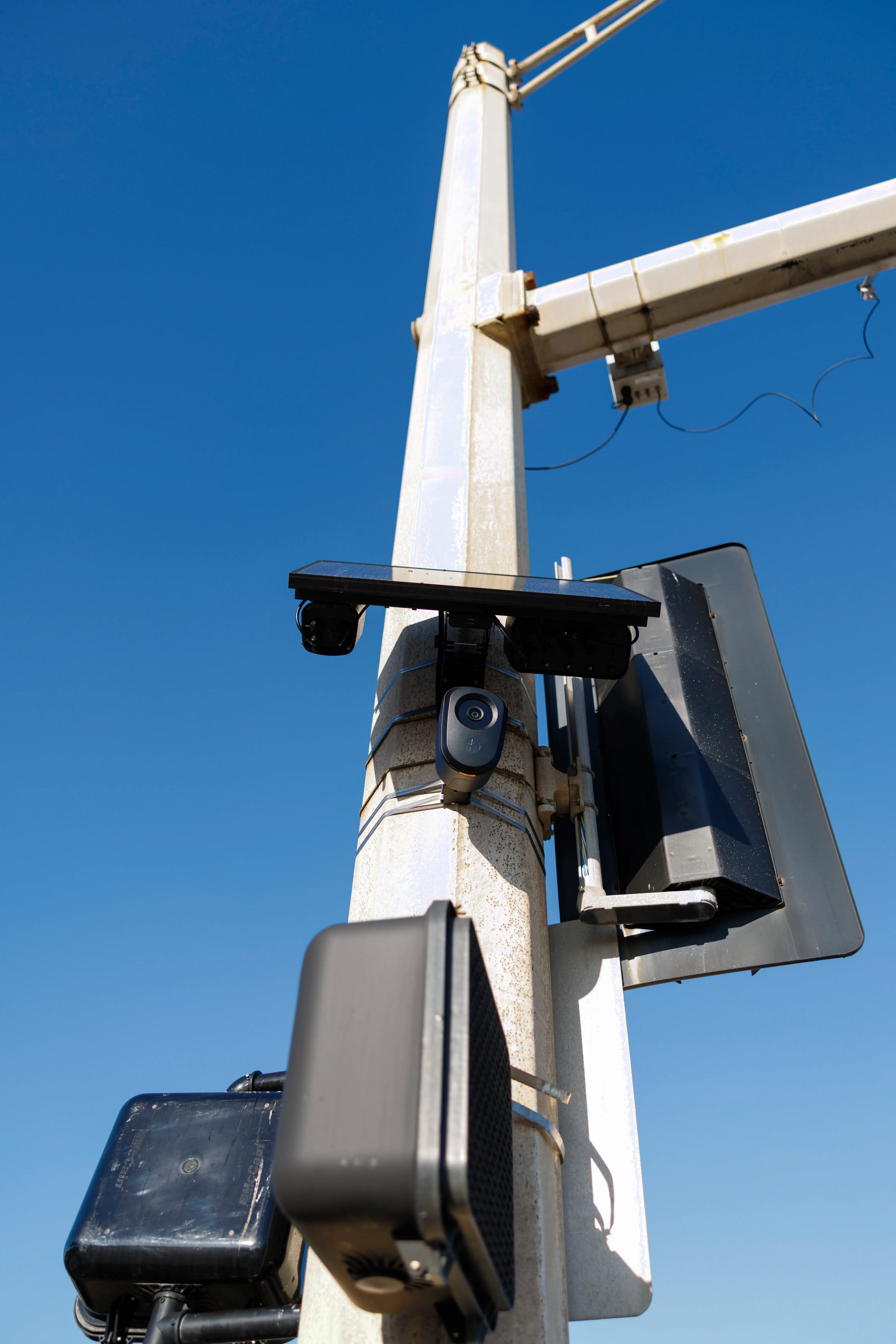
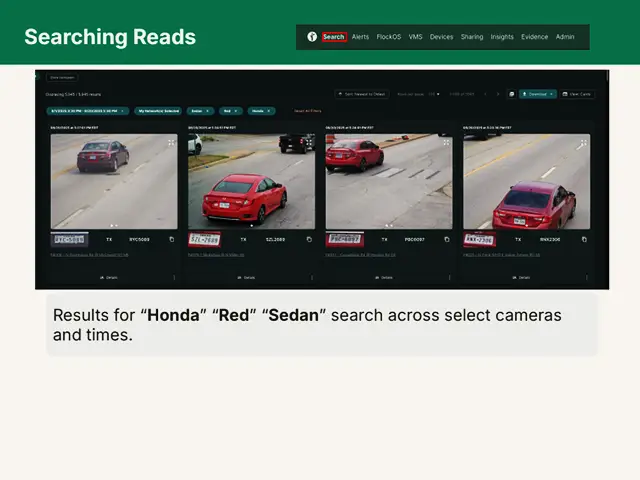
Unlike traditional license plate readers, Flock’s cameras, which are typically mounted on poles and street signs, record more than just numbers and letters. The company’s slate of AI-powered tools allows officers to search for specific characteristics of vehicles, like color, model, dents, and bumper stickers.
Agencies can also opt in to share their data with other departments — in some cases, giving officers the ability to search for a specific plate or car across tens of thousands of cameras nationwide.
A deputy police chief in Tennessee, for instance, told his department in an email that he had requested access to all cameras within a 500-mile radius; when officers searched, the system could reach almost 80,000 cameras. Meanwhile, in Wisconsin, a sheriff’s office had access to over 1,000 networks of cameras and read 2.9 million vehicles over a 30-day span last year, records show.
The cameras capture all vehicles in their vicinity, including those not suspected of any criminal involvement.
“Technology is a powerful way to make policing more objective,” the Flock spokesperson said. “Rather than relying on human intuition or suspicion, ALPR technology provides a completely objective metric — a license plate and vehicle associated with a crime or a missing person.”
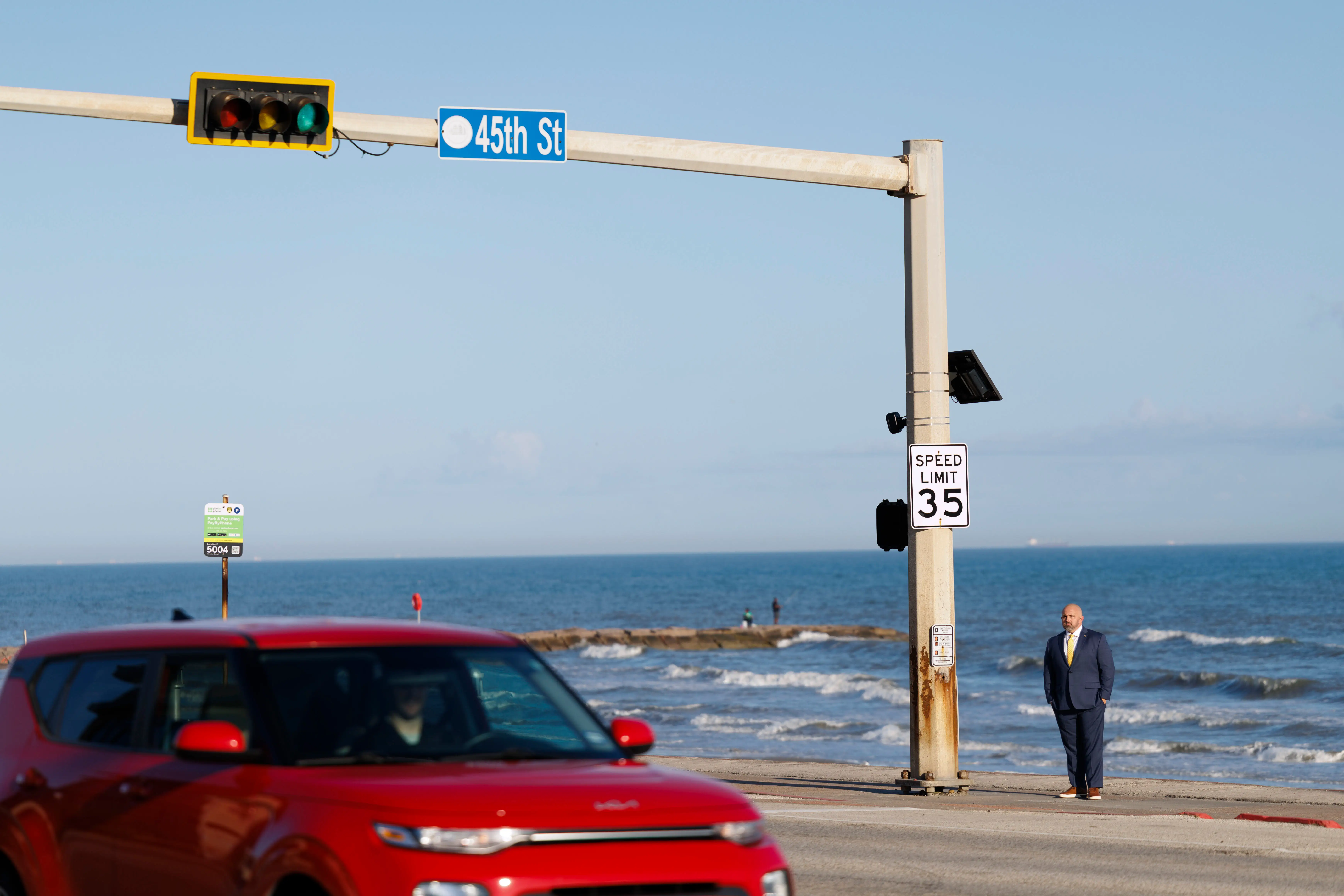
Anthony Rogers, president of the Galveston Municipal Police Association, told Business Insider that the Texas city recently began installing Flock’s cameras. He believes the technology’s ability to track granular detail, as well as the database’s shared information, is crucial to its success.
“They have helped us bring justice to victims and victims’ families, and in some cases they’ve helped us to bring quicker justice,” said Rogers, a detective with the department. “They’re the friend to an officer.”

Flock has had some high-profile success.
In an interview, Providence Police Chief Oscar Perez said the cameras were instrumental in tracking the vehicle of Claudio Neves-Valente, who is accused of killing two students at Brown University and a professor at MIT. Perez said that officers also used Flock to search across jurisdictions during the investigation.
He told Business Insider that Flock is “an excellent resource,” as long as safeguards are in place to “balance clear public safety benefits with legitimate privacy concerns.”
Those privacy concerns have drawn scrutiny, including from advocates worried about the vast quantity of personal data at play. Sen. Ron Wyden of Oregon and Rep. Raja Krishnamoorthi of Illinois urged the Federal Trade Commission in November to investigate the company over its data collection practices. Dozens of communities have cancelled, paused, or suspended contracts, citing concerns over potential misuse of the cameras. (Flock has pushed back against some of Wyden’s criticism.)

According to Alla Valente, principal analyst at the global research and advisory firm Forrester, public sentiment is like a pendulum, and “the momentum of this pendulum is swinging against this type of surveillance.”
Flock will “have their work cut out for them,” she told Business Insider. “Either they’re going to continue to do what they do and be used by law enforcement and the federal government, or they’re going to think about privacy, think about security, think about controls, think about transparency. It all depends on where they see themselves in the next few years.”
The Flock spokesperson said that the company agrees that “dialogue about privacy, security, and transparency are critical,” and that Flock has invested in “industry-leading compliance mechanisms for data controls, auditing, and security.” Flock’s default retention period to store data is 30 days.
As the company grapples with security concerns, there has been less public focus on the reliability of its tech — as well as the potentially devastating consequences when mistakes occur.
“If Flock’s unreliable surveillance technology is sending innocent people to jail, causing them to be stopped at gunpoint or mauled by dogs, that should be a major red flag for any community considering purchasing its system,” Sen. Wyden told Business Insider in response to its findings.
“It is completely unacceptable that this company won’t disclose how often it misidentifies cars,” he said.
Max Isaacs, director of technology law and policy with the Policing Project at New York University’s School of Law, added, “This is the most serious risk of all, that you have a high-stakes situation where police think they’re apprehending a violent criminal and it’s a family.”
“If we find that plate misreads are sort of a pronounced problem, that should call into question our reliance on these tools.”
Last June, JC and Carolyn Herron were driving to a doctor’s appointment with their 3-year-old granddaughter Penelope when they heard the blare of police sirens.
Moments later, officers with the police department in Morristown, a city in eastern Tennessee, pulled out their guns and ordered the couple to exit their black Ford Expedition. JC said he worried that if he made the wrong move, he’d be shot. Officers handcuffed them both, while Penelope remained, terrified and alone, in the car.
The Expedition’s personalized nurse’s license plate, “LOVEY,” was a nickname given to Carolyn by her seven grandchildren. The officers received a Flock alert that the plate was stolen. But the vehicle officers were actually looking for was a black Ford F-150 with the license plate “L0VEY,” with a zero instead of the letter O. It had already been recovered, but it was never removed from the system.
While the Flock investigative summary provided to officers included a photo of the Herrons’ Black Ford Expedition, their license plate number was recorded as a zero, not the letter O.
In police records, an officer noted that Carolyn refused to put her hands up as ordered and instead began to record the incident on her phone. She told Business Insider she was frightened by the officers and worried her granddaughter could be taken away.
“We were two old people just on our way to the doctor,” Carolyn said. “What kind of threat were we with a 3-year-old in the backseat?”
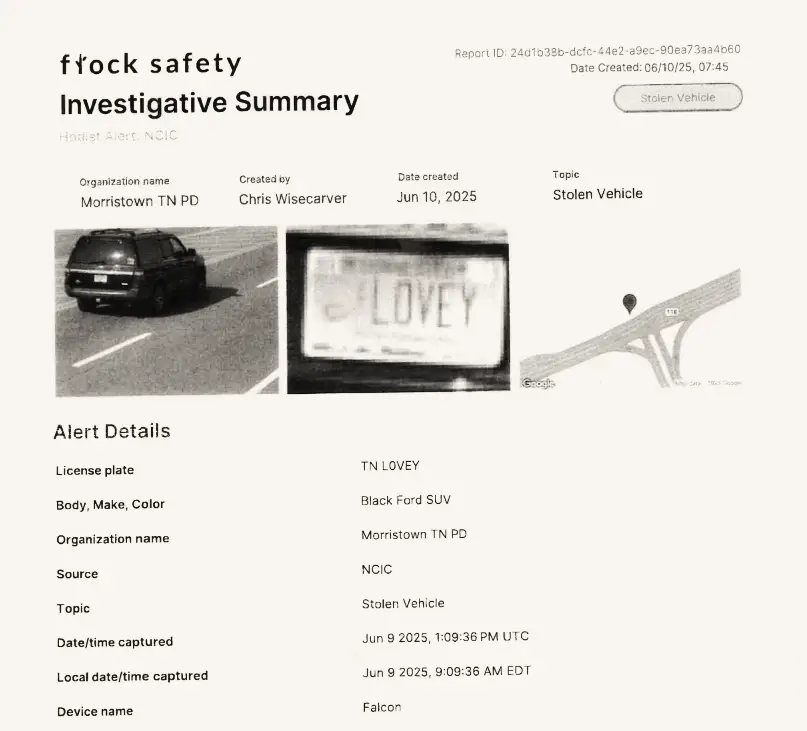
Eight months earlier, Morristown Police Deputy Chief Chris Wisecarver explicitly instructed officers to verify the information provided by Flock before initiating stops. “It’s just information and may not be accurate,” Wisecarver wrote in an email to the department. “It will occasionally misread plates and include pictures that are not the vehicle in question.”
Morristown Police Chief Roger Overholt told Business Insider that it’s common for officers to use high-risk protocols during felony traffic stops, and that officers’ concerns were heightened because “Mrs. Herron was not compliant with officers’ instructions during the traffic stop.”
According to police records, the officer “did run the tag on the Herron’s vehicle to confirm the stolen vehicle hit prior to conducting the traffic stop and the vehicle plate of the Herron’s vehicle (LOVEY) did result in a stolen vehicle hit.” After the couple was handcuffed, it was discovered that the vehicle identification number on the Expedition didn’t match that of the stolen vehicle.
Overholt said that “officers used information from the National Crime Information Center (a state database, not the license plate reader database) as our protocol requires, and used proper police procedure to stop the vehicle for further investigation.”
The department “makes an effort to utilize license plate reader technology responsibly,” he added. “As with other sources of data, we seek to verify information used in our investigations using sources available to us.”
Misreads have happened across the country. In the Silicon Valley neighborhood of Atherton, Jason Burkleo was driving in April 2021 when he was stopped by local police at gunpoint, instructed to lie on the ground, and handcuffed. Police records show that the Flock camera confused an “H” for an “M”; officers noted that “the Flock cameras misread” the plate. Burkleo filed a lawsuit and settled with the town and police officers for $45,000.
“The license plate in question was obstructed by dirt, causing one of the letters (H) to look like an M,” Atherton Police Department Commander Dan Larsen told Business Insider, adding that the town “denies any wrongdoing and contends that it acted properly and lawfully.”
In the northern New Mexico city of Española, Jaclynn Gonzales was driving her 12-year-old sister to the park when Flock notified police that her Kia was stolen. Body camera footage from the July 2023 stop shows officers stopping the sisters and ordering them to exit the car, before handcuffing them. “Can you call my mom?” Gonzales asked.
According to an incident report, the camera misread a “2” for a “7.” Officers said the number was obscured by a license plate cover, though it’s visible in the body camera footage reviewed by Business Insider. The family filed a lawsuit and settled with the city in 2025.
Brandon Upchurch, in Toledo, said he didn’t understand why officers locked him up. He knew he hadn’t done anything wrong.
“This is insane,” he said he thought to himself. “I’m here for nothing.”
There’s a dearth of independent research about the efficacy of Flock’s technology.
Agencies are spending billions of dollars on these surveillance technologies “with very, very little empirical evidence,” Ian Adams, an assistant professor of criminology and criminal justice at the University of South Carolina, told Business Insider. “We have to measure first and spend after, and what’s occurring right now is we’re spending first and measuring never.”
Many of these issues, Adams stressed, are not specific to Flock. He said these are sector-wide concerns.
Still, Flock’s position as the largest provider of automatic license plate readers makes questions over misread issues notable. In 2021, the research firm IPVM independently tested Flock’s LPR cameras, concluding in a report that it misidentified which state a license plate was from for around 1 in 10 reads, and that the system regularly misclassified license plate state, vehicle type, and make. IPVM said that Flock subsequently blocked it from purchasing its cameras for testing.
Jermaine Wilson, IPVM’s head of publishing and research, told Business Insider that there have been improvements with the technology across the industry in the years since.
A May 2025 report from the Office of the City Auditor in Austin found that over a 12-month period beginning in March 2024, there were no incorrect or unjustified stops with its ALPR program, which included Flock cameras.
The Austin City Council opted not to renew its contract with Flock last summer, after the city audit surfaced issues, including users not disclosing their reason for searching the database and concerns about data being shared with outside agencies. The Texas Department of Public Safety reinstalled cameras in the city in February.
During a September 2025 city council meeting in the city of Coralville, in eastern Iowa, a Flock representative said that the accuracy rate for license plate recognition was around 90%. (The council narrowly approved the resolution approving a policy for the cameras.)
“If Flock means to say that it is reading the license plate incorrectly one out of 10 times, that number sounds unacceptably high,” NYU’s Isaacs said.
The Flock spokesperson said that the employee misspoke. “Our accuracy for reading plate characters and correctly identifying the issuing state is consistently in the high 90 percentiles range,” she said.
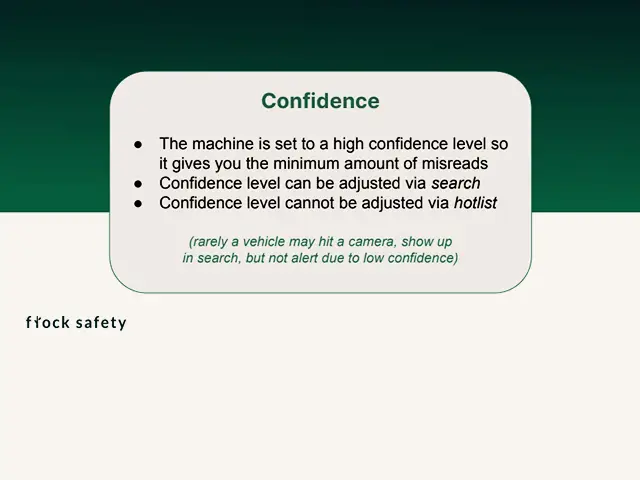
Flock gives law enforcement the option to adjust its cameras to increase or decrease the confidence of its searches, according to internal emails, training materials, and former employees.
When the level is lowered, two former employees explained, the cameras can alert officers to plates that the technology may not consider an ideal match.
According to one police department training video, officers could adjust the confidence levels for the body, make, and color while searching for vehicles. (The video noted that, for the vehicle example in the training, “plate confidence is .84” and “plate state confidence is .94.”) Flock did not respond to Business Insider’s inquiry about what these numbers mean.
“The machine is set to a high confidence level so it gives you the minimum amount of misreads,” noted a slide in a February 2024 Flock training PowerPoint presented to the Dane County Sheriff’s Office in Wisconsin.
A Flock customer success manager also told law enforcement agencies in eastern Tennessee in March 2024 that they could “override confidence levels to broaden/tighten your Search results as needed,” records show.
The Flock spokesperson told Business Insider that the company offers the feature so that an agency investigating a serious case has access to every possible piece of evidence that could result in a lead. She said the “vast majority” of the plate character and state reads are predicted at over 95% confidence.
According to one of the former employees, however, “lowering the confidence level does make the read less accurate by default.”
Experts told Business Insider that no technology is error-free, and it’s critical for law enforcement agencies to have robust policies in place to deal with potential errors. Human oversight of the technology, like double-checking the information provided by Flock, is imperative.
Flock also instructs all law enforcement users to manually verify alerts before taking action. The company spokesperson said that “a human should always manually verify any ALPR hit.”
“Ultimately, policing has to be human-led, and so there’s definitely an onus on the officer, and there always has been, to independently verify that type of information,” the University of South Carolina’s Adams said.
At the same time, added Seth Stoughton, a professor of law and criminal justice at the University of South Carolina, “that doesn’t take the obligation off of Flock.”
“There are reciprocal obligations,” Stoughton said. “The technology should be as reliable as it reasonably can be, and officers should also be using it in a responsible way.”

Cambridge, Massachusetts, recently terminated its Flock contract after the company installed two cameras without the city’s knowledge.
Police Commissioner Christine Elow told Business Insider that while she wasn’t aware of misread issues during the approximately four months that cameras were operational in the city, it’s something she would like more information about. “That would be something our community is concerned about, too,” she said.
The department is interested in exploring potential relationships with other ALPR vendors, added Peter Velluci, who oversees the police department’s procedural justice office. He said that residents voiced issues over Flock in particular.
Nearly two years after he was stopped, Brandon Upchurch said he’s still trying to recover.
The bite caused serious injuries to his arm, and he lost feeling in his fingers, he said. While he owned a lawn care business and worked as a forklift driver, he said he quit because he could no longer lift heavy objects or maneuver the equipment. He sold his truck to keep up with his rent, but it wasn’t enough. He was eventually evicted and moved into his mother’s home.
He also gave up his two bullies, Bruno and Madness, whom he had adopted as puppies. He didn’t want to, he said, but he no longer felt comfortable around dogs.

Mohamad Nasser, the Toledo Police Department’s public information officer, told Business Insider that the stop involving Upchurch was thoroughly reviewed internally, and appropriate administrative action was taken at the time. Wilson was issued a verbal reprimand for failing to verify whether the truck’s plate was the exact match before initiating the arrest, according to records.
Last April, Upchurch filed a lawsuit against Wilson, the officer, and the city, claiming that “it is commonly known throughout the Toledo Police Department that the Flock system is unreliable and often misreads license plates.”
He settled the case in October for $35,000. During the settlement conference, the federal judge said that “Flock Flocked up,” according to Upchurch’s attorney, Peter Pattakos.
“I’d probably still have my house, still have my truck, still have my business,” Upchurch said. “Life struck, all because of that camera.”
Do you have a tip? Contact this reporter via email at [email protected] or Signal at neinbinder.70. Use a personal email address, a nonwork device, and nonwork WiFi; here’s our guide to sharing information securely.
Read the original article on Business Insider
The post A $7.5 billion cop-tech darling runs headfirst into human consequences appeared first on Business Insider.