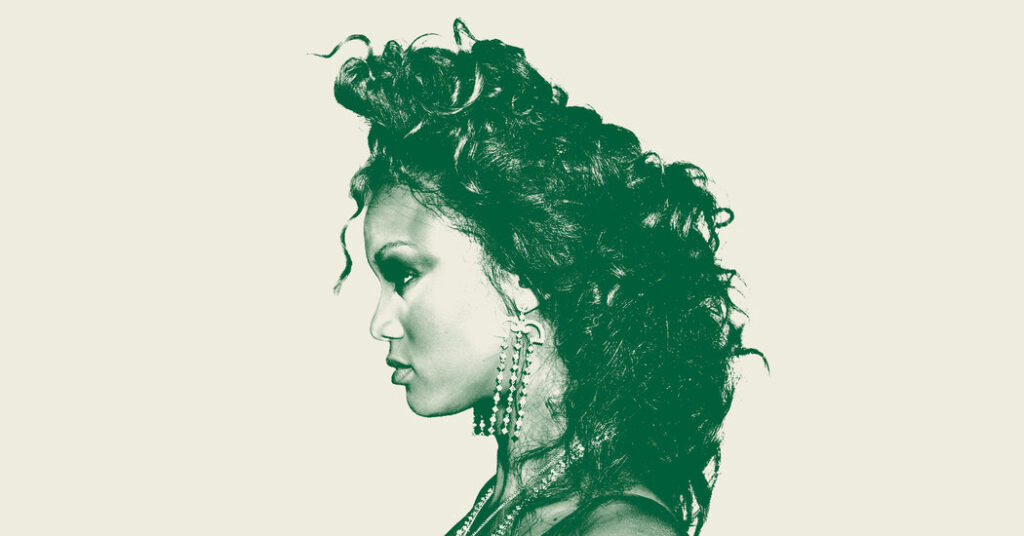
As millennials march into middle age, many are reconsidering the culture of their youth. A new Netflix documentary, “Reality Check: Inside America’s Next Top Model,” is doing just that: exploring how a reality show set out to change the modeling industry, but often wound up humiliating contestants along the way.
The culture editor Nadja Spiegelman sits down with the former modeling agent and brand strategist Kendall Werts and the Opinion writer Jessica Grose to reflect on their relationships to the original show. “I saw these girls being treated so ugly at the time, and I enjoyed it,” Grose says. “And now, with the hindsight of 20 years, I don’t think I would even rewatch the show.”
Below is a transcript of an episode of “The Opinions.” We recommend listening to it in its original form for the full effect. You can do so using the player above or on the NYTimes app, Apple, Spotify, Amazon Music, YouTube, iHeartRadio or wherever you get your podcasts.
The transcript has been lightly edited for length and clarity.
Nadja Spiegelman: I’m Nadja Spiegelman and I’m a culture editor for New York Times Opinion.
Like so many millennials, I recently binged the Netflix docuseries “Reality Check: Inside America’s Next Top Model.” I was in high school when the reality show “America’s Next Top Model” first aired, and I was completely addicted to it.
Audio clip of Tyra Banks: Five beautiful young ladies stand before me, but I only have four photos in my hands.
The original show was a reality TV contest hosted by Tyra Banks, who plucked young women from all over the country competing to win a contract with a modeling agency. I’d never seen anything like it. No one had. I’d never seen real girls on television talking about being gay or being curvy in a world of heroin-chic thinness.
And at the time, I remember that representation felt truly revolutionary. But revisiting the show now, in 2026, through this docuseries, what stands out the most is how these girls were horrifically critiqued for their appearance in a way that we’ve come to think of now as completely unacceptable.
Audio clip of Banks: And as much as I hate and preach about models not having to be stick skinny, we have to face it that we are in the fashion industry. If you don’t fit the clothes, you don’t work.
The documentary reveals a lot of disturbing details about how those contestants were treated.
Audio clip of Banks: [Yelling] We were all rooting for you. How dare you. Learn something from this.
As we think about how much has changed in the more than 20 years since this show first aired, we’re also confronted with how much hasn’t. To talk about these changes, I’m joined by the opinion writer Jessica Grose, who writes extensively about culture, and Kendall Werts, strategist and co-founder of the Jeffries, a creative talent agency.
Kendall Werts: Hi.
Jessica Grose: Hi.
Spiegelman: One of the things Tyra Banks has made most famous is the word “smize,” which is a certain kind of look that you can have in your face where you’re smiling only with your eyes. I think everyone who’s around our age who grew up watching “America’s Next Top Model” at least tried to smize. So I want to know if you guys know how to smize.
Grose: I’m sure I’ve attempted to smize, especially when we were pioneering selfies in those early Facebook days, especially when you would have the albums that had like 9,000 pictures in them, and you thought that was normal to post on a Thursday. So I don’t know if I can still smize, but at some point it was attempted.
Werts: I mean, I did attempt it, but I think I failed miserably. I don’t think I have the gene in me to really know how to turn on that sparkle with the lens.
Spiegelman: Well, let’s cast ourselves back. So, Kendall, Jess, cast yourself back to 2003. It’s low-waist jeans, it’s flip phones, it’s huge belts, it’s blowouts. What was your experience of watching “America’s Next Top Model” when it first came out?
Grose: I was in college. A girl that was my year at school tried out and was on Cycle 3, and that was when I started watching the show. She was stunningly beautiful. Everyone thought she was the most beautiful person on campus. So, it was like, yeah, of course this person would be on a modeling television show.
I was immediately just wrapped in it. At the time, I don’t even know if I clocked the commentary on the bodies, the fat shaming ——
Audio clip of judge: Stop. If you’re sporting a gut, then you turn to the side and disguise it.
The pointing out of the flaws, because these were the beauty standards that I had been raised with, and all the fashion magazines talked like this — your problem spots, how to do exercises to get rid of your problem spots. I went to a predominantly white high school. I went to a predominantly white college. Those were just the beauty standards.
As I wrote in the column that I wrote about it, at the time, I think if you had asked me about the way they talked about the women’s bodies, I would have probably just been like: Yeah, well, it’s a modeling competition. That’s what they signed up for.
Audio clip of model: I think I just pushed myself way past my limit.
Audio clip of judge: She’s huge. She’s not going to be a top model ——
Audio clip of Banks: I just wish her upper body was bigger and matched her lower body better.
So, I think it was really important for me — having watched that show and not really thought too deeply about it since I stopped watching it, probably around 2008, when I was 26 — now, as an adult with a fully closed frontal lobe, seeing how those young girls were treated and talked to was horrifying, from an adult perspective, but also from a 2026 perspective.
Spiegelman: But at the time, you were like: This is the world I live in.
Grose: Yeah. This is how we talk about women’s bodies.
Spiegelman: Kendall, what was your experience?
Werts: This was not the world that I lived in. I’m from Detroit. So, when I embarked on the journey of college, the journey of fashion school, the show was something that held a particular place in my heart and my soul because I’ve always loved what’s going on behind the scenes.
What was so great about this show was, in my mind then, I had no experience to really put it together. As far as I was concerned, it’s basically “Star Search.” It’s a reality TV show, but I don’t have the research to know what reality TV actually is and the story lines and the plots and the this and the that. To me, this was something that was going on every day. I was a huge fan of “The Real World,” so this was kind of similar to that, but with an “American Idol,” “Amazing Race” component that led me to believe: Oh, my God. This is the world that you want to belong to. This is the world that you’re escaping to from Detroit.
I found the show to be extremely effective for my life of saying: I’m going to go and I’m going to work at a modeling agency. Once I got to the modeling agency, I slowly found out that whatever trauma these girls and these young women were going through, it had nothing on the trauma which was going on in the actual reality of my life.
So, when I look back on the show and look at how much I love this show and this piece of pop culture, I also can’t turn my back on it. Like, wait a minute, now look at some of these challenges: This is not really reality in any way, but I ate it up every week. We were tuned in, we were watching, we were smizing — with no phone, and a digital camera.
Spiegelman: We were smizing into pools of water.
Audio clip of Jay Manuel: Your eyes are closed in every shot. You’ve got to leave them wide open. It’s going to sting a little, but just get used to your eyes just being open underwater.
Werts: Basically what I’m saying is that yes, the show was highly effective. It was also very disrespectful. But in the early 2000s, there was a lot of things happening culturally that I can’t wait to dive into with you guys that it wasn’t just skinny; there was a Blackout on the runway. And the Black models that were there were like, “Wait, girl, it’s me.” “No, it’s me.” Tokenism at its best.
So, what I would say, looking back at the show, is that it was revolutionary at the time, but now it’s also revolutionary. When I look back on it, I see all of the bad, but I can’t help but see all the good compared to the hell I’ve seen in the industry.
Spiegelman: I want to ask you about the hell you’ve seen in the industry. Now, in 2026, more than 20 years later, you’re watching this Netflix documentary and you’re revisiting it through the lens of 2026. What was it like rewatching it? Were you surprised? Were you shocked?
Werts: The agencies I’ve worked for taught me how to develop an eye for beauty and how to sell that beauty, how to introduce that beauty to a client. But what I will say is that the industry is much harsher than what we saw and what we’re unpacking here. This was the one documentary that I shed a tear because I said: “Oh, my God. These girls thought that they were going to make their dreams come true.”
And me, as a person who works with models, knowing that this dream is not even possible for you. Girl, just get a subscription to Vogue, get a subscription to Elle, get a subscription to any of these amazing magazines that showcase beauty — and you don’t look like that. She was changing something. She was changing industry standards. I don’t think that the young women that were a part of this change understood the gravity of the change that Tyra was trying to do.
Spiegelman: Kendall, can you give us really specific examples of how things on the show were different from the actual modeling industry that you then entered?
Werts: Well, there are two, actually. Dani Evans and the whole tooth debacle. Agencies would look at Dani’s tooth gap and say: You know what? Actually, this is something that sets you apart from the other girls. We want to keep this; we want to zero in on this. This is what makes you special. That wouldn’t turn into: Let’s close this and make you like everyone else.
Audio clip of Banks: Do you really think you can have a CoverGirl contract with the gap in your mouth?
Audio clip of Dani Evans: Yes. Why not?
Audio clip of Banks: This is all people see. Easy, breezy, beautiful CoverGirl. It’s not marketable.
From the agency side, I’ve seen where there was a girl who was signed at 13 years old. She was from Scandinavia. This guy submitted this girl’s photos, and this young lady gets a job where she’s directly booked. She gets on a plane; the client pays for her. Basically, what ended up happening is the client called the agency and said: We have an issue here. This girl that you sent us does not look like the Polaroid and the digitals — even the updated digitals that you sent us. Something’s going on. There’s a fraud here. She’s not perfect for this magazine. She doesn’t look like a teen anymore.
The girl was 15 years old. I rescue this girl. I’m like: OK, we’re going to go back to the agency. Again, we didn’t sign her off of anything but the photos that they had seen two years ago. When she walked into the office, they took her back into another office where they had a meeting with her about her having a breast reduction — without parental supervision.
So, we’re talking about this contestant on “America’s Next Top Model” being tasked with a gap being closed versus a 15-year-old girl who’s not even of age with a decision to make and being told: You’re not going to work unless you get this. That is insane. That’s crazy. And that was the industry standard at that time.
Spiegelman: That’s really useful context. When we’re watching the “America’s Next Top Model” documentary exposé, Dani, the model that you’re talking about, is a really moving story line on the show. She has this beautiful gap between her teeth and Tyra forces her to close it, or the show forces her to close it. She basically talks about how she would have been a more successful working model if she’d been able to have this gap in her teeth.
Audio clip of Evans: Me getting my gap closed is not opening any doors for me. You knew what you were doing for the show. You were making good for TV at my expense.
And there are others. The makeovers sometimes involve irreversible cosmetic procedures, like pulling out a lot of teeth, and you’re saying that that’s really standard.
So Jess, you were a young girl growing up in a world where you were reading these magazines and being given these beauty standards. When you were watching the show, even though the show purported to change them, it was also in many ways reinforcing them. What was it like to revisit it now and be like: Oh, that is the world I grew up in?
Grose: That commentary about that young model is so upsetting to hear, but it is also reflected in the show. I’m thinking of the model Shannon. In the early seasons, they did weigh-ins. They would give you the models’ statistics.
She starts the season, I think she’s 5-foot-10 and a half, 130 pounds. That is still underweight by B.M.I. standards. I know B.M.I. is not perfect. But she’s already underweight, and she is pressured into losing more weight. She says she developed an eating disorder. I think she becomes 114 pounds. And I remembered that actually from watching it at the time. But again, I don’t remember being upset about it when I was in my early 20s. Again, I was like: Well, that’s just being a model. It’s starving yourself. That’s how it is.
That is a body type that even someone who is extremely tall and willowy and a model body type — most of us don’t have that body type — to maintain the standard that is the base standard when you are an actual grown woman. Intellectually, I knew that, but watching it in the documentary as a full-grown woman was really illuminating. Not just with the body image — there is a sexual assault that happens in the show, and I thought that was the most upsetting thing that happened. It was very brushed away by everyone.
The woman who experienced the assault, her name is Shandi, is still to this day — she’s in her 40s — incredibly damaged by what happened. Understandably, especially since the entire world saw it. There was no reconciliation or apology. I think there’s a way — not to make everything always about the Epstein files; I feel like that’s just the way we circle back to them on every topic now. But it’s just a very easy association to make in this moment. There is this way in which these young women are multiply vulnerable. That was a really big takeaway for me watching it.
Werts: For the most part, for male models, it’s mostly over 18 years old when you’re very viable.
But for the girls, the women who are perusing through these magazines, have no idea that they’re looking at a 13-year-old, a 14-year-old, a 15-year-old who’s gussied up and made to look like an adult woman. These women are having a lot of dysmorphia looking at them and saying: Oh, I’m them, I see myself in them — but not realizing that they’re a grown woman comparing themselves to a teenage girl.
Spiegelman: Wow. Yeah. Yeah. It is hard not to think about the currency of girls — the world of Epstein, the world of rich men, where girlness, not womanhood, is a currency and is valuable. I’m glad you brought up that moment about the assault, Jess. I think part of what was interesting for me about how the documentary frames that — I don’t think they ever call it assault in the documentary. It’s just that through our contemporary eyes, it is extraordinarily clear that that’s what it is.
Yet it was possible to watch that and think that girl had too much to drink and she cheated on her boyfriend. It’s the Rorschach test of what’s happening is the context of the culture and the perspective that you’re bringing to these events.
For me, there was something so healing about revisiting this. It’s not just that the show was bad. This is the context that I grew up in, as a person who’s not naturally thin, as a person who’s queer. These are the messages I was getting from everywhere. Jess, I wonder if there was a way in which it made you revisit your girlhood, your experience of girlhood in the early 2000s.
Grose: Oh, absolutely. I think that there have been multiple ways over the past five to 10 years where I have revisited that period, let’s say ’95 to 2005. The messages that were happening, not just about what my body should look like and what it was acceptable to say about it, but what behavior was acceptable. I think we are continuing to have these conversations, and it is two steps forward, three steps back.
I see that, actually, in both directions with both the #MeToo-affiliated understanding of consent and then also the way we think about body image and what is desirable beautywise. I do think we had this moment, maybe 10 years ago, where we were seeing a much broader range of bodies on the runway. We were seeing more people of different backgrounds and ethnicities on the runway. You know, Vogue and a few other places started keeping statistics about the number of models of color, the number of mid- and plus-size models on the runway. We would see those statistics start to creep up, and now they’re just all the way back again.
It’s also really interesting to think about how progress is not uniform. There are ways in which I think things are much better. I would not actually watch this documentary with my 13-year-old. I wouldn’t show it to her — even though I watch a lot of things with her, we watch tons of ’90s shows together. She is often horrified by the way people talk to each other and about bodies.
At the same time, you look on the internet and you look at the comments on a TikTok of the most stunning woman you’ve ever seen in your life, and the comments will be like: “She’s mid.” “She’s fat.” And you’re like, “What are you talking about? This is Margot Robbie. Like, are you on crack?”
Werts: It’s the bots.
Grose: But still, the kids — kids, we’re talking about teenage girls who are looking at this — they’re not thinking it’s bots. They’re thinking, “Oh, if Margot Robbie is not even pretty enough, I must be a complete monster.” I think there are ways in which the progress keeps getting made, but it’s not uniform and there’s always a backlash. There are always steps back.
Werts: My partner got me an amazing book for my birthday last year — WWD did a history of the fashion business over 100 years. What I found by reading a lot of the articles was that we’ve been here before, over and over and over and over again. In fact, it was Black and Jewish people, actually, who were denied access into this world of fashion and this world of beauty — of being seen. There were different organizations that were established to bring the industry to the mat and say: “This is our time. This is the time.” And as soon as they would move up, they would slowly move backward because of different moments that were happening.
So, when I look at what Tyra was trying to do, I get it. Back in those days, the supers were ruling the runway. And these women were bold. They had body, they had personality — which I guess was distracting from the clothes. I guess that’s distracting from the clothes, so they’ll be replaced with someone who’s very waiflike. Tyra was a part of that supermodel brigade, so she knew that her rates were drying up. In turn, Tyra changes herself into someone who’s more commercially viable in this way.
She’s abandoning high fashion, and she’s going to go the route of someone who is an all-American girl — not just Black girl. I’m the all-American girl who has personality, and it could be a little kooky sometimes ——
Spiegelman: A little kooky.
Werts: What I found by researching what was going on during that time is that she was trying to answer that call with: “OK, I’m going to do a casting and I’m going to have four women who are commercially viable. I’m going to have one woman who is a curvy girl.”
Audio clip of Tyra Banks: Sarah’s our plus size model. Do what you can. Be gorgeous, be tall, be fabulous, work what you got.
“I’m going to have three models who are editorial.” She broke it all down in a way that I found the show to be really entertaining.
Spiegelman: Jess, what do you think? Despite the show’s flaws, do you think that it played a role in bringing about such change? And do you think that anything actually has changed? Like are the messages that your daughter is getting different from the messages that you got? What has changed and why?
Grose: I do think the show absolutely deserves some credit for popularizing different kinds of beauty, for showing — I don’t think anyone had any idea that a plus-size model was a thing. That is not what I ever saw in the magazines that I looked at.
So, I think she definitely deserves some credit for broadening the lens of what a model could be and should be. I think, to give her some credit here, it’s hard to get called out. And I think she came off as seeming very resentful of the fact that people weren’t giving her more credit. We can hold those two ideas at the same time: that she does deserve some credit for breaking a trail for some people, but also she exploited and humiliated so many of these girls in ways — publicly — that were unnecessary and, in retrospect, really damaging to them.
I would say in terms of my daughters and the messaging that young girls are getting now, it’s such a mixed bag. So much of it, for girls who are on social media — and this is why my children are not on social media — is determined by the algorithm. So, if you start liking things or interacting with content, you’re just going to get more of that content. I don’t think social media is uniformly negative for the body image of all girls. But for girls who struggle with body image, they fall down the rabbit hole.
In the piece that I wrote about “America’s Next Top Model,” there was a study that looked at algorithms of girls who have eating disorders and bad body image against a control group, and the images that they were getting were diet and exercise — plus 100, 300 percent more than the people in the control group.
I think for kids who already struggle with these things, their experience is even worse. For the kids who don’t already struggle with these things, it might be a little bit better. But I think overall, the ethos, the way that we all spoke to each other in high school, in many ways is not acceptable for kids to do today. Not just the body image stuff. I will watch ’80s movies with my child and she’ll say: “They let you talk like that?” Like, so many different slur ways. I’m just like, yeah, it was wild. I don’t know how that happened.
Werts: I was thinking about, as I was hearing you talking about your daughter, one thing that I know creeps through the system all the time is blackface. Every once in a while in a blue moon, the howl goes up and some white person or somebody done put some chalk on their face and decided that they’re going to be Black and they’re going to put it on. That is one thing to see a celebrity literally during Halloween bring down themselves because they want to put on a little show. They want to be something outside of the reach of who they are, and because they put this makeup on, they’re like, “Oh, yeah, I can feel the pain.”
Grose: Talk about how “A.N.T.M.” did this. That was the craziest thing to remember. So “America’s Next Top Model” did more than one race-switching photo shoot. I had forgotten all about that. To watch now was just like: Why? Why would you do any of this? It was so crazy.
Werts: The way Tyra was positioning this, well first of all, Jay just looked like: I want no smoke with this. He looked really uncomfortable even delivering this news to the girls. You could see that there was a hesitation on his face. That’s Round 1. Now, Round 2, which is like five or six cycles afterward — Tyra’s still at it. Tyra’s actually going to show up this time and she’s going to be like: Now you’re an Egyptian and now you’re an Indian.
Audio clip of Banks: Erin, you are going to be Tibetan like the Dalai Lama and Egyptian!
She was like the Oprah of blackface.
Werts: It’s crazy that this is what she’s up here talking about. When I look at that episode, I am mortified at the lack of anger I had. This was during a time when your anger is so suppressed in society that screaming out that you’re angry doesn’t really matter because no one hears your screams.
So all of these things happened in the show that are unbelievable, and to revisit that made me so angry with my younger self. But I understand why I was like, “Yeah, whatever.” Because the time did not warrant your anger. The time didn’t listen to your anger. The time didn’t care about your damn anger.
Spiegelman: I’m glad that we’re in a time now where you can feel that anger. I think that where I want to go now is: Have these things actually changed?
Jess, in your essay you write about how we had a body positivity era. We had that, but now we’re back into a time when skinny is queen. When diet cultures are replaced by GLP-1s, when conservative politics are crowning hyper-femininity as the ideal. Are we just stuck in the same cycle with new labels, or are we somewhere new?
Grose: Well, I think in terms of the extreme skinniness that we are now seeing again — I mean, every red carpet, I truly gasp. We see these actresses’ bodies change, who were already very thin and now they are even more thin. I think that there’s this knee-jerk, “Don’t talk about anybody’s body” — but you can’t not talk about it. It is alarming to see. I think that will be in vogue and that will change. I don’t think that that level of extreme skinniness, which calls to mind the heroin chic of the ’90s.
The plus/minus of social media is that there are lots of other things. So you see, right now, we’re just after the Olympics, Alysa Liu and all the other women who just won Olympic medals, they have incredible bodies. They are so fit. They are doing amazing things with their bodies. I do think that there are these other role models for girls that feel better than when we were kids. They’re not just cool to look at; they’re amazing. So, I think that there’s promise for things to get better. I think we are in a particularly bad moment now. I think the advertising’s only going to get worse. That’s my broad conclusion.
Spiegelman: That’s so spot on.
Werts: The advertising won’t even have people. We’ll have A.I.
Spiegelman: As someone who’s still working with casting agents and gatekeepers as part of your job, do you think that under Trump things are looking different or do you think this is a moment, a blip? Where do you think we’re at in this cycle?
Werts: I loved the Biden era. I love the D.E.I. of it all, which was even more so than when Obama was president, because of social media and how even bigger it got under the Biden administration. I think that after Biden exited stage right, Trump came in and it totally changed the idea of what the system was. People who are now talking and being free to say whatever they want are now on the wrong side of the historical facts of today.
Today, the rules changed. Being outspoken and being somebody who has a value system and morals and standing on the business of what your morality is — that’s not in vogue. That is not in fashion. What is in fashion is quiet luxury. So shut up. Don’t talk.
Spiegelman: Someone who was really wanting to talk about their perspective, the specificity of their background and beliefs was really celebrated during the Biden administration.
Werts: It was celebrated during that time. And in this time now, we’re celebrating a girl who has blue eyes and she loves her jeans that are also blue.
Spiegelman: What about how people look? Has that changed?
Werts: The way that people look — now, tokenism is back in full force. We just need one of you. So whoever is going to battle it out, like, here’s a piece of meat and you guys figure it out. So people are fighting over opportunities.
Spiegelman: I want to go back because we’re near the end, but I really just want to talk about Tyra.
A lot of the discourse around this documentary has been about whether Tyra herself gets what reality TV calls the villain edit, whether she comes off as the villain or whether she acquits herself well. What do you think? Is Tyra Banks the villain here?
Grose: She’s definitely the villain of this documentary. Also, she dresses the part; she’s in her Inspector Gadget-like trench coat. She looks ready to escape at any moment.
Spiegelman: She looks like she’s going to run out.
Grose: She is sort of exquisitely media trained, and I think we’re in this moment where everyone wants people to be authentic. It’s a performance of authenticity if you are sitting for a documentary, you are on a podcast — we are performing right now.
Spiegelman: I’m being really authentic.
Werts: Authenticity exists for a bit, but then something takes over.
Grose: Right, but she comes off as inauthentic in that documentary because she’s guarded and media trained. And not taking responsibility. I don’t know if there was anything that she could have said that would have satisfied everyone, but even when given the opportunity to reflect on some of the things that happened, she’s either defensive, she will occasionally apologize, but I think doesn’t really show growth in terms of how she perceives a lot of the things that happened.
I think a lot of it is just like, well, it was 2003, whatever. And you know, again, if that’s how she feels, that’s her truth. But I think a lot of people felt that that was not sufficient.
Werts: I thought that Tyra really did not understand that she was going to be the villain. I don’t know who she thought she was in this situation, because yes, it starts off where she’s like: Look at all these things I did. But my biggest question to Tyra is: How did you end up in that Inspector Gadget outfit?
Because the situation is pretty clear. These people have been doing this documentary for a time, and they called you to get a comment here and there, and that’s when you were like: You know what? Let me go and let me talk to them, let me do some damage control. And she went up there and I think that she thought she was doing damage control.
And to Jess, what you were saying is, with production, did she hear about these things? I’m not going to sit here and say that she did not do anything. She revolutionized TV in a fashion television show, which, there’s not that many that have been able to have the success that she has. But in examining what’s going on, you are in a lot of danger, girl.
Spiegelman: Yeah, she has this constant defense of just like: Well, it was a different time. No one knew. How could I have known it was a different time? That doesn’t really convince, eventually.
But she does have this one moment — or maybe it’s a few moments throughout the documentary — where she has this defense, saying the audience wanted drama. And that to me is actually the most convincing argument that she has. Like: I’m not the villain; America’s the villain. I’m just giving America what it wants, and I’m good at that. What do you guys make of that?
Werts: The thing is that Tyra walked around as if she was the nicest person. And it’s not that she just walked around that way; people put that onto her. She’s a leader. She’s a Black model. She has done tremendous work in her career in the fashion business.
So when she’s wearing her cape, people are putting the cape on her as strong and as someone, most importantly, who is kind. That sort of goes away in a way, where we take off that cape of like, oh my God, look at how amazing she is. And she turns into a modern-day villain.
Grose: Hearing you talk, I think the analogy I have in my head is the Wall Street guys never pretended like they were saving the world. They’re like: I’m just making a lot of money. And tech industry guys were like: No, I’m saving the world. And we know that to be false now and we all hate them.
It feels very much like Tyra versus worldwide wrestling. Worldwide wrestling never pretended like we’re doing something for these wrestlers, like we’re putting good into the world. It’s entertainment. And I think why people are mad at Tyra is exactly what you said — she wanted to be like: No, I’m this beneficent person giving all of this to the world. And now it’s like, actually, it’s just entertainment, and you can’t really have it both ways.
Spiegelman: I think you’re right. It’s the hypocrisy of it.
Grose: But I think she’s right. I mean, her telling the audience that they’re culpable made me feel like: You’re right, I was. I saw these girls being treated so ugly at the time, and I enjoyed it. And now, with the hindsight of 20 years, I don’t think I would even rewatch the show.
Spiegelman: OK. Thank you both so much for being here. This has been so fun. It’s been such a pleasure to talk about this with you.
Grose: Thanks for having us.
Werts: Thanks for having us.
Thoughts? Email us at [email protected].
This episode of “The Opinions” was produced by Vishakha Darbha. It was edited by Alison Bruzek and Kaari Pitkin. Mixing and original music by Isaac Jones. Fact-checking by Mary Marge Locker and Kate Sinclair. Audience strategy by Shannon Busta and Kristina Samulewski. The deputy director of Opinion Shows is Alison Bruzek. The director of Opinion Shows is Annie-Rose Strasser.
The Times is committed to publishing a diversity of letters to the editor. We’d like to hear what you think about this or any of our articles. Here are some tips. And here’s our email: [email protected].
Follow the New York Times Opinion section on Facebook, Instagram, TikTok, Bluesky, WhatsApp and Threads.
The post Was Tyra Banks the Villain? Or Were We? appeared first on New York Times.