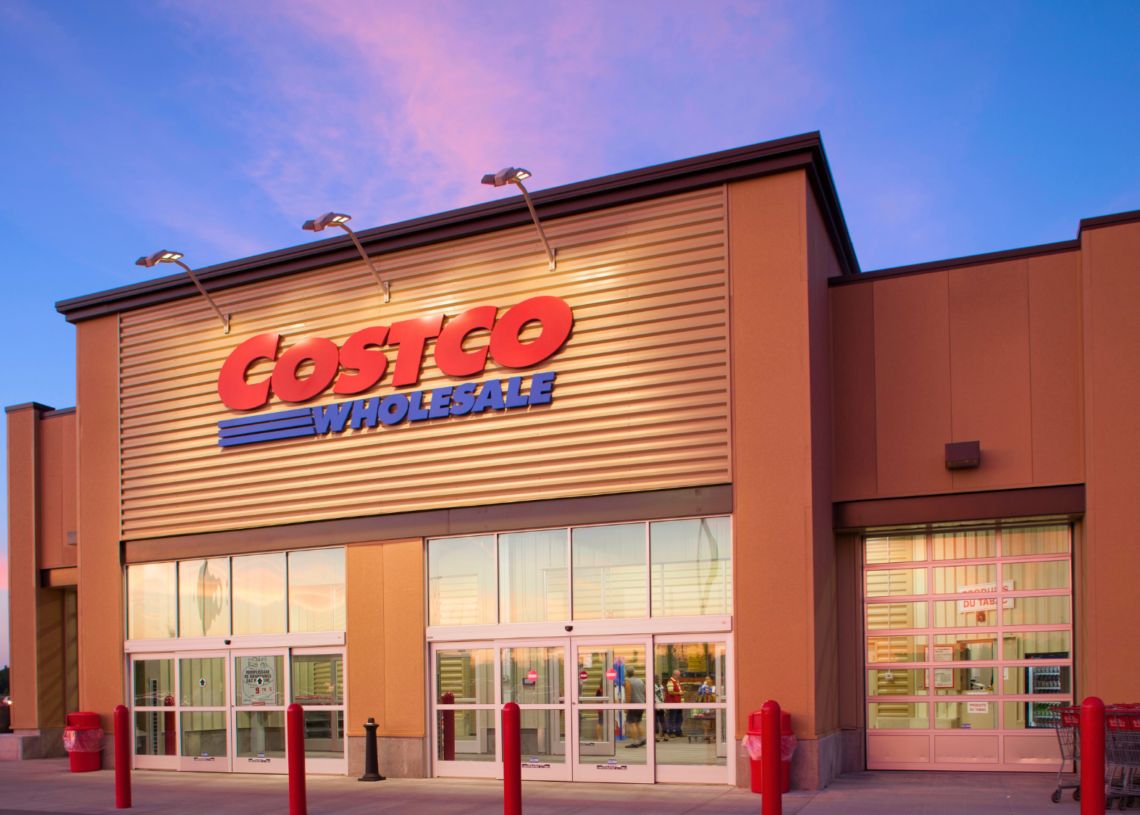
It was overwhelming. I had to scan a card with my face on it just to get in, like it was a high-security government research lab. Once in, this coliseum that I thought was going to be filled mostly with industrial-sized packs of Kraft Mac & Cheese had a pile of pants and polos to greet me upon entry. That was immediately followed by big-screen TVs, cell phones, couches, patio furniture, an even wider selection of clothes, and then, finally, way in the back, there they were: the fabled packs of food so large I thought I was in a Honey, I Shrunk The Kids scenario.
I had never been to a Costco, or even seen one in real life, until a little less than a year ago. My wife came across a deal on a year-long membership that was too good to pass up. I am a Floridian, and as such, I am practically required by state law to remain loyal to Publix, but Costco has quickly found a place in my heart. I’m not the only one.
Costco is in the midst of a golden era. It’s a boom that’s been chronicled by business and financial publications time and again for the past couple of years. I’m not going to bore you with the facts and figures of it all, a little because that stuff is confusing to me, but mostly because I don’t care. I’m not going to rattle off quarterly reports and wax analytical about how its strategic growth and expansion plans indicate it’s a company that’s doing Scrooge McDuck dives into pools of cash, even though all of that appears to be true.
Why Are We All So Obsessed With Costco?
I, like so many millions of Americans (particularly younger ones, apparently), have fallen in love with Costco because it doesn’t screw around. It’s not trying to project itself as anything more than a warehouse filled with stuff. It’s not trying to, for instance, sell me a middle-of-the-road Yas Queen liberal identity and then immediately cut DEI programs as it tries to get in the good graces of the new regime, like the idiots at Target. Costco looks and feels like it was built by normal humans who have not yet been fully corrupted by their fortunes, who, like the rest of us, just want to buy a shockingly affordable pack of chicken wings that will last them through at least one or two apocalypses.
Costco’s identity is that it’s just a store, but one that seems to at least somewhat care about the customers it serves, and does it through the reputation it’s billed as a store and almost nothing else. I can’t recall ever once seeing a commercial for Costco. I’ve never seen them try to tug at my heartstrings with emotionally manipulative ads the way Publix does, like in this one, where they seem to imply Publix store brand products are at least partially responsible for getting a little girl to accept her stepfather as her real dad over the course of a decade.
Costco has never tried to convince me that my relationship with my dad can be repaired with some Kirkland Greek yogurt or whatever. They’ve convinced me they’re a good store because whenever I go to it, I think, “Damn, this is a good store.”
There is a rabid Costco fandom out there that’s been thriving long before I ever set foot in one. Just like the near-terrorist level of fanaticism I heard about Trader Joe’s long before one ever popped up within a reasonable distance of me, once I experienced it firsthand, I instantly knew why Costco gained its legion of devotees. It’s not the value in the pricing and the blah blah blah business BS.
It’s much more elemental than that. It’s something more human than that. It’s that it feels like it’s all put together by people who remember how fun and rewarding day-to-day shopping could be before it was taken over by business maniacs. If there’s any evidence that someone out there remembers what a good retail experience used to be like, it’s Costco.
Gigantic, Dirt-Cheap Hot Dogs
Its gigantic, dirt-cheap hot dogs have become the avatar of this Costco ethos. People always cite the possibly apocryphal, possibly true story of its CEO threatening to kill a guy if he dared raise its price. That’s nice. It adds to the company’s lore of putting people over capital.
There is the nagging thought that something so cheap is probably cheap for a reason, and that there’s probably some exploitation of someone at some point in that hot dog’s journey into your stomach. I get that all’s probably not squeaky clean in the magical Costco utopia, but a big chunk of the modern day is about choosing the lesser of a billion evils.
Costco seems like the lesser, while giving me a lot more of what actually matters when I do the mundane things that keep my day-to-day life going: the reminder that this place is run by people who weren’t trying to sell an image, a lifestyle, a brand. They’re trying to sell the stuff I need to live, because I need a four-pound bag of tortilla chips to live.
The post Gen Z Is Basking in the Glow of Costco’s Golden Era, and I’m There With Them appeared first on VICE.