STORIES: The Collected Short Fiction, by Helen Garner
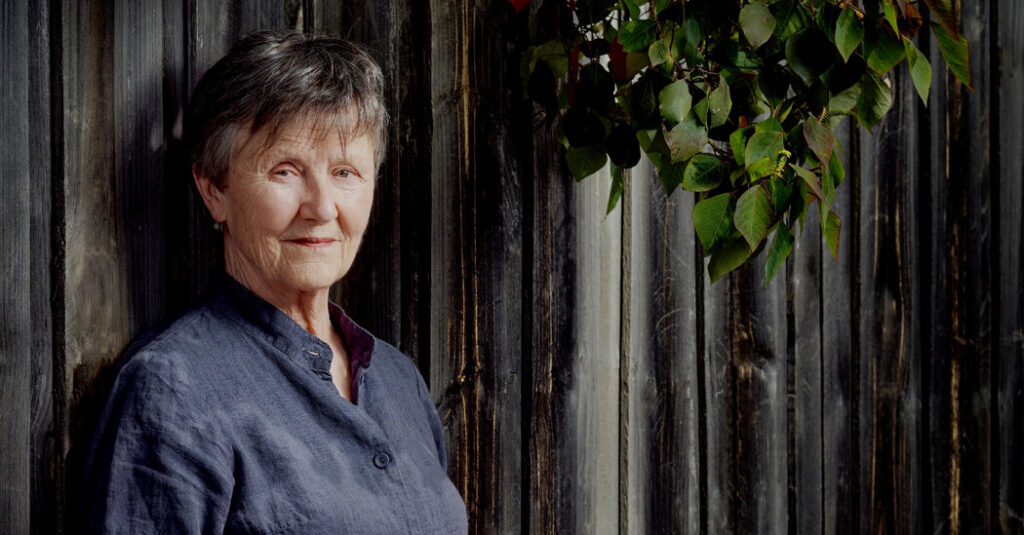
I usually hesitate to mine an author’s personal life for literary insight, but in the case of Helen Garner, the perceptive and virtuosic Australian writer, it’s apt. As she drafted her debut novel, “Monkey Grip,” in the 1970s, she’d sit with her diaries to one side and a notebook on the other. This cross-pollination between her fiction and her journals is clear; in both, readers can see Garner’s compassionate, exacting mind making sense of the betrayals and delights that compose a life.
Now 83, Garner must surely have examined every pebble strewed along her subconscious. Her diaries remain her best work — she agrees — and, I believe, are the key to appreciating the rest of her writing. Garner’s novels often seem to confound critics, and even her most ardent admirers are reduced to micro-profundities when describing them. (“This is a story about how life happens to all of us,” one writer proclaimed in a recent introduction.)
A collection of her short fiction, “Stories,” is newly available in the United States, featuring selections first published in 1985 and 1998. “Is it possible to develop a voice in writing with such coherence and quiet authority that I can do away with narrative structure? (Plot?)” she asked in her journal in 1987. “In the dream story, all that’s holding it together now is the voice, and maybe the imagery.” The question is an ideal overture to this volume. Even if, as she wrote in her diary, elements in her stories “want to return to some other order,” she can “compel them quite quietly to hold together my way.”
Garner exerts her authorial will in part through immediacy of setting. “I turn 41,” begins the opening story. “I buy the car. I drive it to the riverbank and park it under a tree.”
Another component of this “way” is her ear for peculiarly Australian strings of syllables. Readers of her nonfiction learn about her birthplace, Geelong, and the kookaburras that surround her as she writes. In “Stories,” we encounter even more idiosyncrasies; “I’ll keep the stickybeaks in the Woomelang post office guessing,” as one narrator says. (Please read that aloud, and marvel at the aural shapes that the English language can create.)
Garner took up piano lessons as an adult, and her appreciation of Bach in particular is manifest in her writing, with themes, characters and archetypes recurring in related tones. Friendship, heartbreak, the unfairness of women made to adapt to men’s realms — these concerns arise in major and minor keys throughout the collection. In one uncomfortable exchange, two women wade into a discussion with men about the differences between male and female artists.
“There must be a line of women’s writing,” said Natalie, “running from the beginning till now.” “It’s a shadow tradition,” I said. “It’s there, but nobody knows what it is.” “We’ve been trained in your tradition,” said Natalie. “We’re honorary men.”
Characters in these 14 stories view “feminism” as a before-and-after event, like Partition or the moon landing. Romantic attachments are vexing, and the idea of reciprocity between the sexes seems far from reach for Garner’s women. “I want a man who’s not going to think my ideas are crazy. I want a man who’ll see the part of me that no one ever sees,” cries one character, lonely and broke. “‘Women like us,’ I said to my friend, ‘don’t have men like that. Why should you expect to find a man like that?’”
The story “Little Helen’s Sunday Afternoon” shows off Garner’s prodigious talent for writing about children, and evokes the simmering nausea of a Donna Tartt novel. The young protagonist hears about grisly surgeries performed by a doctor she knows, and encounters the fetid reek of slightly older adolescents tangling with vice. Garner’s kids are never a caricature, even when they are doing objectively goofy things. Little Helen, limping around with her foot stuck through a bucket, receives an elegant description as she inspects dozens of small, unexpectedly gruesome pictures. “In this Balinese posture she lowered herself to contemplate the mystery.”
The images across this collection are memorable. “The white doorsteps of the ocean travel and travel,” thinks one narrator. Another describes “a wooden ladder (feeble as a thought).” The sensory intelligence in these associations, unfiltered and freestyled, sidesteps expectation. In the absence of plot the visuals advance the stories, conjure the atmosphere and surprises.
Friendship is often central to Garner’s writing, and she approaches it with the gravity and affection it deserves. “We stayed in our seats so we could keep up our conversation which is no more I suppose than exalted gossip but which seems, because of Natalie’s oblique perceptions, a most delicate, hilarious and ephemeral tissue of mind,” thinks one narrator. “Exalted gossip” is an efficient descriptor for so much of this author’s best work. These visceral, incandescent stories treat us to Garner’s companionable brilliance.
STORIES: The Collected Short Fiction | By Helen Garner | Pantheon | 184 pp. | $27
Joumana Khatib is an editor at The Times Book Review.
The post The Companionable Brilliance of Helen Garner appeared first on New York Times.